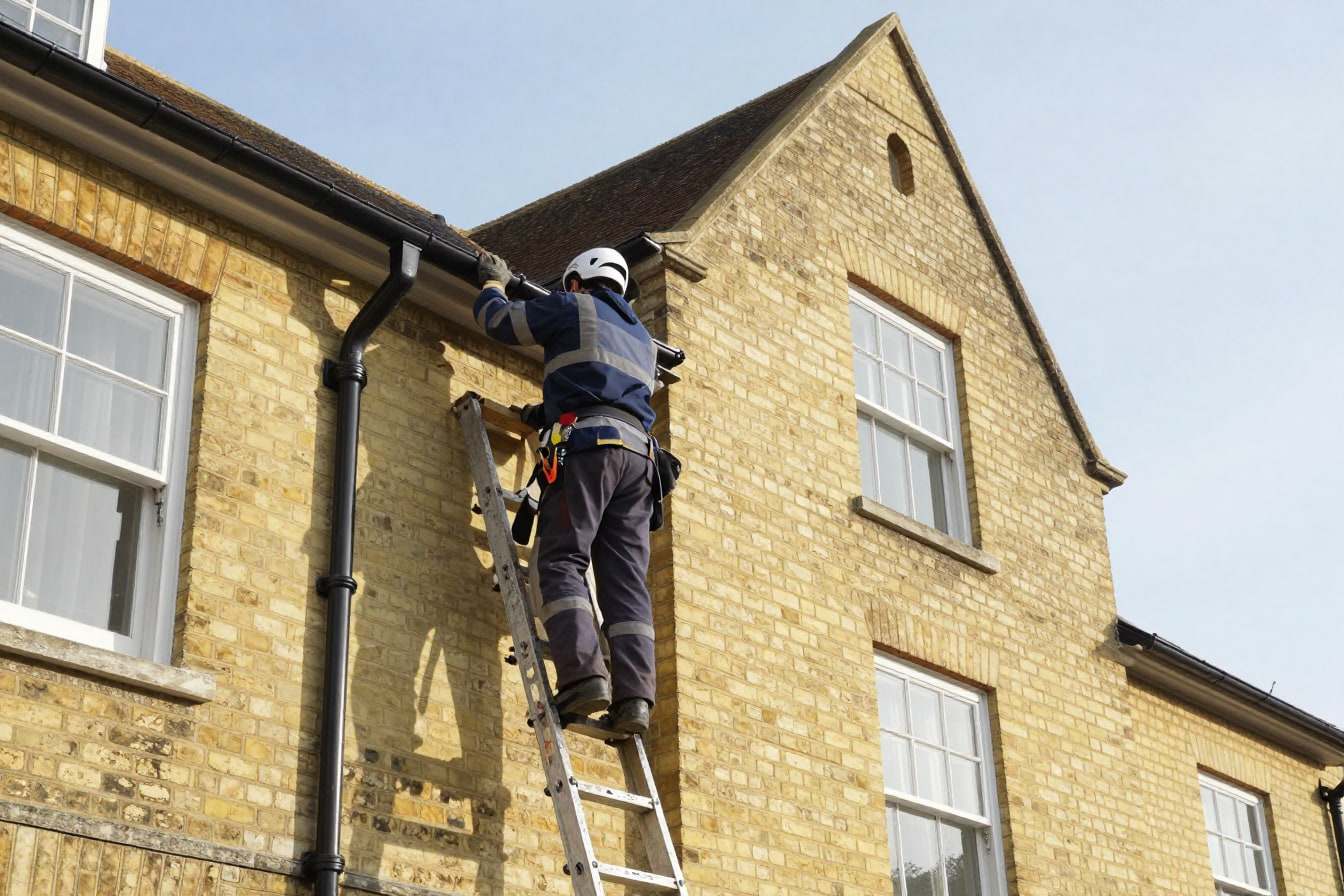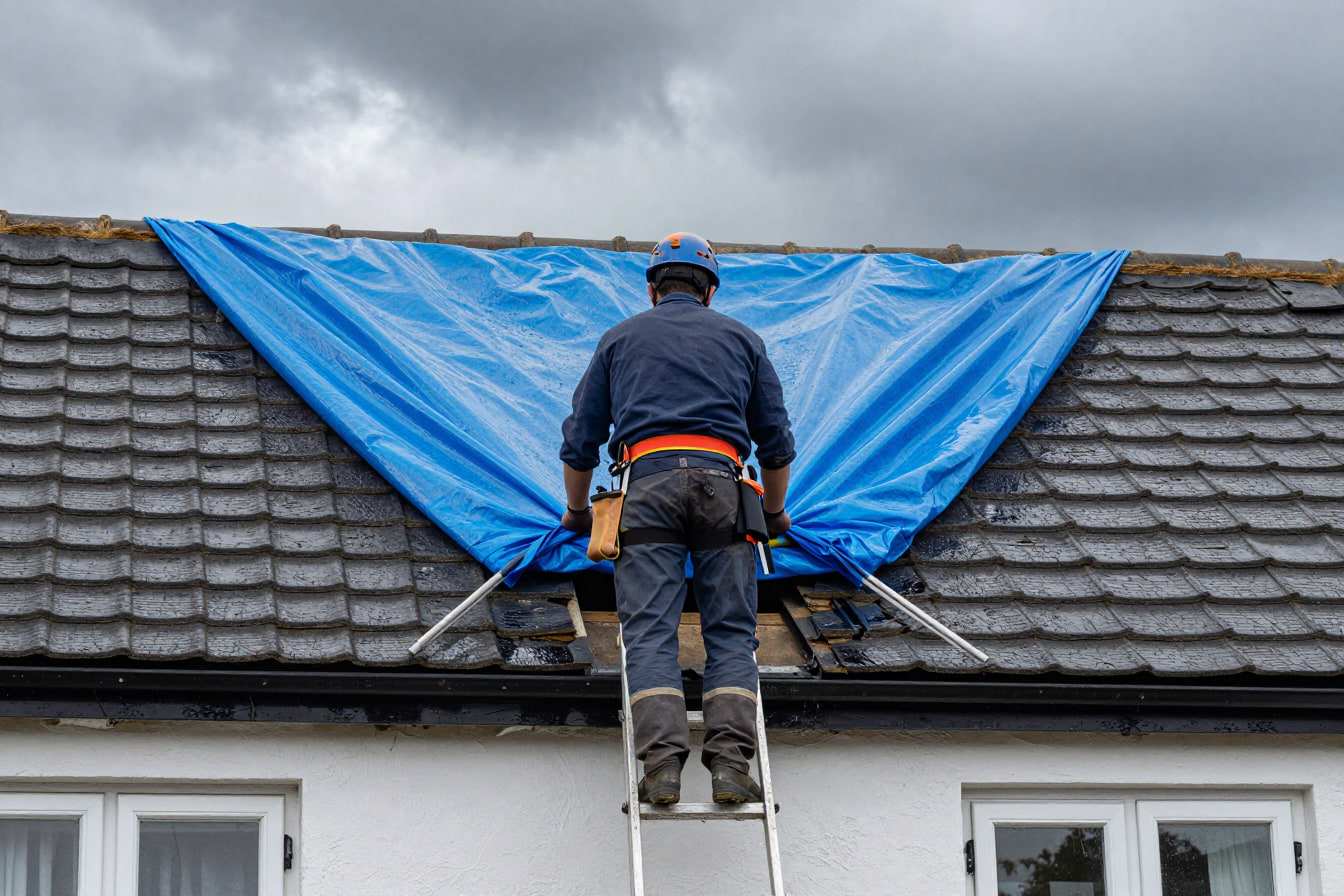
- Urgent jobs prioritised, Mon–Fri 8am–5pm
- Temporary make-safe and tarpaulins
- Photos and notes for your insurer
- Permanent repairs with a 5-year warranty
- Honest advice on what can wait
Emergency roof repairs in Cambridge: how we work
When your roof is leaking or the wind has just stripped part of a ridge, you want a straight answer. Roofing Cambridge carries out emergency roof repairs in Cambridge and the surrounding villages during our opening hours, Monday to Friday, 8am to 5pm, and active leaks and storm damage go to the front of the queue. We’re a local roofing team, not a call centre, and we don’t run a night-time or weekend call-out service. We would rather be upfront about that than promise something we can’t deliver.
Out of hours? Leave a message on 01223 902596 or send us the contact form with a few photos, and we’ll call you back first thing on the next working day. Photos help us bring the right materials, so the first visit can often fix more than a tarpaulin would.
What counts as an emergency?
Anything where water is coming in now, or where something could fall on someone. The list on this page covers the usual cases: water through a ceiling, a bulging ceiling, tiles or ridge tiles blown off, flashing torn loose, a loose chimney pot, a ripped flat roof membrane or a branch through the roof.
Plenty of roof problems feel urgent but can safely wait a few days: a stain that has been there for months and hasn’t grown, one slipped tile with no water getting in, moss, or condensation in the loft on a cold morning. If you’re not sure, call and describe what you can see. We’ll tell you honestly whether it needs prioritising or can wait for a normal roof leak repair appointment.
What to do while you wait
- Contain the water. Put buckets and towels under drips, lay plastic sheeting down, and move furniture, rugs and electronics out of the way.
- Protect the electrics. If water is near lights, switches or sockets, switch that circuit off at the consumer unit and don’t touch wet fittings. If you’re unsure, call an electrician.
- Keep clear of a bulging ceiling, and keep children and pets out of the room.
- Photograph everything for your insurer: the damage inside, the roof from the ground or a window, and anything that has fallen. Note the date and time.
- Keep fallen tiles and slates. They help us match the roof, and your insurer may want to see them.
- Call your insurer. Many home policies have a claims or emergency helpline; ask what they need from you.
- Don’t go on the roof. HSE says almost one in five deaths in construction work involve roof work. A wet, windswept roof is no place for a ladder, and you should keep people away from the ground below a damaged chimney or loose ridge.
How we make a roof safe
Our first visit is about stopping the water and removing any danger. Depending on what we find, that means:
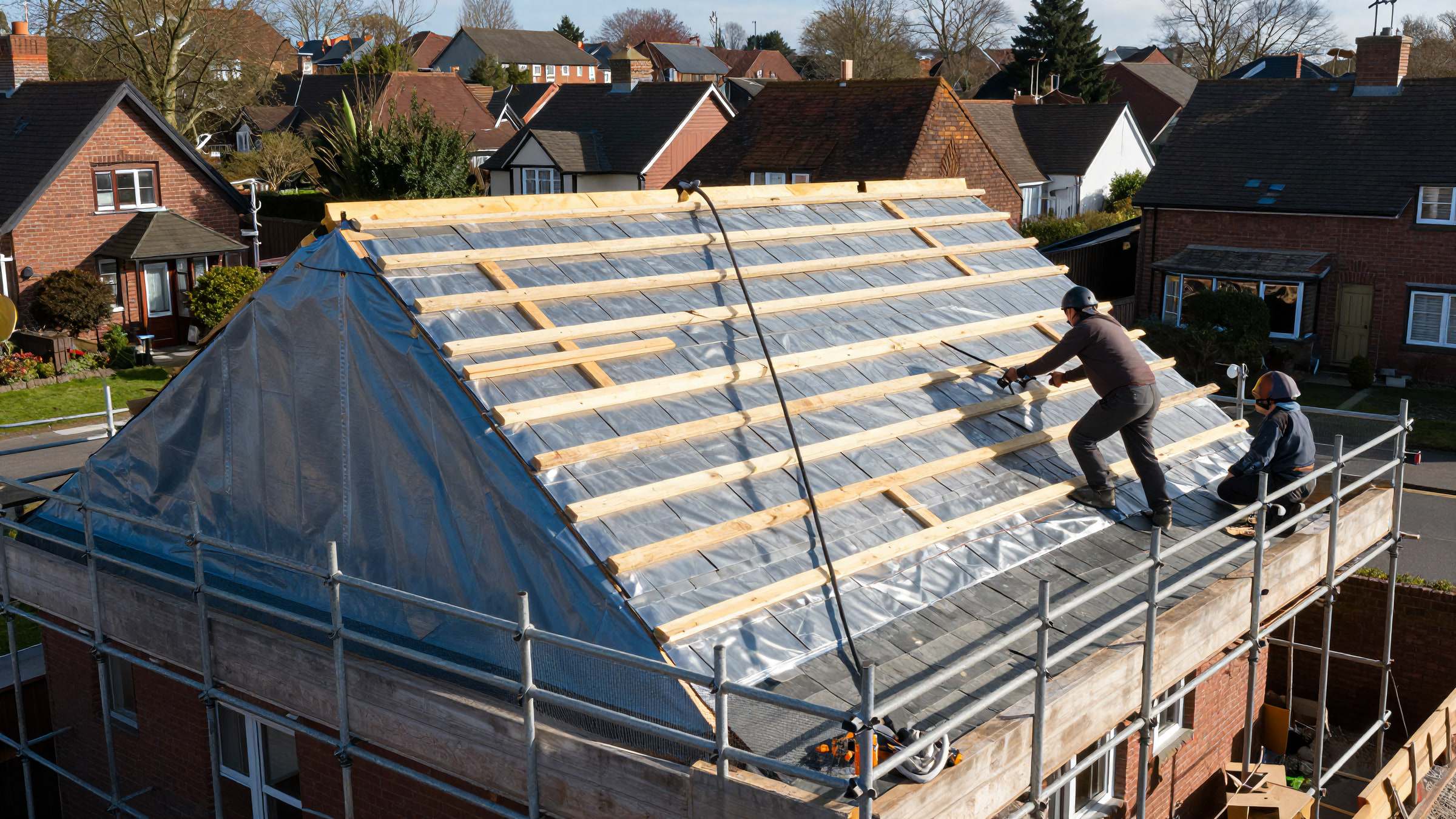
- Tarpaulins: battened down and secured so the wind can’t get underneath, over a damaged slope or a hole.
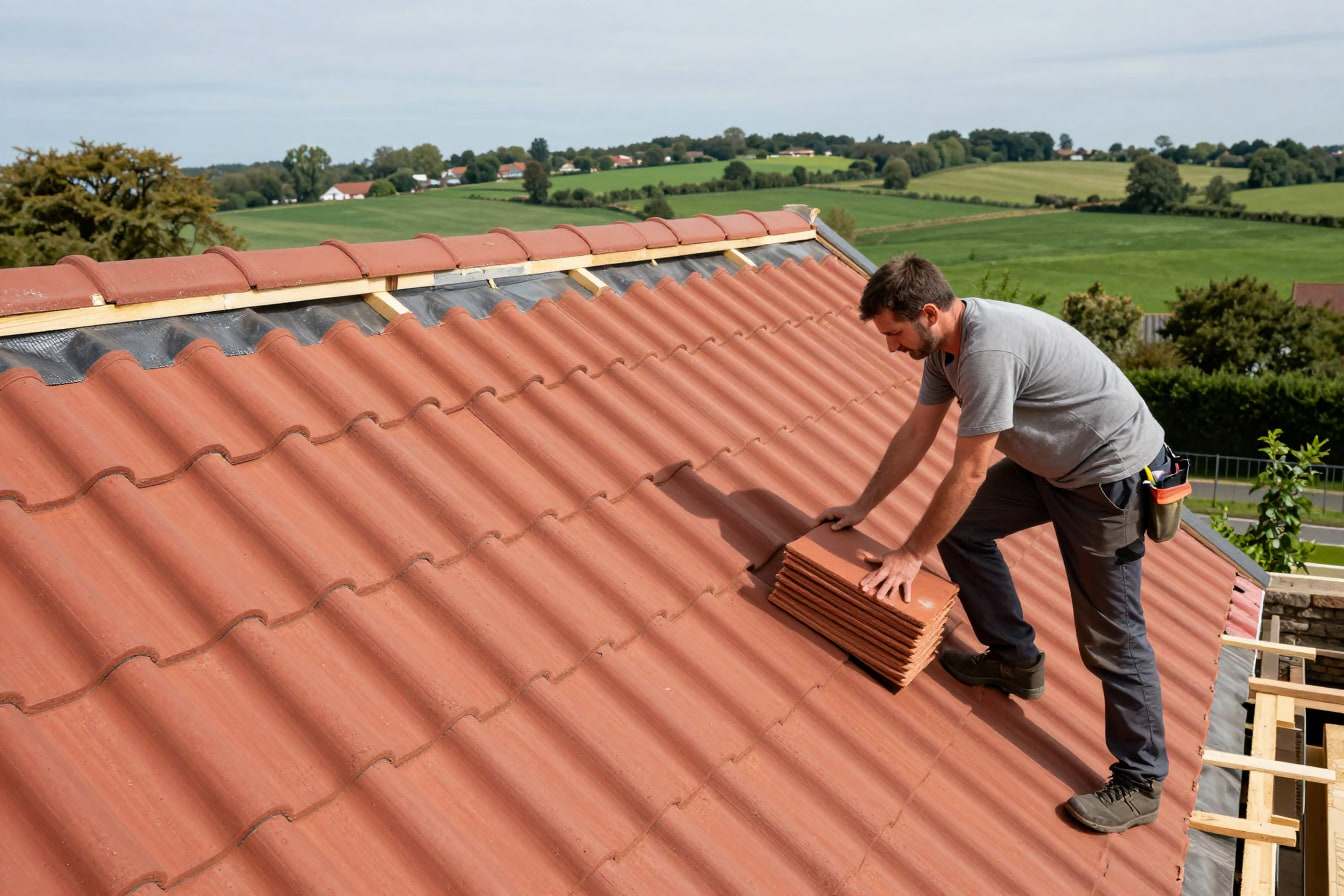
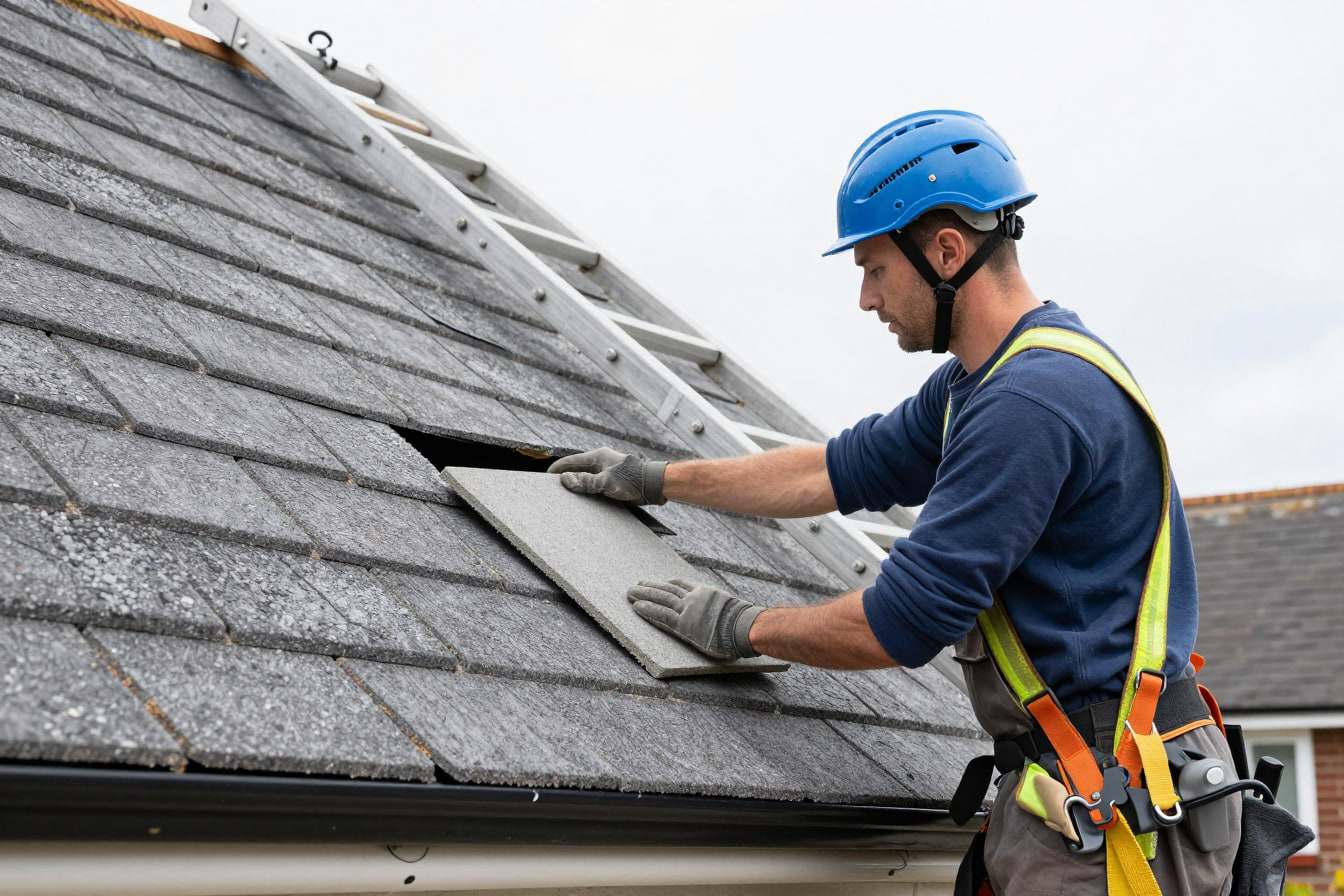
- Refixing or replacing blown tiles and slates, using salvaged ones where they are sound.
- Temporary flat roof patches over splits and lifted membrane edges.
- Taking down loose chimney pots or masonry before they can fall.
- Clearing blocked valleys and gutters that are backing water into the house.
We don’t send anyone onto a roof in high winds. The Confederation of Roofing Contractors treats force 5 winds (19–24 mph) as approaching the safe limit and force 6 as no work at all, so in a storm the first job is often inside the house. Once the roof is safe, we quote the permanent repair in writing, and that repair carries our 5-year warranty.
Storm damage and insurance in Cambridge
East Anglia is the driest region of the UK, but Cambridge still gets its share of storms. Ahead of Storm Eunice in February 2022, an amber wind warning covered Cambridgeshire, forecasting gusts of 60–70 mph and warning that damage to buildings, with roofs blown off, was likely. Storm Amy brought a yellow wind warning to the county in October 2025.
The damage we see after a storm is usually lifted ridge tiles, slipped slates along exposed verges, torn or lifted lead flashings, flat roof edges peeled back, and chimney pots knocked loose. Storms also find old weaknesses: a ridge with tired mortar or slates with corroded nails will go first.
For an insurance claim, the evidence matters. Dated photos, the fallen materials and a written description of the damage from a roofer help an insurer see whether it was sudden storm damage or gradual wear. We can provide all three, along with a written quote for the repair.
How much does an emergency roof repair cost?
Checkatrade’s 2026 data for Cambridge puts emergency roofing jobs at £350–£1,011, with an average of about £586, and notes that emergency work is typically priced higher than scheduled maintenance. Simple fixes sit at the lower end: around £200 to replace storm-damaged tiles, £250 for new flashing and about £100 per m² for an emergency flat roof repair. Scaffolding, a high or steep roof and extensive damage push the price up. The table on this page gives typical figures, and our roofing costs hub covers the wider picture.
We always tell you the price before we start, and we’ll say if the make-safe is all you need for now.
After the emergency
Once the roof is safe and repaired, it’s worth a proper look at the rest of it. Storms tend to expose problems that were already there, so we can photograph the whole roof by drone without scaffolding and show you anything else that needs attention before the next bad spell of weather. Our roof inspections and drone surveys page explains how that works, and roof repairs and replacements covers the longer-term options.
| Job | Typical price |
|---|---|
| Emergency roofing job (typical Cambridge range) | £350–£1,011 |
| Replace storm-damaged roof tiles | about £200 |
| Replace torn or lost flashing | about £250 |
| Emergency flat roof repair | about £100 per m² |
| Replace up to 6 ridge tiles | about £180 |
| Re-bed up to 10 m of ridge | about £500 |
| Roofer labour in Cambridge | £35–£45 per hour |
Guide prices from Checkatrade's Cambridge emergency roofing and roofer data and its 2026 roof tile replacement guide, excluding VAT and scaffolding. Checkatrade notes that emergency work is typically priced higher than scheduled maintenance. We confirm the price before any work starts. Get your exact price.
What counts as a roofing emergency
- Water coming through a ceiling or a light fitting
- A ceiling bulging or sagging with water
- Tiles, slates or ridge tiles blown off in a storm
- Lead flashing torn loose or flapping in the wind
- A chimney pot, cowl or loose bricks at risk of falling
- A flat roof membrane ripped or lifted by the wind
- A fallen branch through the roof
- Gutters hanging off after a storm