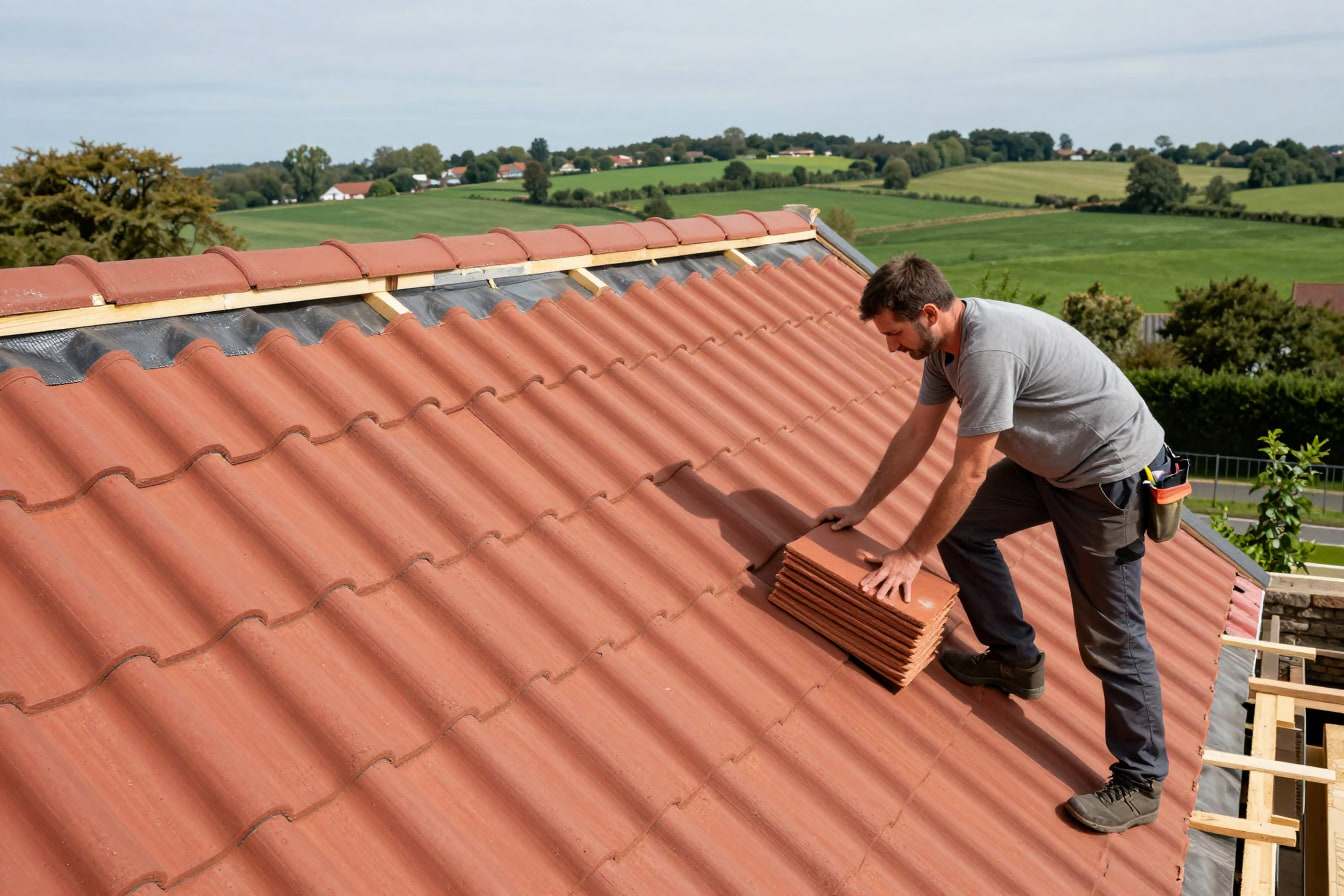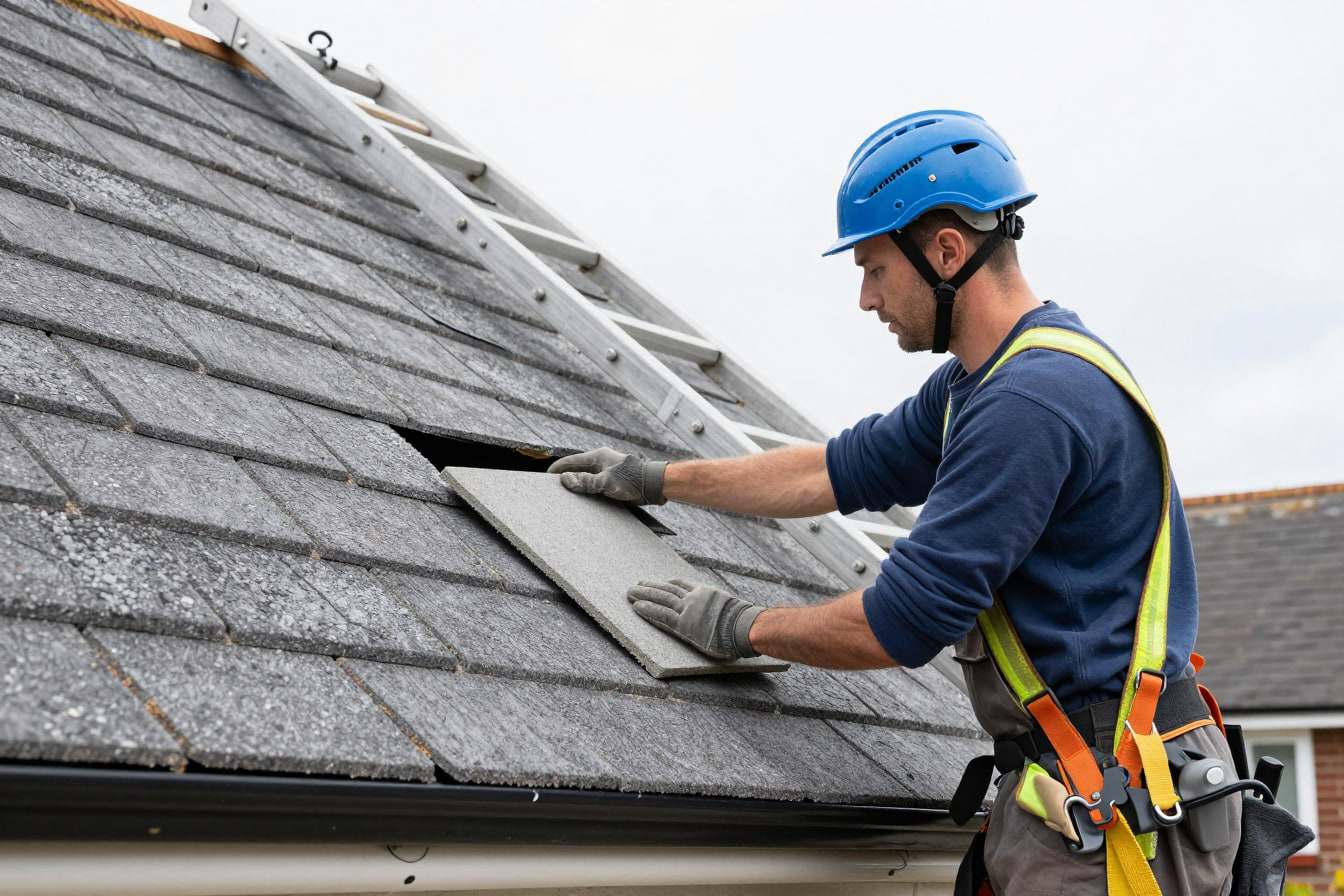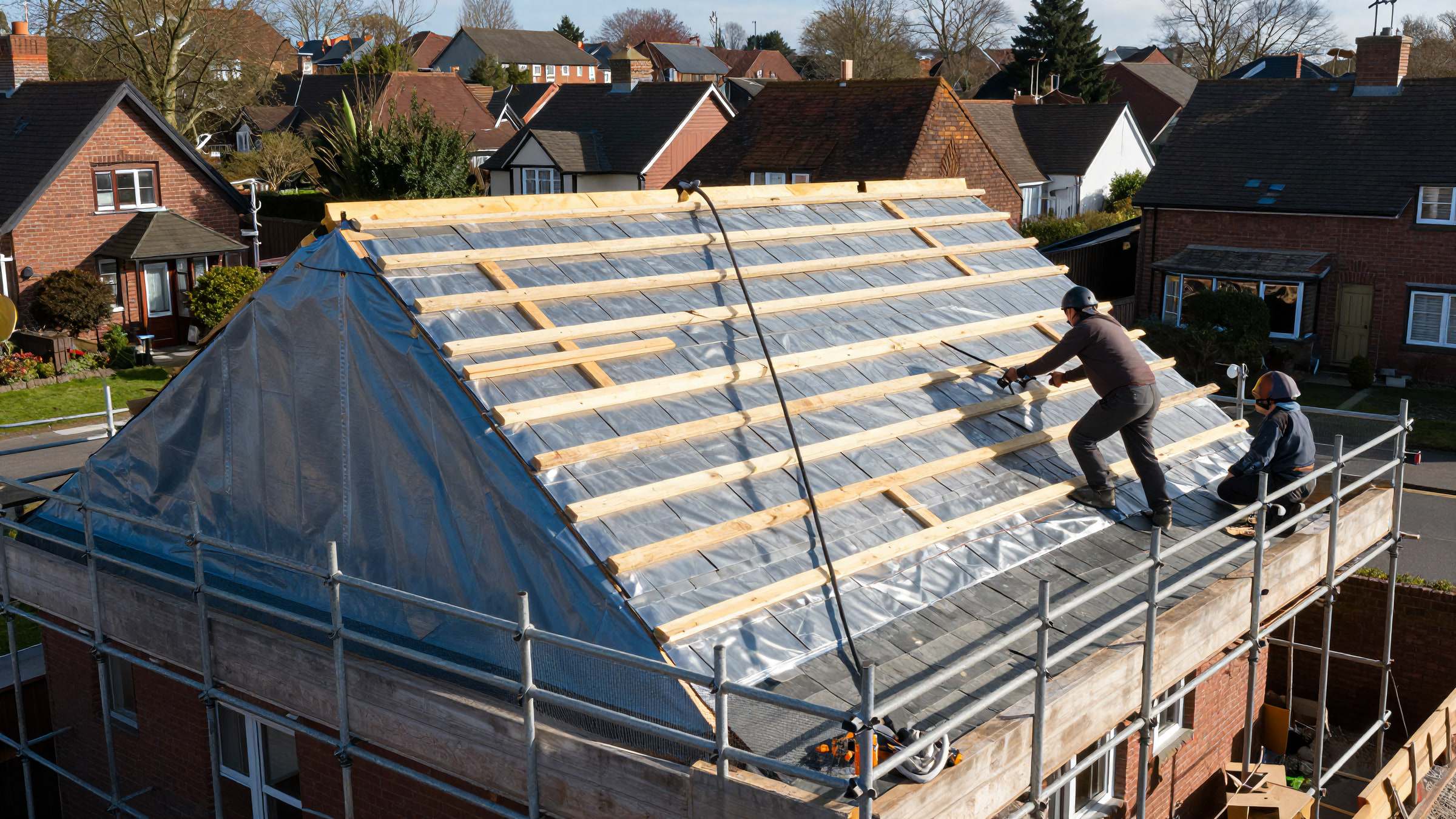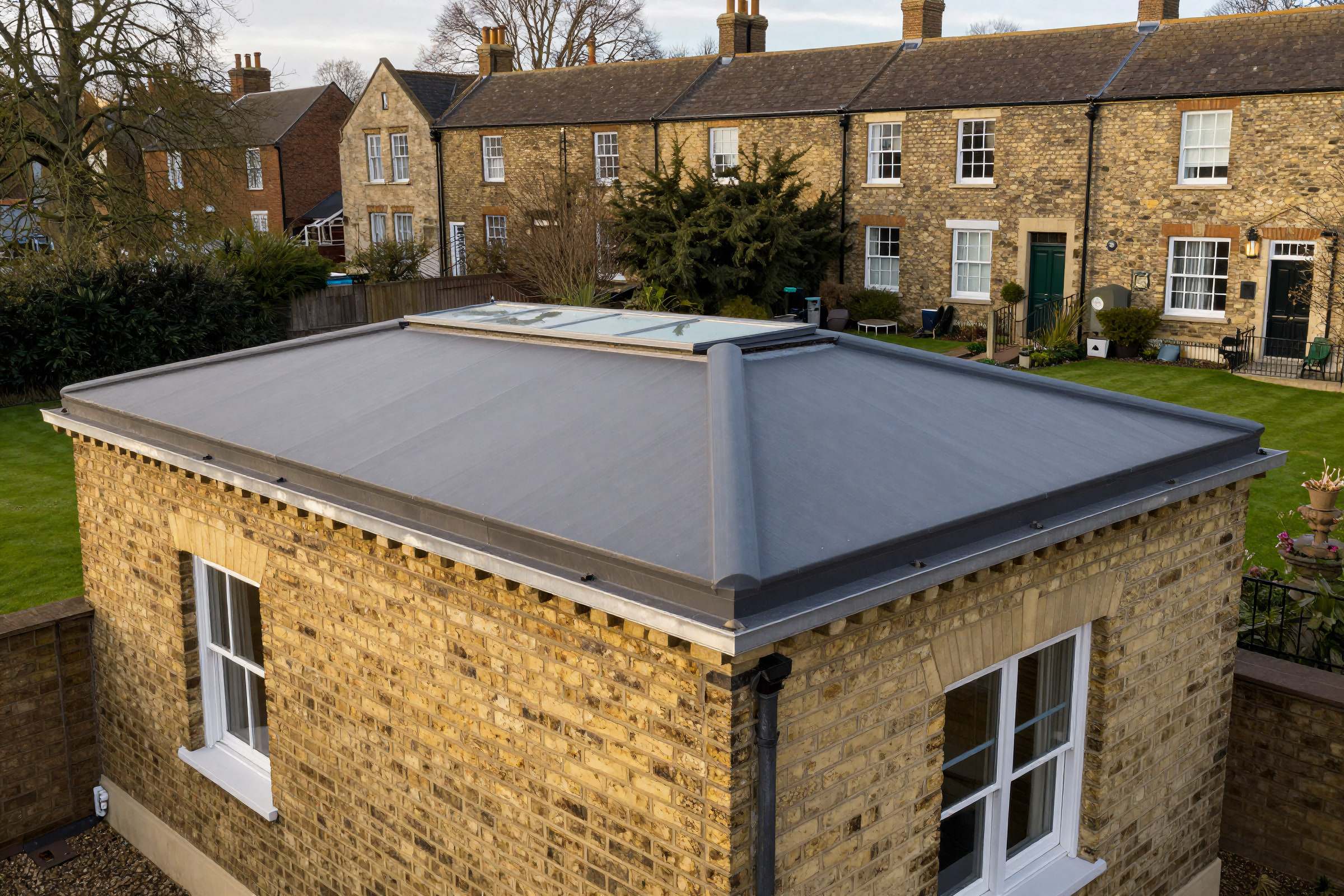
- Leak tracing by elimination
- Loft, ladder & drone checks
- Flashings, valleys & upstands
- Photos of the cause and the fix
- 5-year warranty on repairs
Roof leak repairs in Cambridge
A roof leak is rarely where the stain is. When we’re called out for roof leak repairs in Cambridge, the most useful thing we do is find the real cause before anyone picks up a trowel, because a patch in the wrong place costs you twice. We trace leaks on Victorian slate terraces, post-war tiled semis, flat-roofed extensions and commercial buildings across the city and the surrounding villages, then fix them with materials that match. Every repair carries our 5-year warranty.
Leaking right now? What to do first
- Catch the water. Buckets and towels under the drip, and move furniture, rugs and electronics out of the way.
- Think about the electrics. If water is near a light fitting or socket, switch that circuit off at the consumer unit and don’t touch anything wet.
- Stay out from under a sagging ceiling. Water can build up above plaster; if it bulges, keep everyone out of that room until it has been made safe.
- Take photos inside, and of the roof from the ground, with the date. Your insurer may ask for them.
- Stay off the roof. HSE says almost one in five deaths in construction work involve roof work, and wet slates and ladders are a bad mix.
If water is pouring in or a storm has just damaged the roof, our emergency roof repairs page explains how we prioritise urgent jobs. Otherwise, call 01223 902596, Monday to Friday, 8am to 5pm.
Why do roof leaks travel?
Water seldom drops straight down. Once it gets past the slates or tiles, it runs along the top of the underlay, down the rafters, along battens and pipes, and drips off the first low point it finds, which is often a ceiling joint or a light fitting some way from the hole. On older slate roofs with little or no underlay, it soaks into the timbers and spreads. On flat roofs, water can track under the membrane and along the deck before it finds a gap in the ceiling.
That is why patching the roof directly above a stain so often fails, and why “it’s probably the tiles” is not a diagnosis.
How we trace a leak: a process of elimination
- Ask about the weather. Does it leak in every shower, only in long downpours, only when the wind is from one direction, or after a frost? Each points to a different fault.
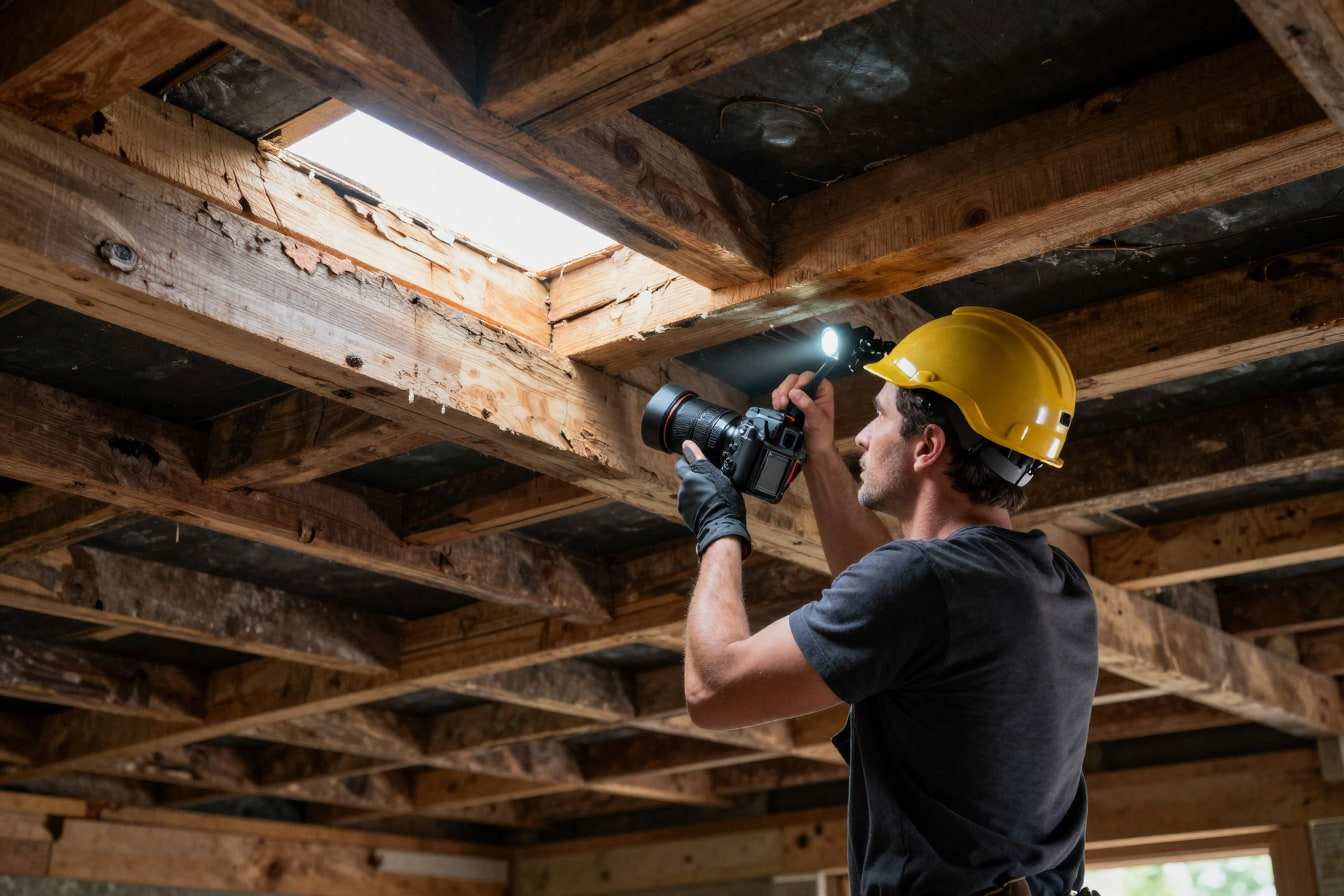
- Look inside first. In the loft we follow the water marks on timber and underlay uphill to where they start, and check for condensation and plumbing leaks that can look like roof leaks.
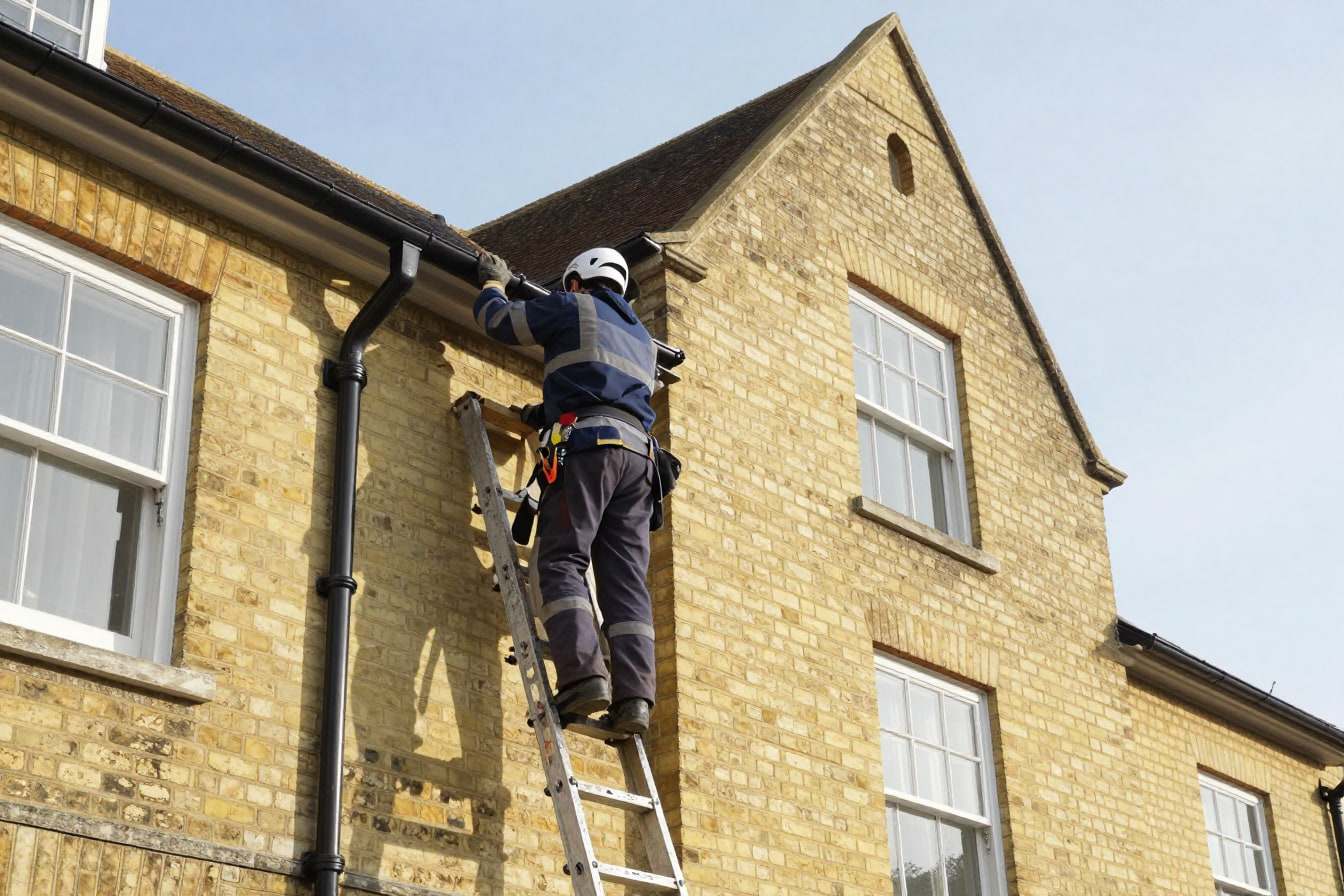
- Inspect the roof above. By ladder for single-storey roofs and close details; by drone for upper slopes, chimneys and valleys, so nobody needs a scaffold just to look. Our roof inspections and drone surveys page shows what that involves.
- Test one section at a time. If the cause still isn’t obvious, we run water over one small area at a time, starting low and working upwards, while someone watches inside.
- Show you before we fix it. You get photos of the cause, the repair options and a price in writing.
Where do roofs in Cambridge usually leak?
Chimney flashings
Checkatrade notes that chimney flashing problems are a leading cause of roof leaks. Lead aprons, step flashings and back gutters lift, split or lose their pointing, and on terraces with prominent stacks it is the first place we look. See chimney repairs for the fixes.
Valleys
Where two slopes meet, the valley carries more water than any other part of the roof. Lead valleys split with age, mortar-bedded valley tiles crack, and leaves and moss build up into a dam that pushes water sideways under the tiles.
Slipped slates and tiles
Many Cambridge terraces in Romsey, Petersfield, Mill Road and Chesterton still have their original Welsh slate. Local planning guidance notes that slates mainly fail through corroded fixings, often called nail sickness, so slates slide out of place one by one. On tiled roofs, rusting fixings and decaying battens cause the same slippage. With around 40 days of air frost a year at the Met Office’s Cambridge station, cracked ridge and verge mortar is common too.
Flat roof upstands and edges
On extensions, most leaks start where the flat roof meets the wall, at the upstand and its flashing, or around rooflight kerbs, outlets and edge trims, rather than in the middle of the roof. Our flat roofing page covers repair and replacement.
Velux windows and rooflights
Failed flashing kits, perished seals and debris trapped above the window are the usual culprits. Condensation running down the glass is often mistaken for a leak, so we check which it is first. Our Velux and skylights page covers repairs and replacements.
Ridges, soil pipes and gutters
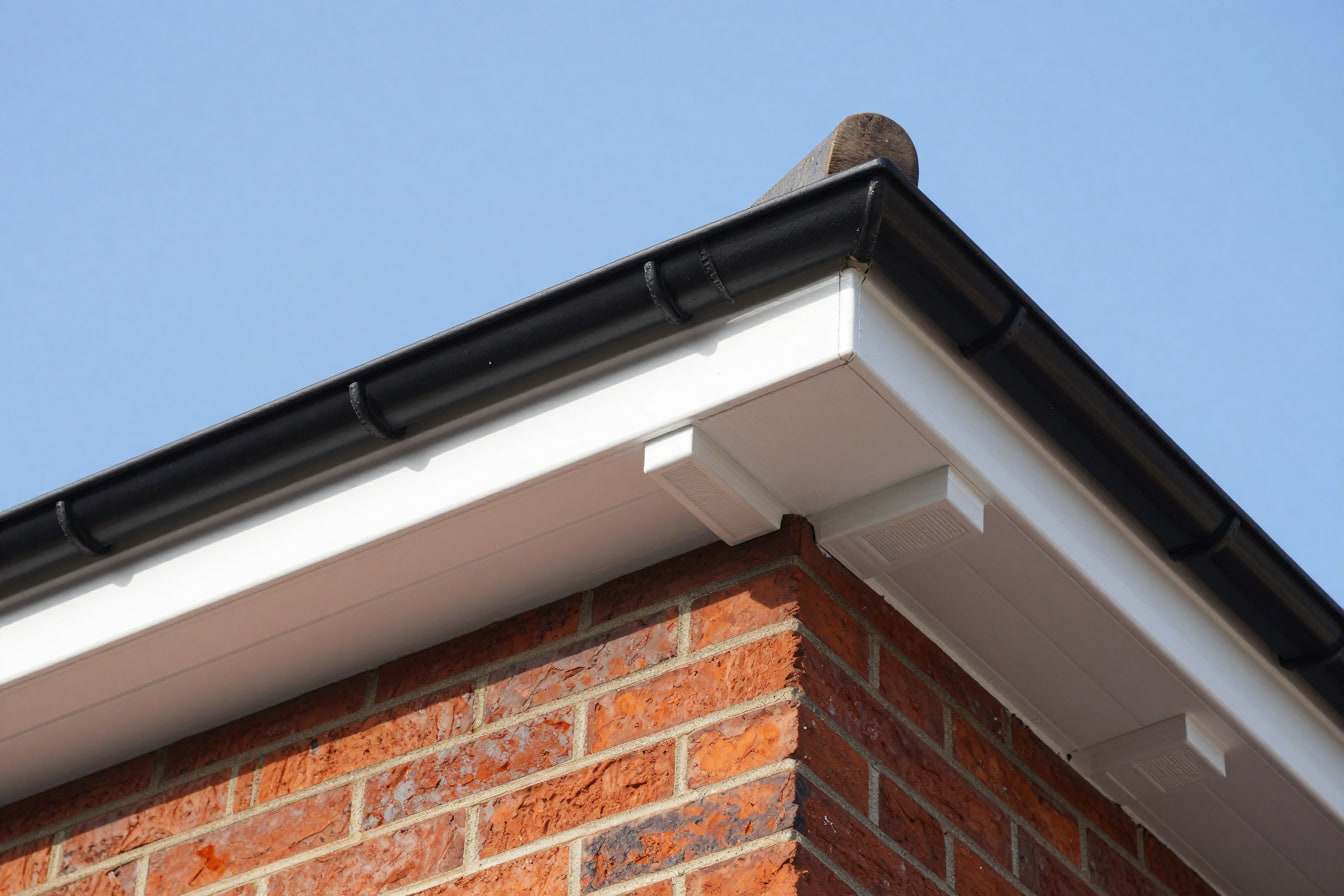
Cracked ridge mortar, open verges, perished collars around soil vent pipes and gutters overflowing back into the wall all let water in.
When it isn’t the roof
Part of honest leak tracing is telling you when you don’t need a roofer. Wet patches can come from condensation in a poorly ventilated loft (damp underlay on cold, dry mornings), a leaking cold water tank or pipe, an overflowing gutter soaking a wall, failed render on a gable, or an extractor duct dripping condensation into the loft. If that is what we find, we’ll say so and tell you who to call.
How much does a roof leak repair cost?
Checkatrade’s 2026 data for Cambridge puts typical roofing repairs at £583–£2,284, with an average of about £1,178, and flat roof repairs at £584–£1,738. Many leak repairs cost less than that: replacing up to five slipped tiles is about £170–£225, and new lead flashing is £50–£70 per metre. Roofer labour in Cambridge runs at about £35–£45 an hour.
What moves the price is mostly access. A leak on a single-storey extension can usually be fixed from a ladder; a chimney or a second-floor valley may need scaffold. The table on this page lists typical prices, and our roofing costs hub covers every type of job.
Our leak repair process
- Free inspection: loft, ladder and drone as needed.
- Written quote with photos: the cause, the fix and the price, with options where there are any.
- The repair: matched slates or tiles (we reuse sound originals where we can), correct lead codes and properly bonded membranes.
- Check and hand over: we re-test where practical, show you photos of the finished work and confirm the 5-year warranty in writing.
| Job | Typical price | Typical time |
|---|---|---|
| Replace up to 5 slipped or cracked tiles | £170–£225 | 2–3 hours |
| Renew lead flashing at a wall abutment (Code 5) | £50–£70 per metre | — |
| Renew stepped lead flashing | £80–£120 per metre | — |
| Patch repair to chimney flashing (no scaffold) | about £250 | 4–8 hours |
| Replace valley tiles (up to 4 m) | about £500 | — |
| Replace roof window seals | £65–£150 | — |
| Flat roof leak repair (typical Cambridge job) | £584–£1,738 | 1–2 days |
Guide prices from Checkatrade's Cambridge roofing data and its 2026 roof repair, tile replacement, chimney flashing and Velux repair cost guides, excluding VAT and scaffolding unless stated. We inspect and quote free of charge, then confirm the repair price in writing before we start. Get your exact price.
Signs you have a roof leak
- Brown rings or damp patches on a ceiling, often after heavy or wind-driven rain
- Drips, wet timber or stained underlay in the loft
- Peeling paint or damp on the wall below a chimney or flat roof
- A musty smell or mould in an upstairs corner
- Daylight showing through the roof from inside the loft
- Pieces of slate or tile in the gutter or on the ground
- Water running down the inside of a rooflight frame