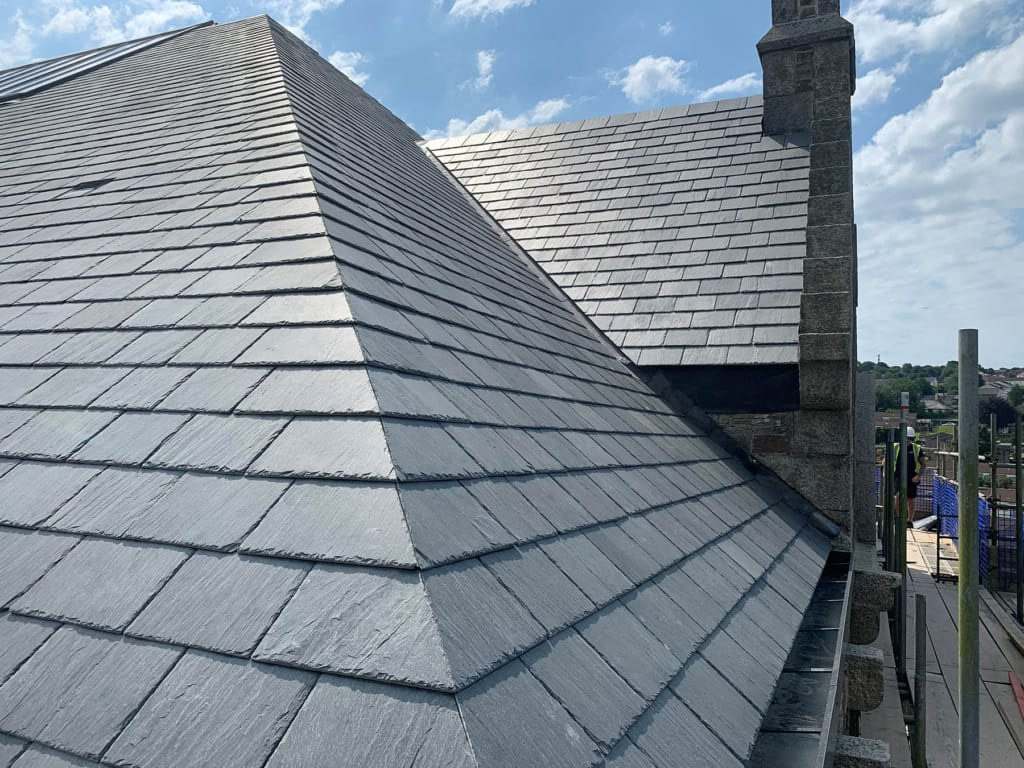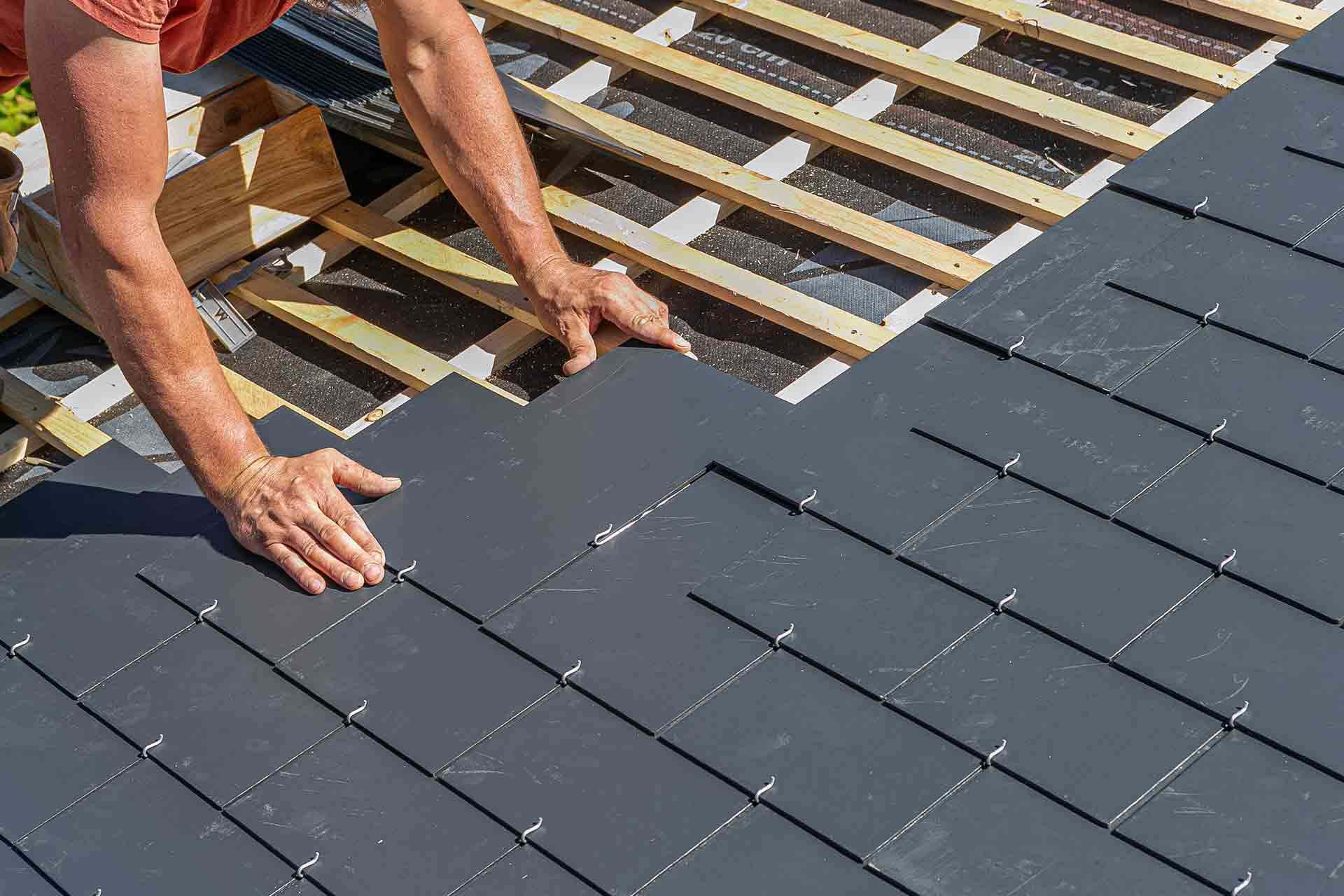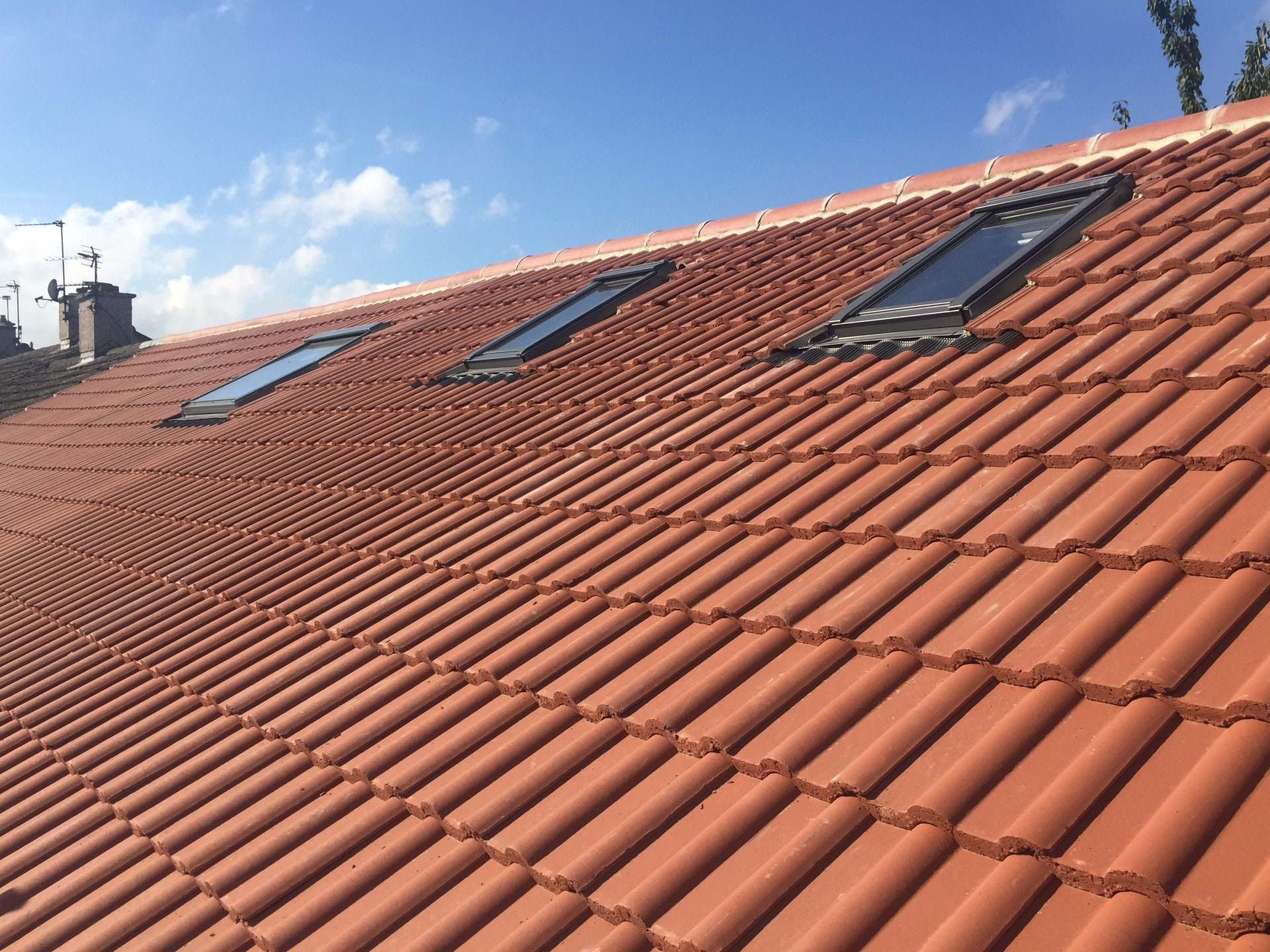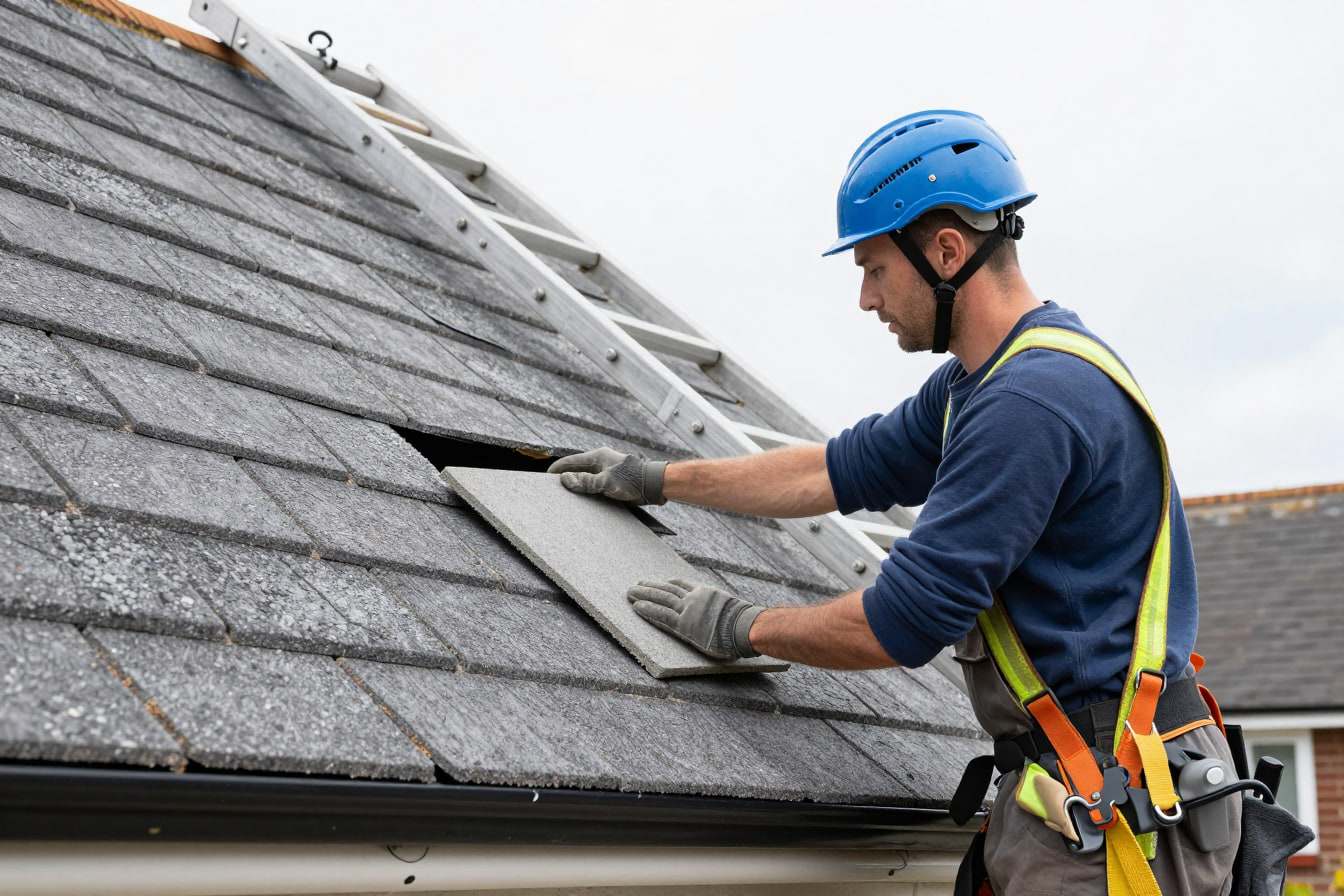
- Welsh and reclaimed slate
- Clay and concrete tile matching
- Ridge re-bedding & dry ridge
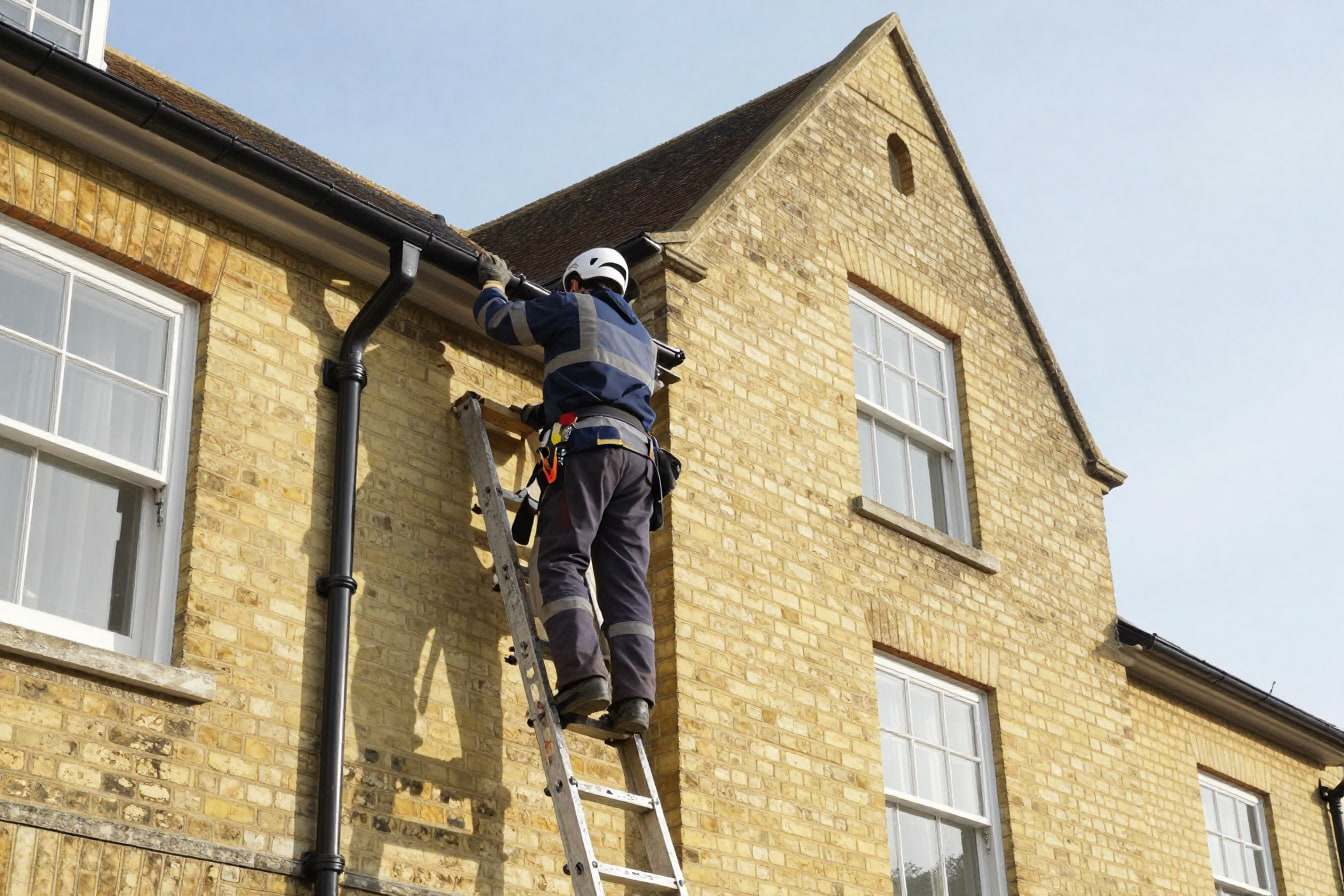
- Drone and ladder surveys
- 5-year warranty on repairs
Roof tiling and roof slates Cambridge
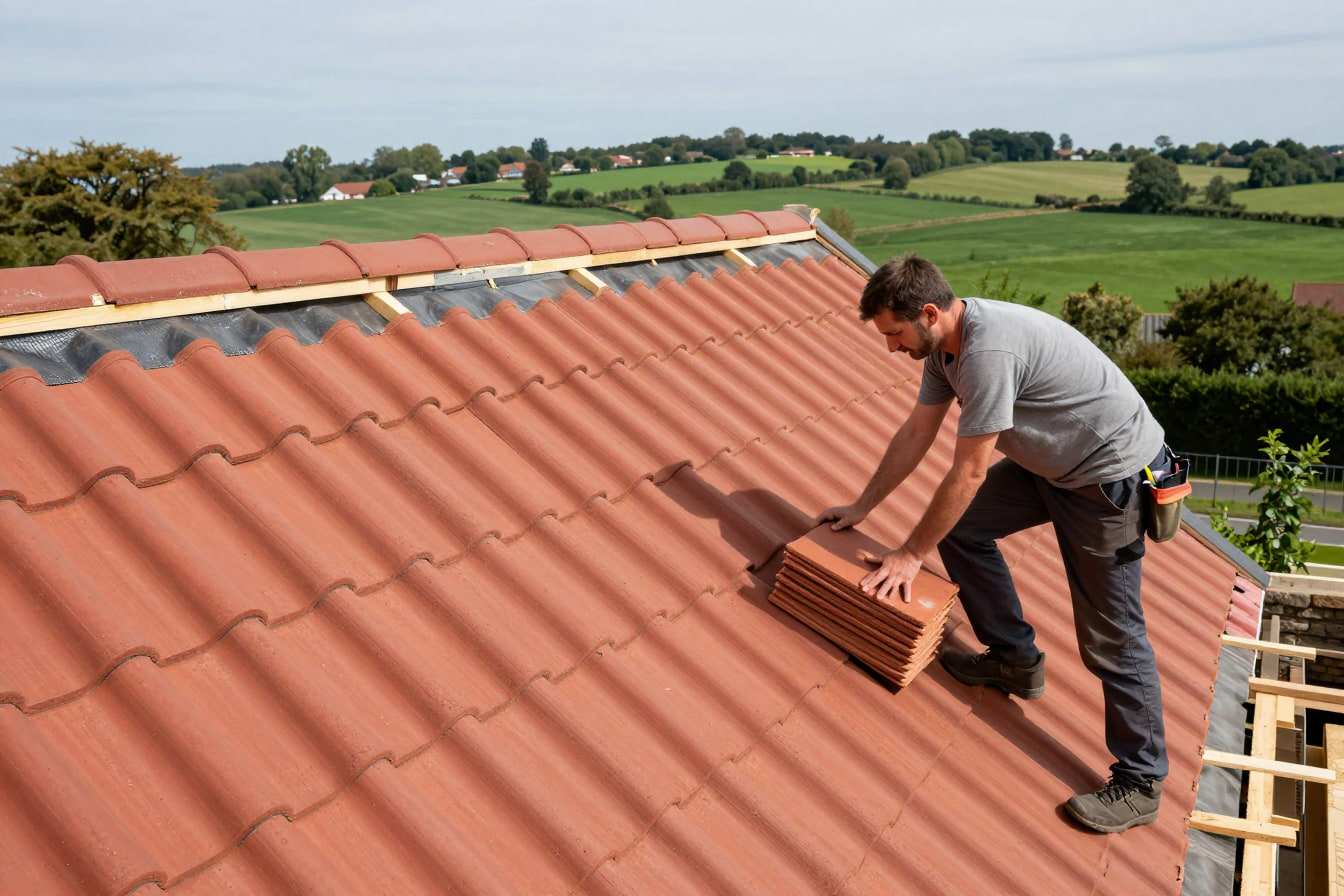
As one of the most popular roofing solutions, opting for a tiled or slate roof is a choice you won’t regret. These roofs offer a balance of practicality and a modern, aesthetically pleasing look. They are simple to install and cost-effective, making them an ideal choice for many properties.
At Roofing Cambridge, we are experts in installing tiled and slate roofs. We take into consideration the size of your property and your daily schedule to ensure that the work is completed swiftly and with minimal disruption to your home or business.
Roofing Tiling and Slates Cambridge – roof repairs & maintenance
While roof tiling and slate roofing are beautiful, they are not immune to issues. Inclement weather, for instance, can lead to broken and displaced tiles. If you encounter these problems, don’t worry – Roofing Cambridge offers a first-class repair and maintenance service. We quickly identify the source of the problem and use the correct materials to ensure the repair is done right. Having worked on thousands of tiled roofs over the years, you can have complete faith in our expert team.
If you’re interested in learning more about the tiling and slate roofing services provided by Roofing Cambridge, don’t hesitate to get in touch. We are here to offer you the best solutions tailored to your roofing needs.
Tiles and slates on Cambridge roofs
You can often date a Cambridge street by its roof. The Victorian and Edwardian terraces around Mill Road, Romsey, Petersfield, De Freville and old Chesterton are pale gault brick under natural Welsh slate, carried here by the railway after it reached Cambridge in 1845. Some of the earlier Chesterton buildings have plain clay tiles. The post-war council estates in Arbury, King’s Hedges and around The Grove mostly carry concrete interlocking tiles, which the council’s own reports call “contoured roof tiles”.
Each material fails in its own way, so the first job on any survey is working out exactly what is on your roof and how it is fixed.
Slate, clay or concrete: what’s the difference?
| Covering | Where you’ll see it in Cambridge | Minimum pitch | Typical lifespan | Watch out for |
|---|---|---|---|---|
| Natural (Welsh) slate | Victorian and Edwardian terraces | 25° | 100+ years; the fixings fail first | Nail sickness, slipped slates |
| Clay plain tiles | Older Chesterton buildings, period homes | 40° | 50–60 years | Frost damage, especially on machine-made tiles |
| Concrete interlocking tiles | Post-war estates in Arbury, King’s Hedges and Chesterton | Varies by profile | 25–40 years | Porous, eroded surface; discontinued profiles |
Lifespans are typical ranges from Checkatrade’s 2026 guides; minimum pitches come from South Cambridgeshire’s listed buildings guidance. If you are weighing up a change of material, our slate vs tile guide compares cost, weight and looks.
Why do tiles and slates slip?
Slipped tiles are rarely the tile’s fault. South Cambridgeshire’s guidance on listed buildings puts it plainly: one of the most common problems on a tiled roof is slippage caused by rusting metal fixings and decaying battens. The tile itself is usually fine and can go straight back on.
Cambridge weather adds to it. The Met Office records around 40 days of air frost a year at its Cambridge station, mostly between December and February. Water that gets into a cracked tile or old mortar freezes and expands, and machine-made tiles are more prone to this frost damage than hand-made ones. Then there are the storms: before Storm Eunice in February 2022, Cambridgeshire was under an amber warning for gusts of 60–70 mph, and a roof with tired fixings is the first to lose tiles.
A handful of slipped tiles is a small job. If they keep slipping across the roof, the battens or fixings are failing and patching won’t hold for long.
Nail sickness on Victorian slate roofs
Welsh slate lasts for generations. What gives up first is the iron nails holding each slate to its batten. When they rust through, slates slide out of line, crack or drop into the gutter. Roofers call it nail sickness, and it is why so many Cambridge terraces now need attention: the council’s Mill Road appraisal notes that many of the original slate roofs there need replacement.
A few loose slates can be refixed individually with a metal clip, known as a tingle. If nail sickness has spread across a slope, the honest answer is to strip it, save every sound slate and re-lay them on new battens and membrane with aluminium alloy or copper nails, as conservation guidance recommends. Topping up with matching reclaimed slate keeps your roof in step with its neighbours, which matters on terraces where one roof runs across several houses.
Where front doors open straight onto the pavement, a re-slate needs a pavement scaffold and a Cambridgeshire County Council licence, which takes at least 15 working days; we build that into the programme.
Ridge tiles: re-bedding or a dry ridge?
Ridge tiles along the top of the roof are traditionally bedded in mortar. After years of frost and summer heat the mortar cracks, the tiles loosen and water gets in. There are two ways to fix it:
- Re-bedding – lifting the ridge tiles, clearing the old mortar and bedding them on fresh mortar. It suits period roofs where the traditional look matters, and it is how decorative terracotta ridges, like those on many De Freville houses, are saved and reset.
- Dry ridge – fixing each ridge tile mechanically with clips or screws over a ridge roll, with no mortar to crack. It is low-maintenance and suits most concrete-tile roofs on post-war and modern homes.
The same choice applies to hips, and to gable edges, where a dry verge replaces mortared verges.
Concrete interlocking tiles on post-war estates
Arbury was built by the council from 1957 and King’s Hedges from 1967, and many homes there still carry their original concrete tiles. Concrete wears rather than breaks: the surface erodes, the tiles absorb more water, moss takes hold and the edges crumble. With a typical life of 25–40 years, plenty of estate roofs are at or past that point.
Single tiles are easy to replace while the profile is still made. Where it has been discontinued, we find reclaimed matches or move sound tiles from a hidden slope to the front. If tiles are failing everywhere, a full re-tile is better value than repeated repairs; see new roof installation.
Swapping slate for concrete is rarely wise on period streets: a covering that adds 15% or more to the roof’s weight needs Building Regulations approval, and the council’s De Freville appraisal calls such swaps out of place.
Full re-tiling and re-slating
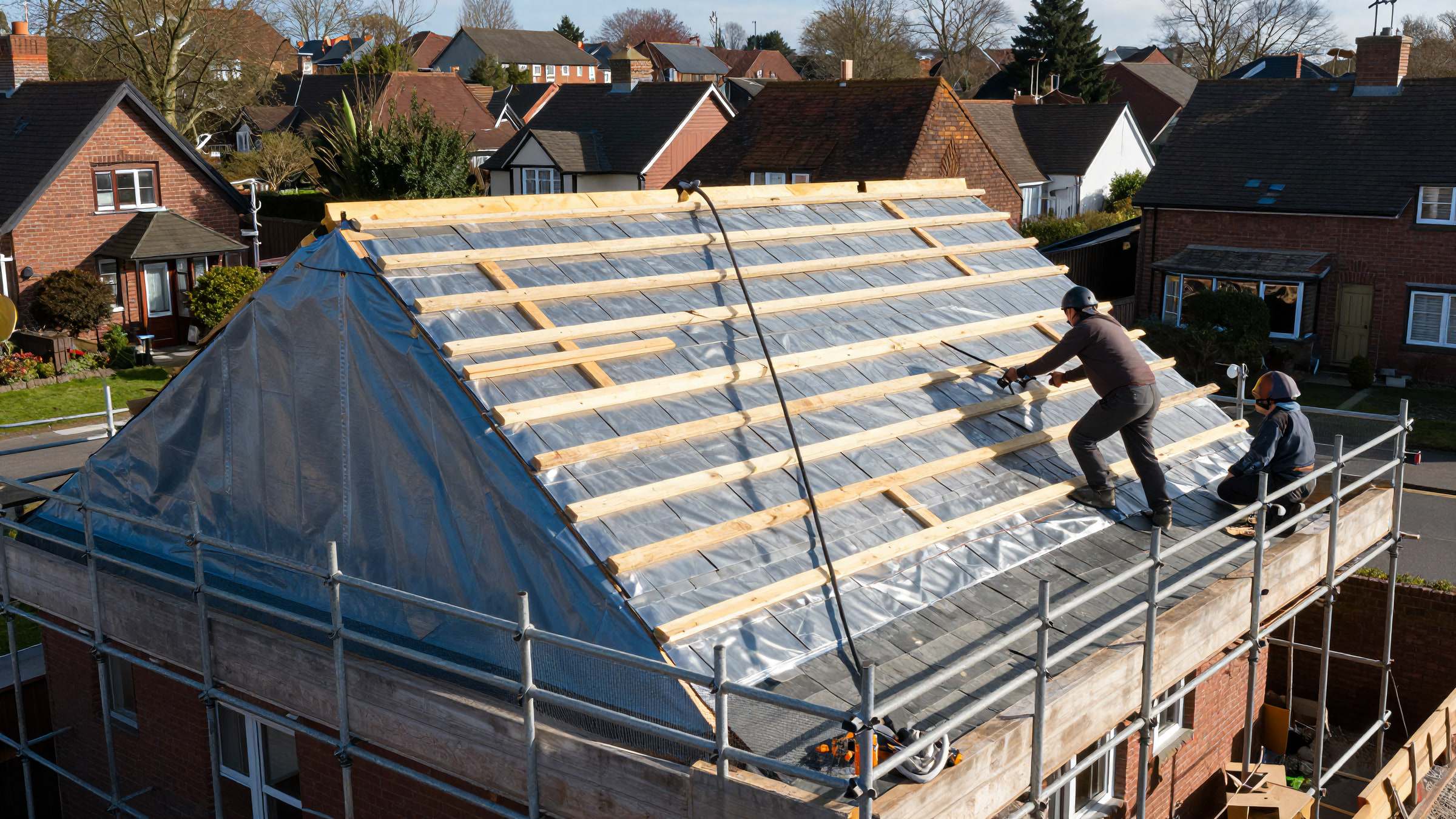
When repairs stop making sense, we strip the slope or the whole roof, check the rafters, fit new breathable membrane and battens, and re-lay the slates or new tiles with proper ridges, verges and fixings. A few rules apply:
- Planning: like-for-like re-roofing usually needs no planning permission, even in most of Cambridge’s 18 conservation areas. Listed buildings need listed building consent. Our planning permission guide covers the exceptions.
- Building Regulations: if more than 50% of the roof is renovated, Approved Document L expects the insulation to be upgraded where practical, and the work is either self-certified through a competent person scheme or notified to building control.
- Bats: they are protected, so if there are signs of bats, stripping waits until advice has been taken.
Leadwork at chimneys, valleys and abutments is usually renewed at the same time; see lead roofing and leadwork.
How much does roof tiling cost in Cambridge?
Small tile repairs are mostly about access: Checkatrade’s 2026 figures run from about £170 for up to five tiles on an easy-to-reach roof to around £500 where scaffolding or hard-to-find tiles are involved. For larger patches, its Cambridge rates run from £83–£120 per m² for concrete tiles and £106–£152 for clay plain tiles to £150–£218 for natural slate.
We confirm a fixed price in writing after a free ladder or drone survey, and tile and slate repairs carry our 5-year warranty. For a wider look at prices, see our roof repair cost guide.
| Job | Typical price | Typical time |
|---|---|---|
| Replace up to 5 slipped or broken tiles (easy access) | about £170 | About 2 hours |
| Replace up to 5 tiles (roof ladder and fresh bedding) | about £225 | About 3 hours |
| Replace up to 5 tiles (scaffold or hard-to-find tiles) | about £500 | About 5 hours |
| Re-bed up to 10 m of ridge tiles | about £500 | — |
| Dry ridge system, per metre | £50–£70 per m | — |
| Concrete tile repair, per m² (small areas) | £83–£120 per m² | — |
| Natural slate repair, per m² (small areas) | £150–£218 per m² | — |
Guide prices from Checkatrade's roof tile replacement and roof repair cost guides and its Cambridge roofing repair rates (2026), excluding VAT and scaffolding unless stated. Every roof is different, so we always fix the price in writing after a free survey. Get your exact price.
Signs your tiles or slates need attention
- Tiles or slates that have slipped, cracked or gone missing
- Slates sliding out of line or turning up in the gutter
- Loose ridge tiles or cracked, crumbling ridge mortar
- Daylight or damp patches visible in the loft
- Concrete tiles that look faded, porous or crumbly at the edges
- Moss lifting the tile edges on a shaded slope
- Damp patches on bedroom ceilings after wind-driven rain