- Chimney flashings & aprons
- Valleys, back gutters & bay roofs
- Lead Codes 3 to 8, used correctly
- Ladder and drone surveys
- 5-year warranty on repairs
Lead roofing & leadwork
Lead is an extremely durable and hardwearing material, so if you want a roof that will stand the test of time, this could be the material for you. Lead is also one of the oldest materials still used in the roofing industry, which in itself demonstrates just how reliable it’s been throughout the centuries. And like felt, lead is a very flexible and workable material, meaning it’s perfect for uniquely shaped buildings and tricky-to-cover areas.
At Roofing Cambridge, we have a great deal of experience when it comes to leadwork and lead roofing, so we’re perfectly positioned to carry out your lead roof construction.
Lead roof repairs & maintenance
While lead roofing is as strong as it gets when it comes to roofing materials, this doesn’t mean it’s immune to wear and tear. Just like any other roof, a lead roof will still require repairs and maintenance every once in a while, so make sure you contact a reputable repair company like Roofing Cambridge when the day comes.
To learn more about our lead roofing services, such as lead roof installation, lead roof maintenance and lead roof repairs, all you have to do is get in touch. We primarily serve Cambridge and the surrounding villages.
Where is lead used on a Cambridge roof?
Most leadwork in Cambridge isn’t a whole lead roof. It is the junctions that keep water out of the rest of the roof, and on the city’s Victorian and Edwardian slate roofs there are a lot of them:
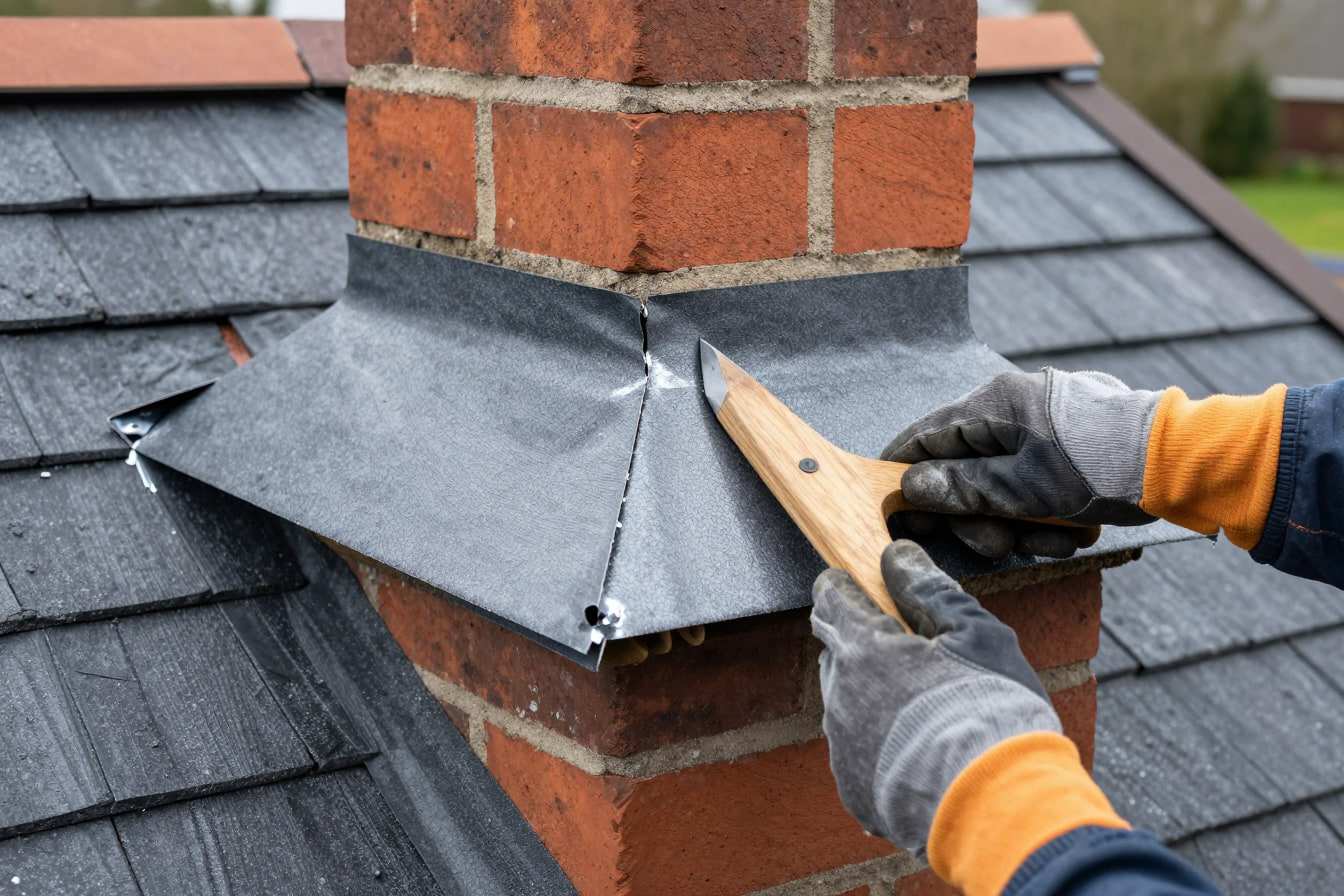
- Chimney flashings and aprons. Stepped flashings up each side of the stack, an apron across the front and a back gutter behind it. Local planning guidance on listed buildings calls a lead flashing and apron “the most satisfactory detail around chimneys”. For pots, flaunching and brickwork, see our chimney repairs page.
- Valleys. Where two slopes meet, an open lead valley carries water down between the slates or tiles.
- Abutments. Where a roof meets a wall, such as a back extension against the main house, lead soakers sit under each slate with a stepped cover flashing over them.
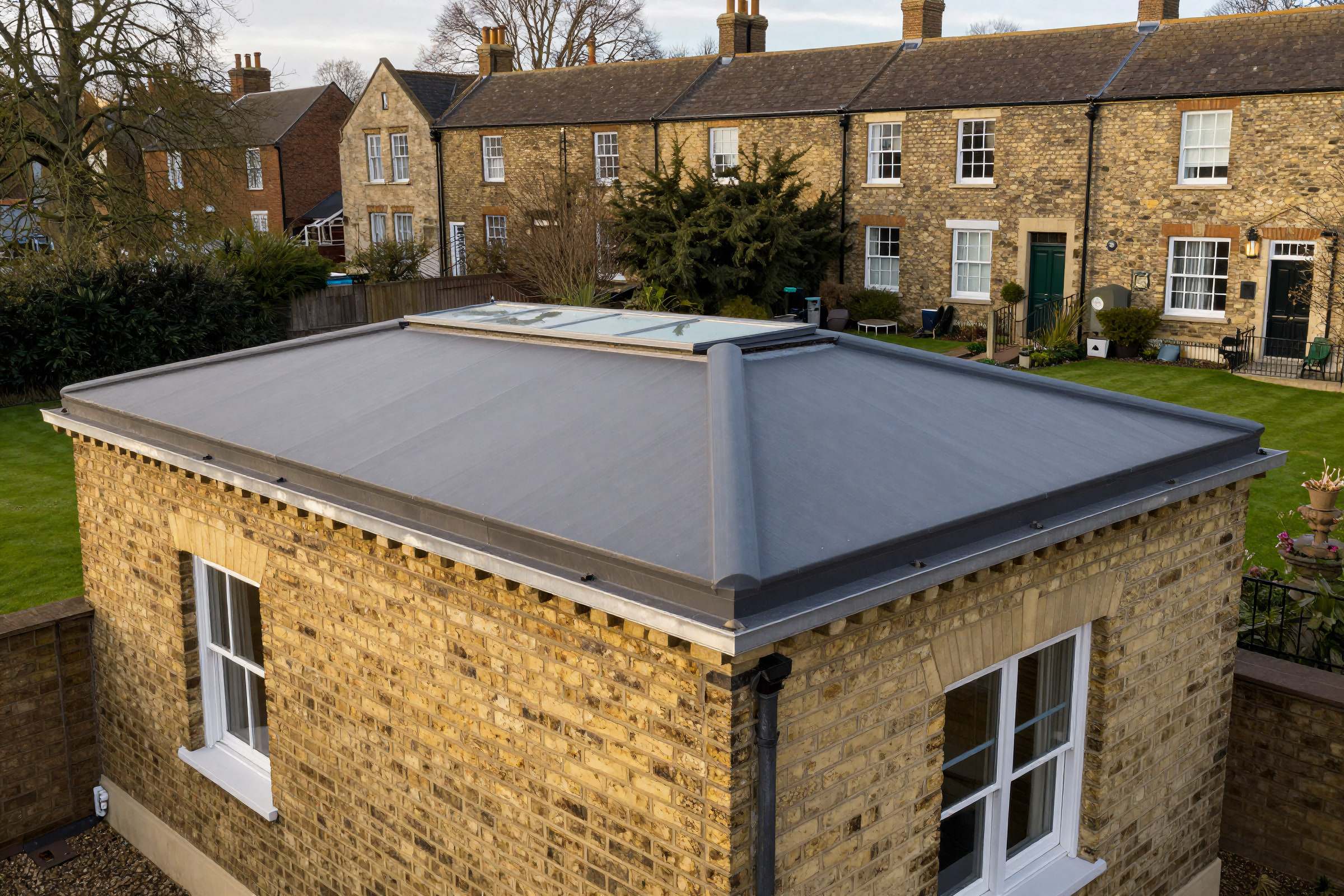
- Bay window and dormer roofs. Small lead roofs over bays, and lead-clad dormer cheeks and tops.
- Ridges and hips. On some Victorian roofs these were finished with lead rolls rather than ridge tiles.
- Back gutters, box gutters and small flats. Behind chimneys and parapets, and over porches and canopies.
Lead codes: which thickness goes where?
Sheet lead is graded by “code”: the higher the number, the thicker and heavier the sheet. Using the right code for each position is one of the main differences between leadwork that lasts and leadwork that cracks.
| Code | Thickness | Weight | Typical uses |
|---|---|---|---|
| Code 3 | 1.32 mm | 14.97 kg/m² | Soakers, and areas covered by thicker flashings |
| Code 4 | 1.80 mm | 20.41 kg/m² | Soakers, most flashings, pitched valleys; the standard flashing grade |
| Code 5 | 2.24 mm | 25.40 kg/m² | Valleys, back gutters, aprons, bay and dormer roofs, small flat roofs |
| Code 6 | 2.65 mm | about 30.1 kg/m² | Lead flat roofs, box gutters, sumps and outlets |
| Code 7 | 3.15 mm | 35.72 kg/m² | Exposed roofs on churches and large historic buildings |
| Code 8 | 3.55 mm | 40.26 kg/m² | Very large roofs such as cathedrals; rarely used on houses |
Thicknesses and uses are from the Associated Lead Mills guide to rolled lead sheet (BS EN 12588) and the Lead Sheet Advisory Service.
Why leadwork fails: the 1.5 m rule
Lead moves. It expands in the sun and contracts in the cold, and if a piece is too long or fixed too tightly it cannot move freely, so it buckles, then cracks along the stress line. That is why the manufacturer’s guidance says no single piece of flashing, weathering or pitched valley lining should be longer than 1.5 m, and why lead flat roofs need drips at set spacings: no more than 1.5 m apart for Code 4, and up to 3 m for Code 8.
Cambridge puts lead through a wide range. The Botanic Garden recorded 38.7 °C in July 2019, then the UK’s highest temperature, and the city still averages about 40 frosty nights a year. A south-facing chimney apron sees both. Other common causes of failure we put right:
- Mortar joints that have crumbled, letting the flashing pull out of the wall.
- Lead that is too thin for its position, or nailed through the face.
- “Repairs” made with sealant, tape or a mortar fillet instead of lead.
- Theft. Lead has a scrap value, so bays and flat roofs that are easy to reach are the most exposed.
Repair or replace?
Plenty of leadwork can be saved. If a flashing is sound but has come out of its joint, we re-wedge it, repoint the joint and re-dress the lead. If a short length has split, that piece can be cut out and replaced. If the lead is cracked along its length, too thin, too long or has been patched with sealant, replacement is the better value.
Our team includes Michael Conway, who has 35 years’ experience in slate and leadwork; you can meet the team here. Where leadwork sits on a slate or tile roof that also needs attention, we can repair both together; see roof tiling and slates.
Patination oil and the finished look
New lead is bright silver, and as it weathers it gives off a white carbonate that can streak tiles, brickwork and windows below. We apply patination oil to new leadwork once it is dressed, which slows that reaction and lets the lead weather evenly to its familiar dull grey. On a listed building or in a conservation area, that even, traditional finish helps new work sit quietly alongside the old.
If you are weighing up alternatives for a flat or low-pitch roof, zinc and copper offer a similar long life; see our sheet metal roofing page.
How much does leadwork cost in Cambridge?
Checkatrade’s 2026 cost guides give these benchmarks:
- Lead flashing: £50 to £70 per metre to replace a defective flashing with new Code 5, and £80 to £120 per metre for stepped flashing.
- Chimney flashing: about £250 for a patch repair without scaffold; £450 to £600 to replace all four sides, rising to £800 to £1,200 when scaffold is needed.
The biggest variable is access. A chimney on a single-storey back addition can often be reached from ladders, while a stack in the middle of a three-storey terrace roof may need a high-level scaffold at £500 to £820 a week. Our roofing costs page gathers guide prices for other jobs.
Our leadwork process
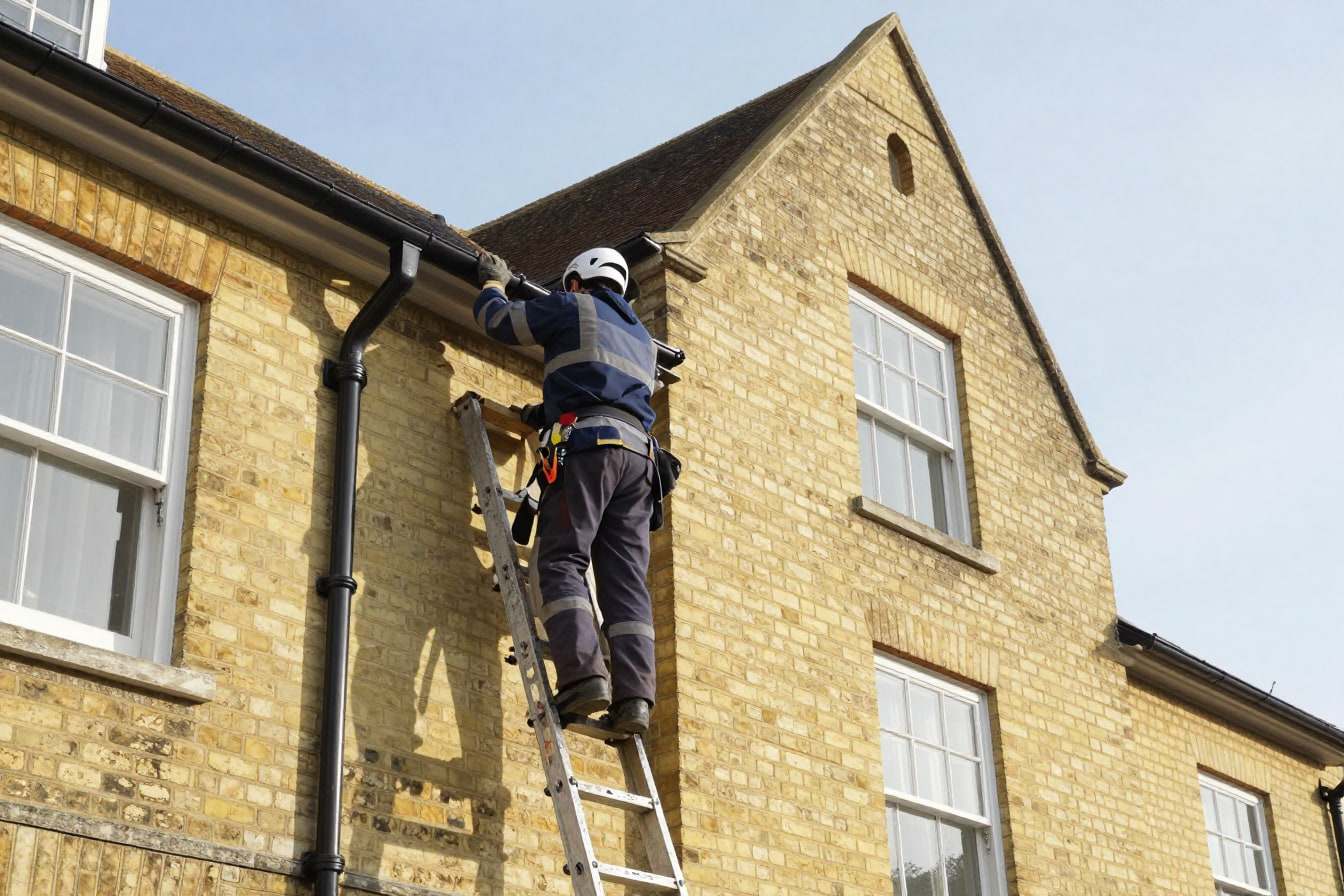
- Survey. We inspect by ladder or drone, check inside for damp and photograph every junction.
- Written quote. Repair or replacement options, with the lead code for each part specified.
- Prepare. Old lead comes off, mortar joints are raked out and any rotten boarding under gutters is replaced.
- Install. Pieces cut to no more than 1.5 m, dressed to shape, wedged and pointed into the joints, then finished with patination oil.
- Hand over. Photos of the finished work, and our 5-year warranty on repairs in writing.
| Job | Typical price | Typical time |
|---|---|---|
| Replace lead flashing (Code 5, up to 150 mm wide) | £50–£70 per m | — |
| Replace stepped lead flashing | £80–£120 per m | — |
| Patch repair to a chimney flashing (no scaffold) | about £250 | — |
| Replace chimney flashing, all four sides (no scaffold) | £450–£600 | 4–8 hours |
| Replace chimney flashing, all four sides (with scaffold) | £800–£1,200 | — |
| High-level chimney scaffold, per week | £500–£820 | — |
Guide prices from Checkatrade's roof repair cost guide (table June 2026, excluding VAT and access equipment) and chimney flashing cost guide (September 2026); typical duration from Checkatrade's Cambridge roof repair data. We always confirm a fixed price in writing after a free survey. Get your exact price.
Signs your leadwork needs attention
- Damp patches on the chimney breast or the ceiling beside the stack
- Lead flashing lifting, split or pulled out of its mortar joint
- Water stains inside under a valley or a bay window roof
- Missing lead, often with fresh cut edges or scratches
- Cracks or holes in an old lead bay or porch roof
- Mortar fillets or sealant used where there should be a lead flashing