Key takeaways
- Like-for-like re-roofing rarely needs planning permission, and rooflights projecting 150 mm or less are permitted development.
- Cambridge has 18 conservation areas, but only one Article 4 direction (Accordia, off Brooklands Avenue) restricts alterations to homes.
- Listed buildings need listed building consent for any work affecting their character; unauthorised work is a criminal offence.
- Renovating more than 50% of a roof, or 25% of the whole envelope, means upgrading insulation under Approved Document L.
- Pavement scaffolding needs a Cambridgeshire County Council licence: allow at least 15 working days.
| Job | Typical price | Typical time |
|---|---|---|
| Pavement scaffold licence (Cambridgeshire County Council) | Per street, per 30 days | Allow 15 working days |
| Skip permit for a skip on the road | Covers 14 days | Allow 10 working days |
| Scaffolding, two-storey semi | £650–£1,100 | — |
| Natural slate re-roof, supply and fit | £160–£275 per m² | — |
| Concrete tile re-roof, supply and fit | £120–£230 per m² | — |
| Rooflight or Velux window, supply and fit | £1,000–£1,500 | — |
| Removal of the old roof covering | £1,000–£2,500 | — |
Licence and permit timings from Cambridgeshire County Council (checked October 2026); costs from Checkatrade's 2026 roof installation, roof replacement, scaffolding and skylight cost guides, excluding VAT where stated. Planning, listed building consent and building control fees are not included. We confirm a fixed price in writing after a free survey. Get your exact price.
Most homeowners do not need planning permission to replace a roof in Cambridge, as long as the new roof looks materially the same as the old one. The exceptions matter, though: listed buildings, flats, dormers in conservation areas and a single estate covered by an Article 4 direction. Separately, almost every full re-roof needs Building Regulations compliance, including an insulation upgrade. This guide sets out each rule as published by Greater Cambridge Shared Planning, the Planning Portal and gov.uk, checked in October 2026. It is general guidance rather than legal advice, so always check your own property.
Do I need planning permission to replace my roof?
For a house, usually not. The Planning Portal says: “Work to the roof of a house (e.g. re-roofing) that does not materially affect its external appearance will usually not require planning permission.” Like-for-like work of this kind is not treated as development at all under the Town and Country Planning Act 1990.
What counts as a change?
Other roof alterations to a house fall under Class C of the permitted development rules. They are allowed without an application unless the work:
- protrudes more than 0.15 m (150 mm) beyond the plane of the original roof slope;
- is higher than the highest part of the original roof; or
- involves installing, altering or replacing a chimney, flue or soil and vent pipe.
A window in a side-facing roof slope must also be obscure-glazed and non-opening unless the opening part is more than 1.7 m above the floor.
Can I change the type of tile or slate?
Class C has no “similar materials” condition, so changing the covering is not automatically a planning issue for a house. Two practical catches: a very thick over-roof insulation system could break the 150 mm projection limit, and the Planning Portal’s re-roofing guidance says switching to a different material, such as slate to tiles, is likely to need Building Regulations approval.
Flats and maisonettes
Permitted development rights for houses do not apply to flats or maisonettes. Like-for-like repairs are still fine, but external changes such as a new rooflight need full planning permission. With 30.7% of Cambridge homes in purpose-built flats, against 17.1% across England (2021 Census), this rule catches a lot of people here.
Roof work at a glance
| Roof work | Planning permission? | Also check |
|---|---|---|
| Like-for-like re-roof on a house | Usually not needed | Building Regulations if over 50% of the roof |
| Different covering on a house | Usually not needed, unless an Article 4 or condition applies | Building Regulations; listed building consent if listed |
| Rooflight projecting 150 mm or less, below the ridge | Not needed (permitted development) | Obscure glazing on side slopes |
| Dormer outside a conservation area | Often permitted within volume limits | Building Regulations; party wall |
| Dormer or roof extension in a conservation area | Needed | Building Regulations |
| Chimney or flue fronting a highway, in a conservation area | Needed | Building Regulations |
| External roof change on a flat or maisonette | Needed | Lease terms |
| Any work affecting a listed building’s character | Listed building consent | Building Regulations |
What changes in Cambridge’s conservation areas?
Cambridge City Council has 18 conservation areas, all with appraisals: Barrow Road, Brooklands Avenue, Castle and Victoria Road, Central, Chesterton, Ferry Lane, Conduit Head Road, De Freville, Howes Place, Mill Road, New Town and Glisson Road, Newnham Croft, Riverside and Stourbridge Common, Southacre, Storey’s Way, The Kite, Trumpington and West Cambridge. Older figures of 13 or 17 that you may see online are out of date. South Cambridgeshire, which covers villages such as Histon and Cottenham, has a further 85.
Greater Cambridge Shared Planning sets out what needs permission in a conservation area:
- Rooflights remain permitted development if they “do not extend more than 150 mm above the slope of the original roof” and are not higher than the ridgeline.
- Dormers on all roof slopes need planning permission. Rear dormers “may be acceptable if the impact on the street is limited”; front dormers only where they are an original feature or common in the street.
- Roof extensions and loft conversions need planning permission.
- Chimneys, flues and soil pipes on a slope fronting a highway need permission to alter or replace.
- Solar panels are usually permitted if they project no more than 200 mm and sit below the highest part of the roof.
The council also notes that planning can be refused on conservation grounds alone.
Why materials matter in Cambridge
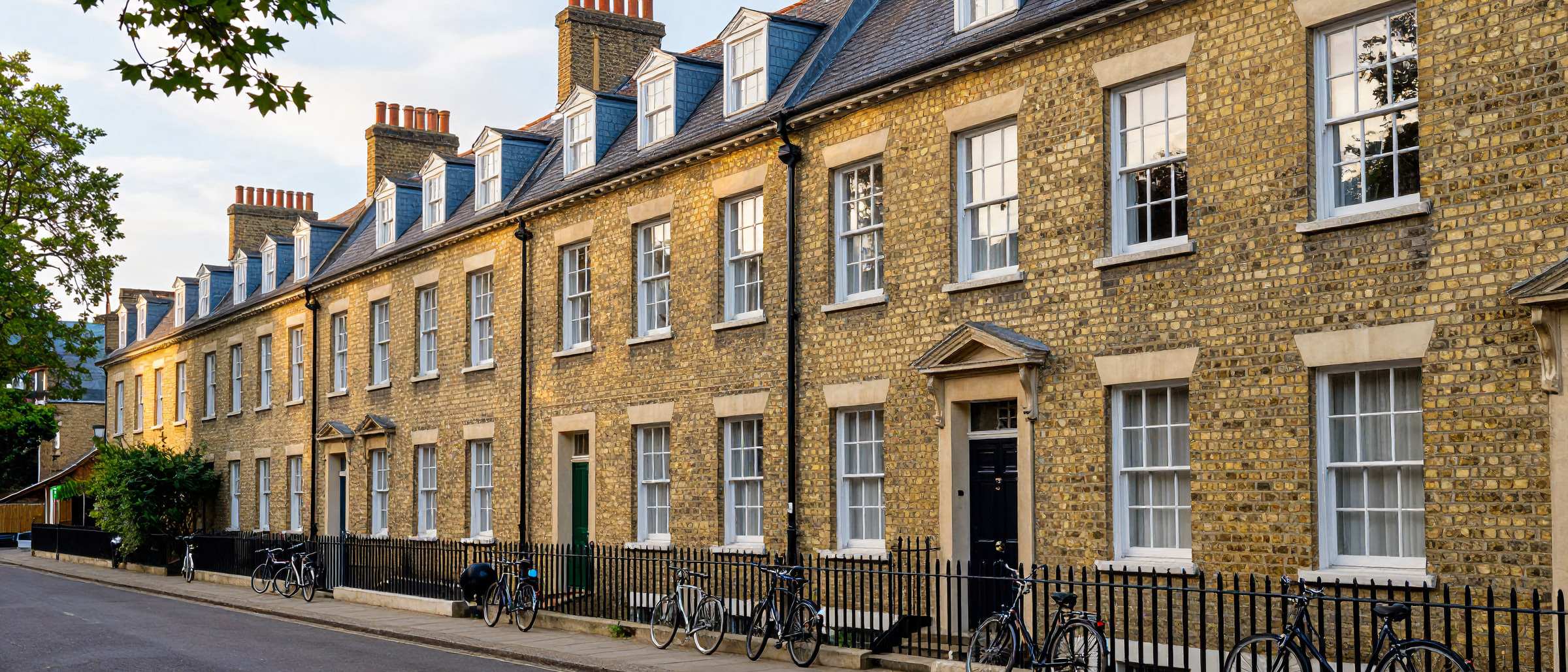
The appraisals describe what the council wants to protect. Around Mill Road, terraces are pale gault brick with natural slate roofs, and the Mill Road appraisal notes “many of the original slate roofs are now in need of replacement”. The De Freville appraisal praises slate roofs with “pierced terracotta decorative ridges and finials” and says that where slates have been replaced by concrete tiles “the incongruity is painfully obvious”. In practice, re-slating with natural slate and salvaging decorative ridges is the safe and sympathetic choice; our roof tiling and slating team can advise on period roofs from Chesterton to Romsey.
The Accordia Article 4 direction
Article 4 directions let a council remove permitted development rights. Of Cambridge City’s 19, only one restricts alterations to homes: the Accordia estate off Brooklands Avenue. The other 18 protect named pubs from demolition, such as The Carlton Arms on Carlton Way. So conservation-area status on its own does not stop a like-for-like re-roof, but an earlier planning permission can carry conditions. Check any address on the council’s planning restrictions map. The city council’s old conservation areas page now redirects to Greater Cambridge Shared Planning, which runs planning for both Cambridge and South Cambridgeshire.
Listed buildings and listed building consent
Listed buildings are protected by the Planning (Listed Buildings and Conservation Areas) Act 1990. Greater Cambridge Shared Planning’s listed buildings page explains that the whole building is listed, including its interior and fixed objects, and that listed building consent is required for “any work that affects the character of the building”. It adds: “It is a criminal offence to carry out unauthorised work to a listed building.”
That can include replacing historic slates, tiles or leadwork even when planning permission is not needed. The listed buildings guidance published by Greater Cambridge Shared Planning says concrete tiles or fibre-cement slates on a listed building need listed building consent, and it supports natural Welsh slate. Approved Document L also allows some flexibility for listed homes and homes in conservation areas, where meeting the energy rules in full would unacceptably alter their character, and building control should consider the conservation officer’s advice. Our lead roofing and leadwork team is used to traditional details on older roofs.
Rooflights and dormers
Rooflights (Class C)
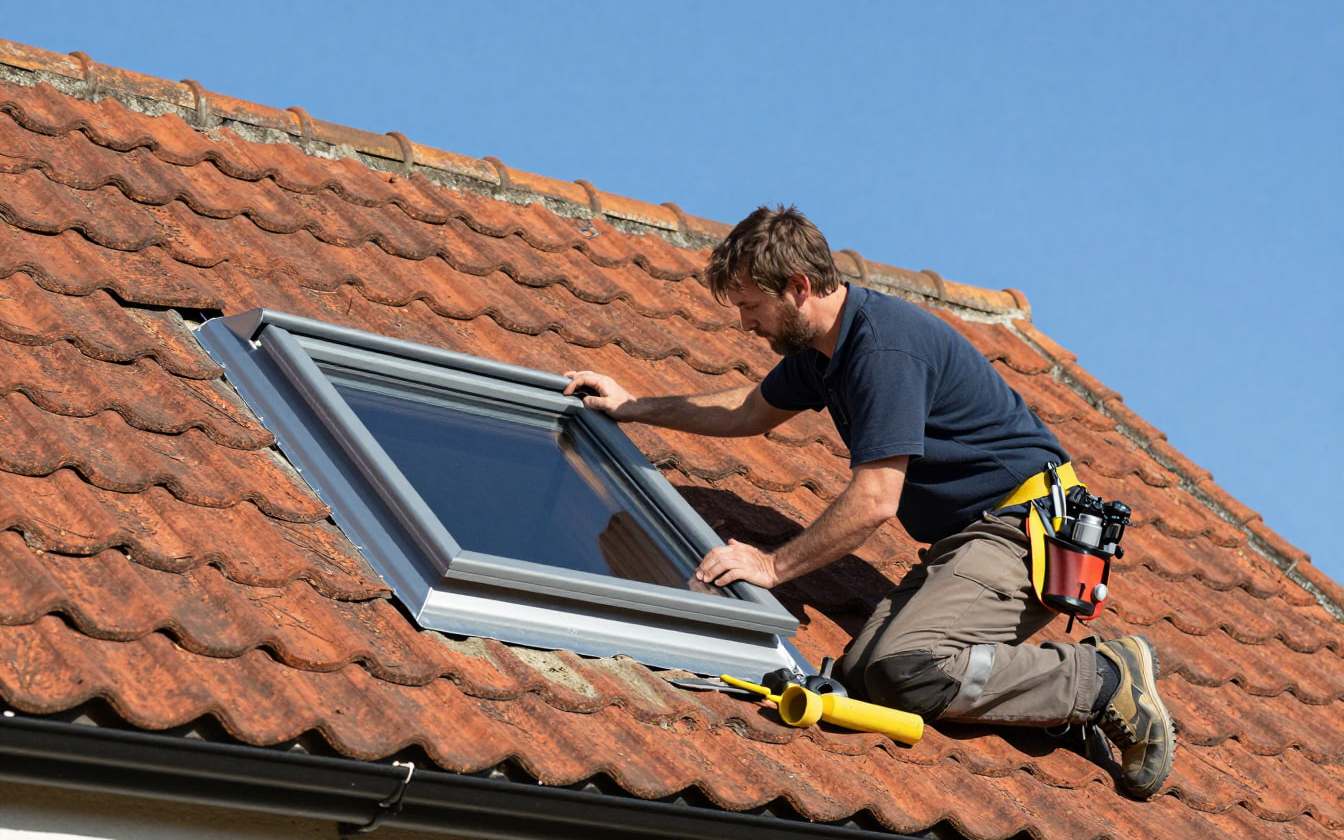
Rooflights are permitted development on houses within the 150 mm and ridge-height limits above, including in conservation areas. On a listed house you need listed building consent but not householder planning permission. Our Velux cost and installation guide covers the details and prices.
Dormers and loft conversions (Class B)
Roof extensions are not permitted development in conservation areas. Elsewhere, the government’s technical guidance allows them within 40 m³ of extra space on a terraced house or 50 m³ on other houses, provided no part is higher than the existing roof, nothing extends beyond the plane of the principal (usually front) roof slope, and the eaves are kept. Replacing a flat roof with a pitched one can count as an enlargement too.
Do I need Building Regulations approval to re-roof?
Usually, yes. The Planning Portal says that “in most situations, this work will need Building Regulations approval”. You will not normally need an application for repairs or re-covering if less than 25% of the building envelope and less than 50% of the roof are affected. Above those limits, or if there are structural alterations, a change in fire performance, or a new covering that increases the roof’s weight by 15% or more, you will.
The insulation rule
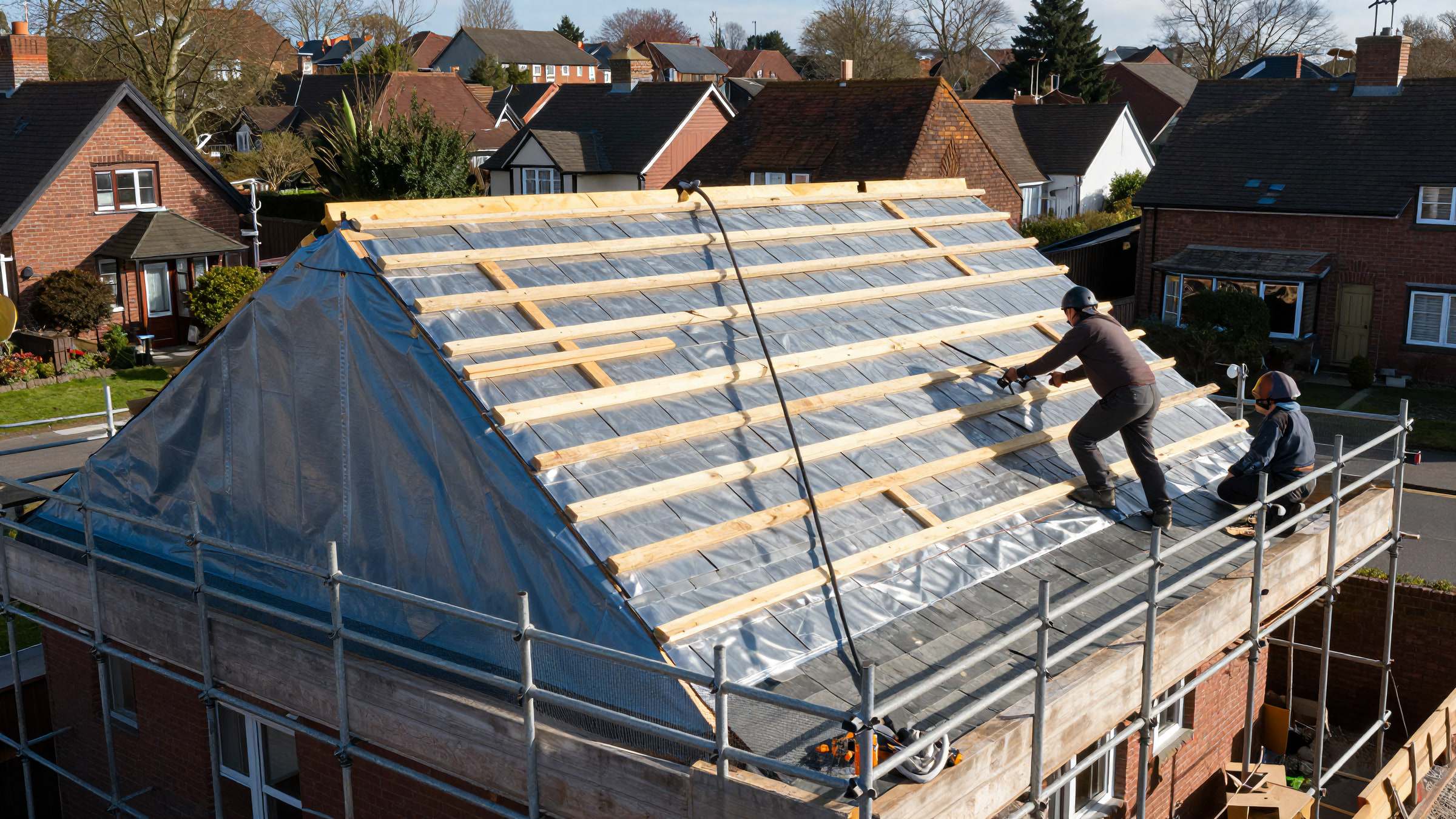
Under Approved Document L, stripping a roof back to the rafters, or replacing a flat roof’s waterproof membrane, counts as renovating a thermal element. If more than 50% of the roof, or more than 25% of the whole building envelope, is renovated, the whole roof should be upgraded to a U-value of 0.16 W/m²K where technically and economically feasible. If that is not feasible, or would not pay back within 15 years, it should be upgraded to the best standard that is, generally no worse than 0.7 W/m²K.
A 2026 edition of Approved Document L takes effect on 24 March 2027 for most work in England, but these renovation rules are unchanged. Cambridge’s shared building control service, 3C Building Control, says approval covers replacement roofs “even if this only new or replacement ‘felt’”.
Competent person schemes explained
The government authorises two competent person schemes for “replacement of roof coverings on pitched and flat roofs”: NAPIT and CompetentRoofer, which NFRC now runs as the NFRC Competent Person Scheme. A registered roofer can self-certify the work instead of going through building control, and the homeowner receives a compliance certificate. The schemes do not cover solar panel installation.
A roofer who is not registered must notify building control instead, usually through a building notice or a full plans application. Both routes are legitimate. Whoever you hire, ask at the quote stage which route they will use, who pays any fee, and when you will receive the certificate.
Party walls, scaffolding and skips
Party Wall etc. Act 1996
The Party Wall Act covers work such as cutting into a party wall, making it taller or removing chimney breasts from it. Work to an existing party wall needs at least two months’ notice to your neighbour. Roof repairs are not mentioned in gov.uk’s guidance. On Mill Road’s terraces, the appraisal notes there are “no party walls through these roofs”, so one roof often runs over several houses and neighbours will see the join.
Scaffold licences and skip permits
Cambridgeshire County Council is the highway authority. Scaffolding on a pavement or road needs a highway licence, which only registered companies can apply for, charged per street per 30 days; allow at least 15 working days. A skip on the road needs a permit, which takes about 10 working days and covers 14 days. On Romsey and Petersfield streets where front doors open onto the pavement, this is routine.
Bats, nesting birds and asbestos
Roof stripping can disturb bats, which are protected. It is an offence to damage or destroy a bat breeding or resting place, obstruct access to it or disturb bats in a roost, with penalties of up to six months’ imprisonment and/or an unlimited fine. Gov.uk advises taking advice from the National Bat Helpline or Natural England. Planning permission or permitted development rights do not override wildlife law, and nesting birds are protected too.
Asbestos cement can turn up in roofs, flues and pipes on buildings built or refurbished before 2000. HSE’s advice is not to disturb it and to use licensed contractors where required.
A checklist before your roof is replaced
- Check the planning map for conservation-area, listed or Article 4 status.
- Look at your planning history for conditions.
- Decide the covering, matching like-for-like where character matters.
- Agree the Building Regulations route and insulation spec.
- Consider whether any work touches a party wall.
- Book the scaffold licence early and allow 15 working days.
- Ask about bats before stripping, especially on older roofs.
If you are still unsure, a lawful development certificate from the council confirms whether planning permission is needed.
Get a fixed price for your roof
We explain the planning and Building Regulations position for your property as part of every survey, at no extra cost, and give you a detailed written quote with a fixed price for your new roof installation. The survey is free with no obligation. Call 01223 902596 (Monday to Friday, 8am to 5pm) or request a free quote.
Sources
- Greater Cambridge Shared Planning: Conservation area appraisals
- Greater Cambridge Shared Planning: What needs planning permission in a conservation area
- Greater Cambridge Shared Planning: Search for local planning restrictions
- Greater Cambridge Shared Planning: Listed buildings
- Planning Portal: Roof planning permission
- Planning Portal: Building Regulations for re-roofing
- GOV.UK: Approved Document L (2026 edition)
- GOV.UK: Competent person schemes
- Cambridgeshire County Council: Highway licences and permits
- GOV.UK: Bats, protection, surveys and licences
Figures were checked on 1 October 2026. Published prices are guides only and usually exclude VAT; we always confirm a fixed price in writing after a free survey.