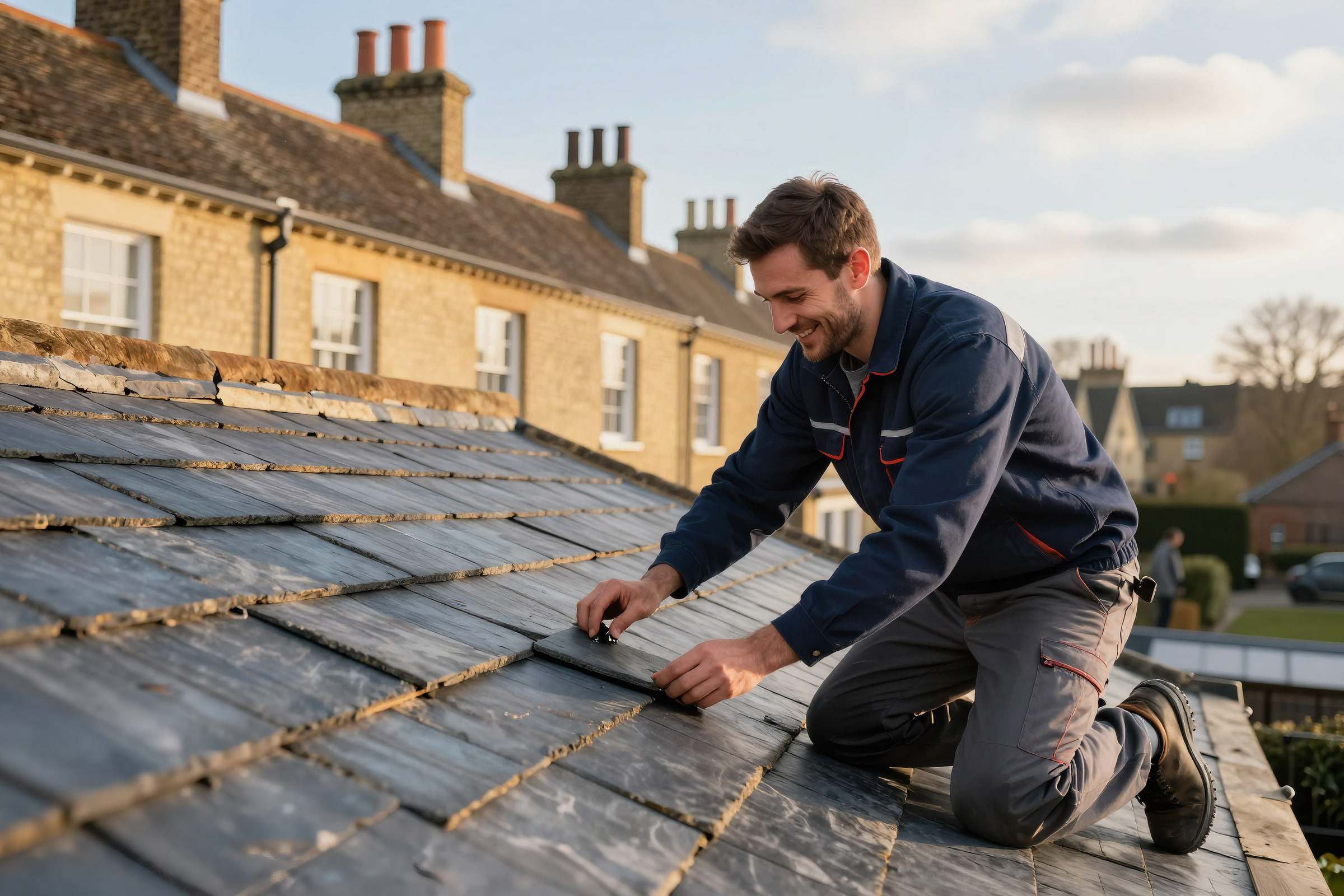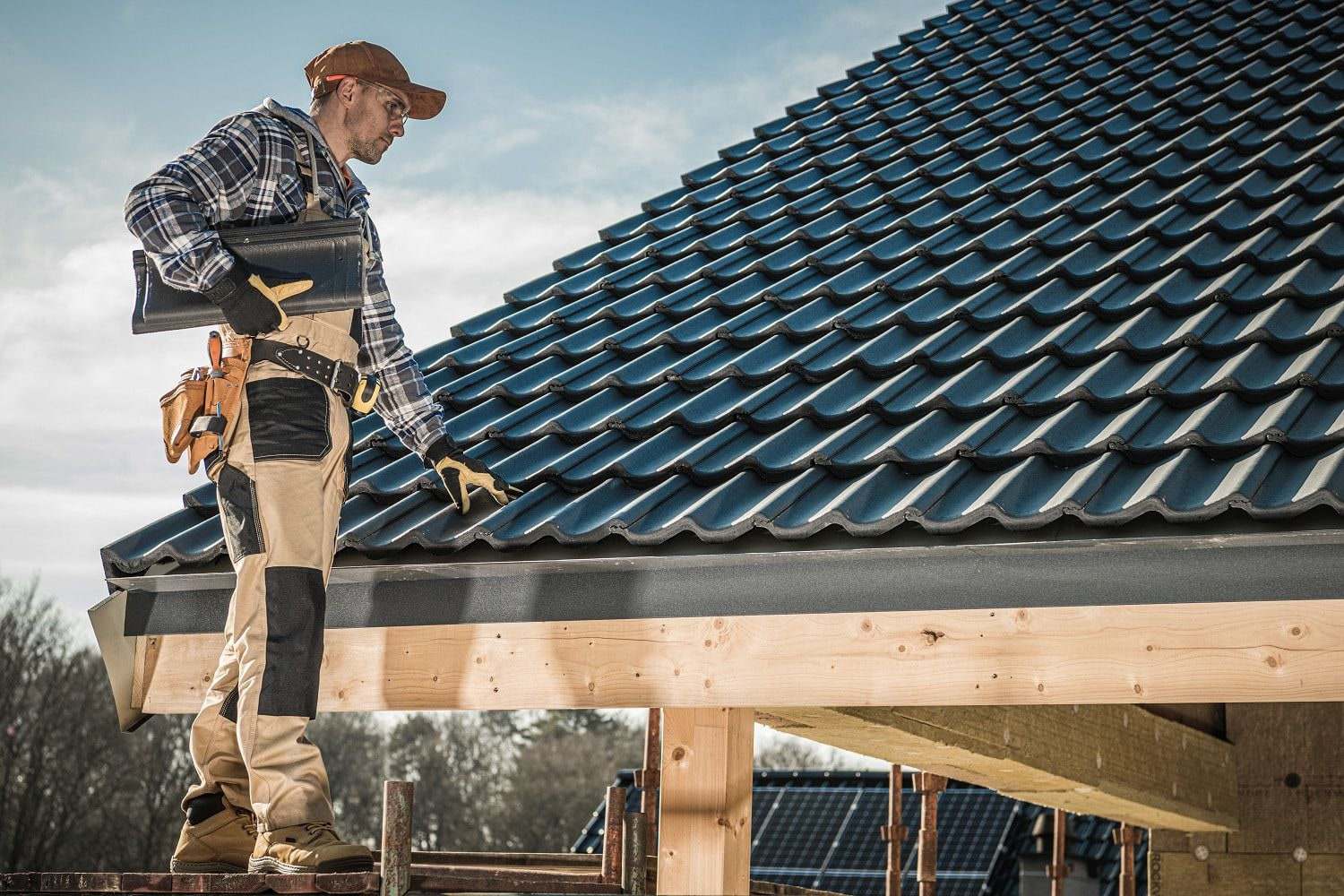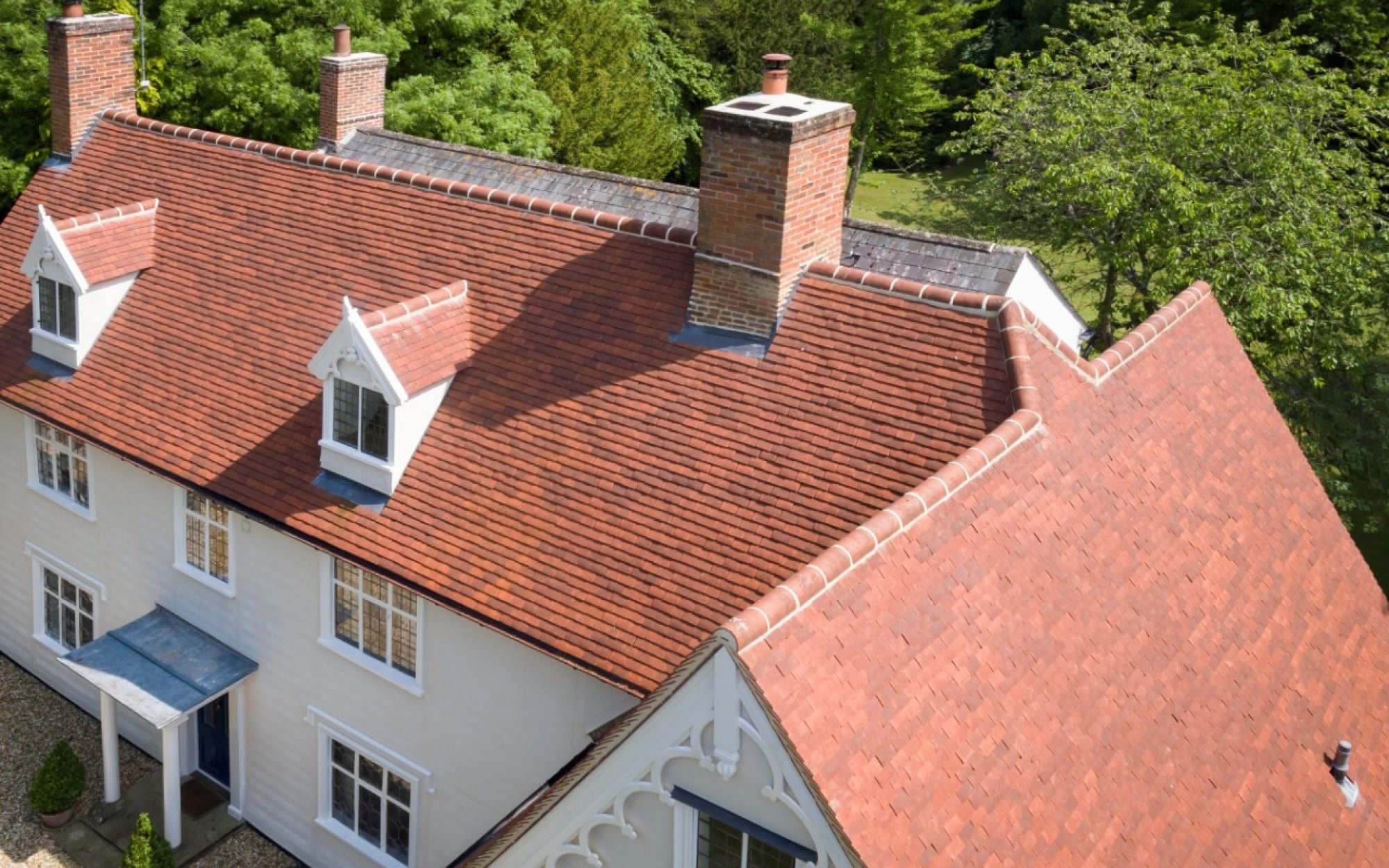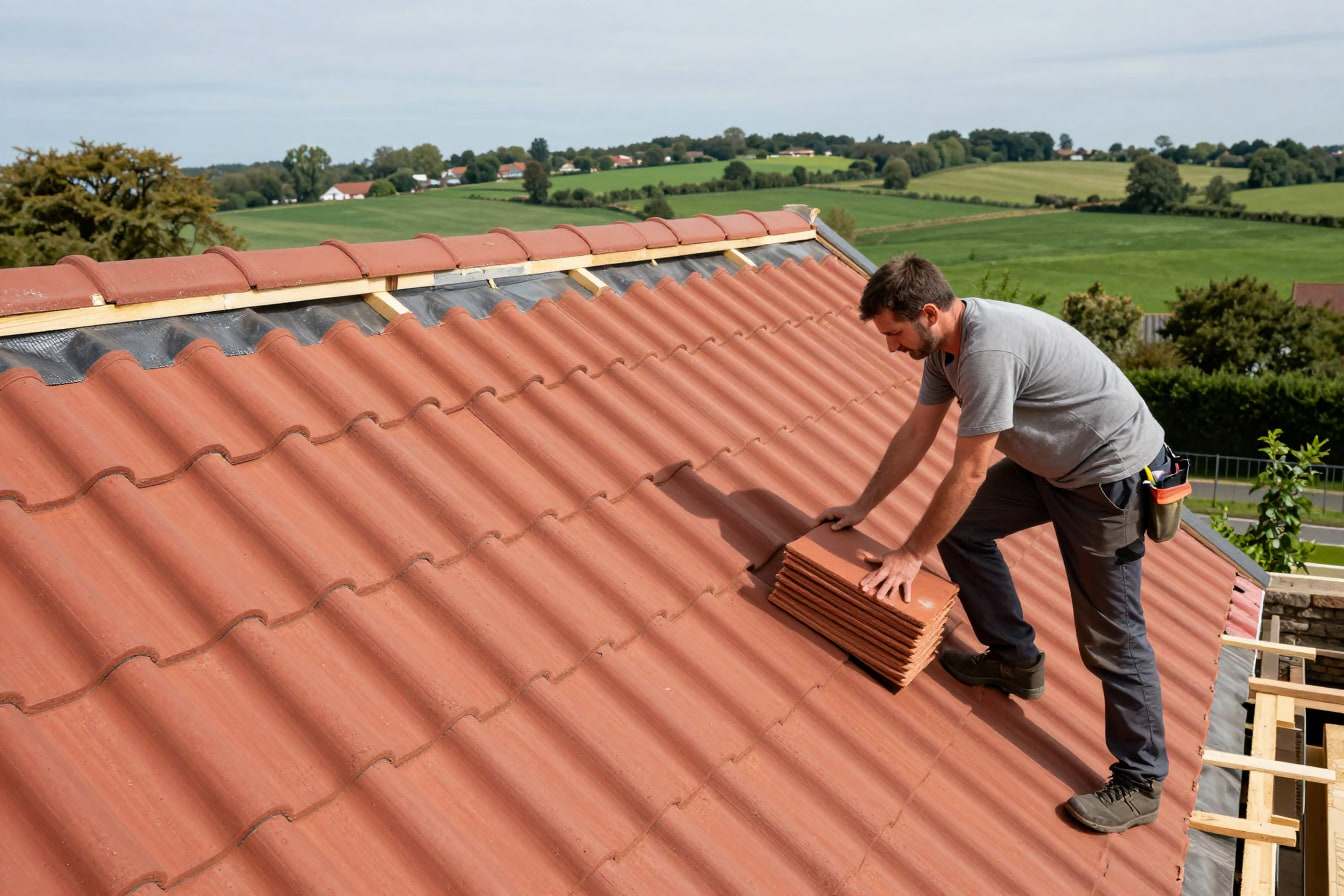
- Gable, hip & mansard roofs
- Rafter and structural repairs
- Loft ventilation & condensation
- Valleys, dormers & leadwork
- Ladder and drone surveys
Pitched roof construction
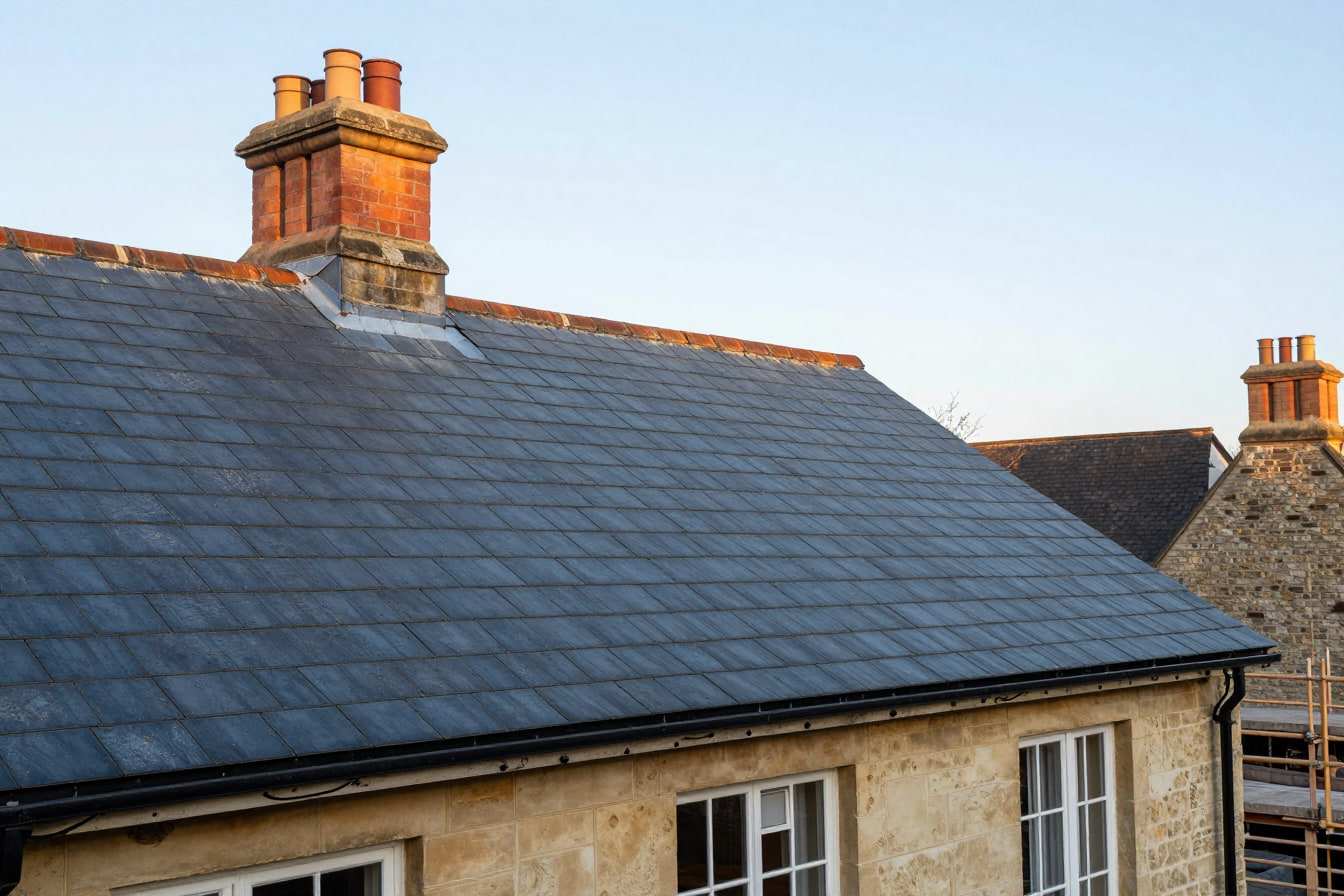
Both popular and practical, the pitched roof style is something that you can put your trust in. It’s used in home construction all over the UK, mainly because it looks great whilst offering the best possible natural drainage.
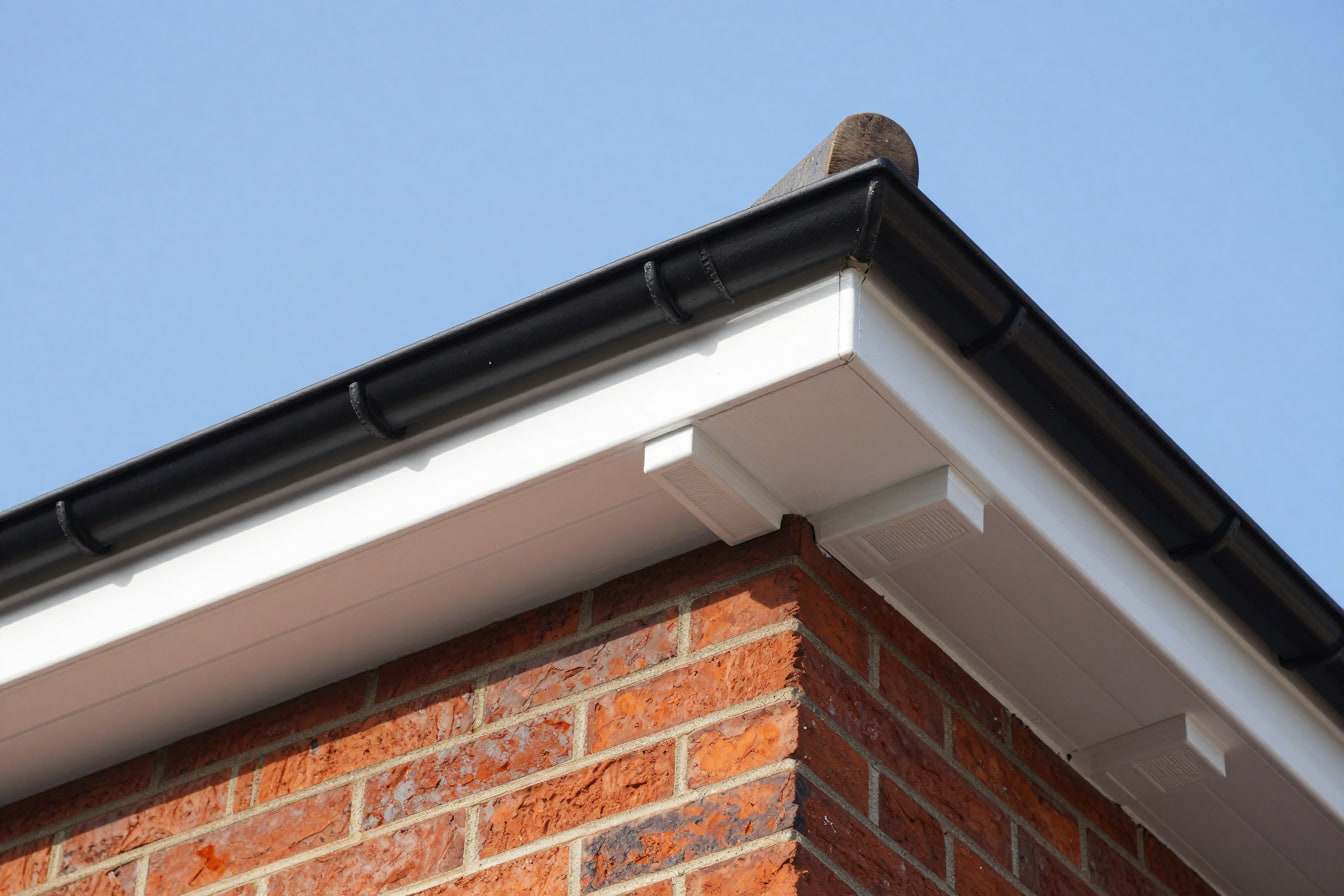
Here at Roofing Cambridge, we’ve been installing pitched roofs for years, so whether you’re a domestic or commercial customer, you can be sure we have the skills and expertise to install your roof quickly and precisely. We can also kit out your roof with essential extras such as fascias, guttering and soffits, ensuring that your roofing system functions properly and contributes to the smooth running of your home.
Pitched roof installation & repairs
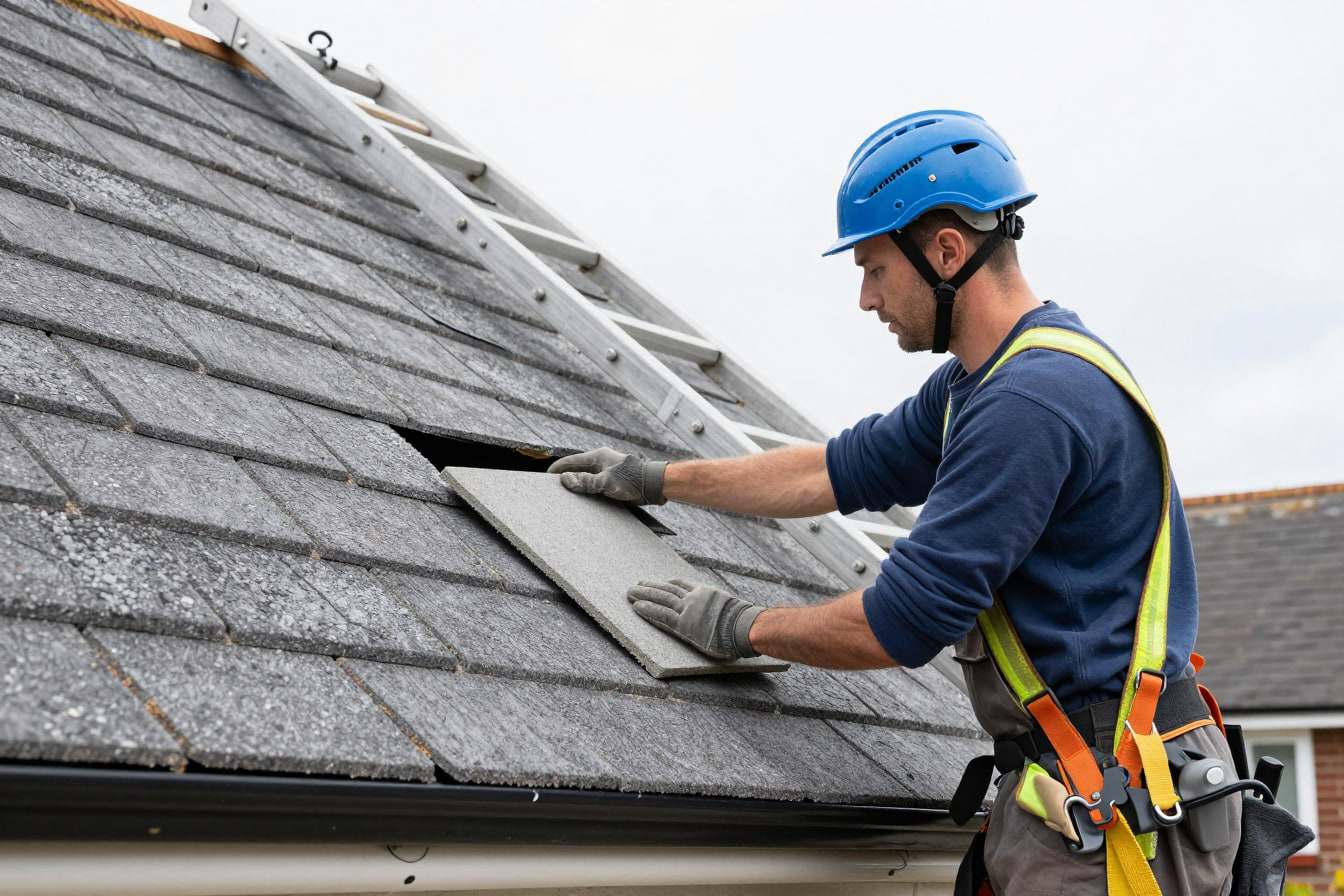
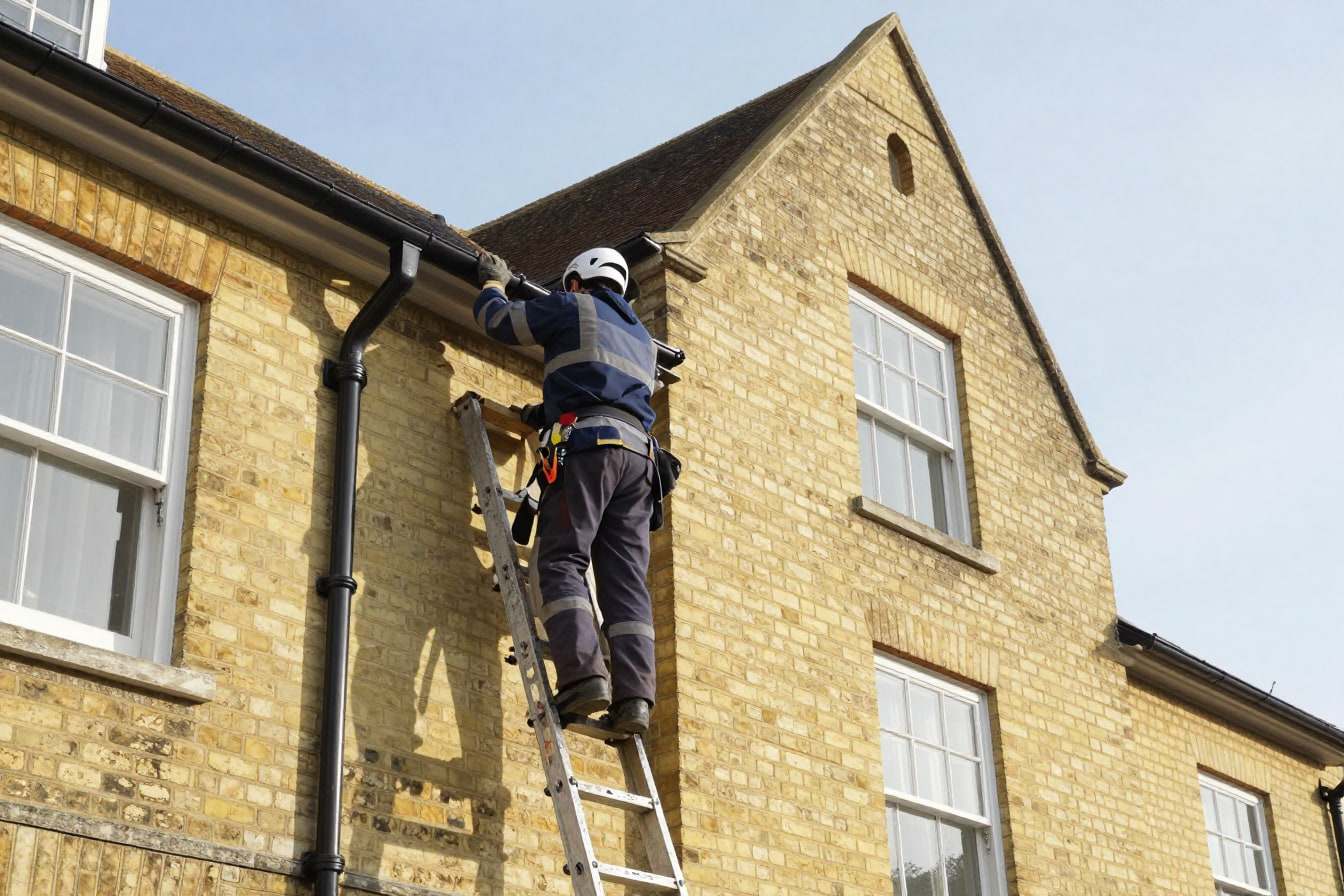
If your pitched roof is damaged and requires some repairs, we can help. From small cracks and surface level issues to large-scale structural damage, our team will be able to quickly identify the issue and get it sorted. We also offer pitched roof maintenance services, such as gutter cleaning and ladder and drone inspections.
Operating throughout Cambridge and the surrounding villages, you can trust Roofing Cambridge when it comes to pitched roof installation and pitched roof repairs. Give us a call today for more information.
Gable, hip or mansard: what kind of pitched roof do you have?
The shape of your roof decides where it is likely to fail, so it is the first thing we note on a pitched roof survey in Cambridge.
| Roof type | What it looks like | Where you’ll see it locally | What to watch |
|---|---|---|---|
| Gable | Two slopes meeting at a ridge, with a triangular wall at each end | Victorian and Edwardian terraces; the simple gabled slate roofs of Chesterton | Verges at the gable ends; chimney stacks on party walls |
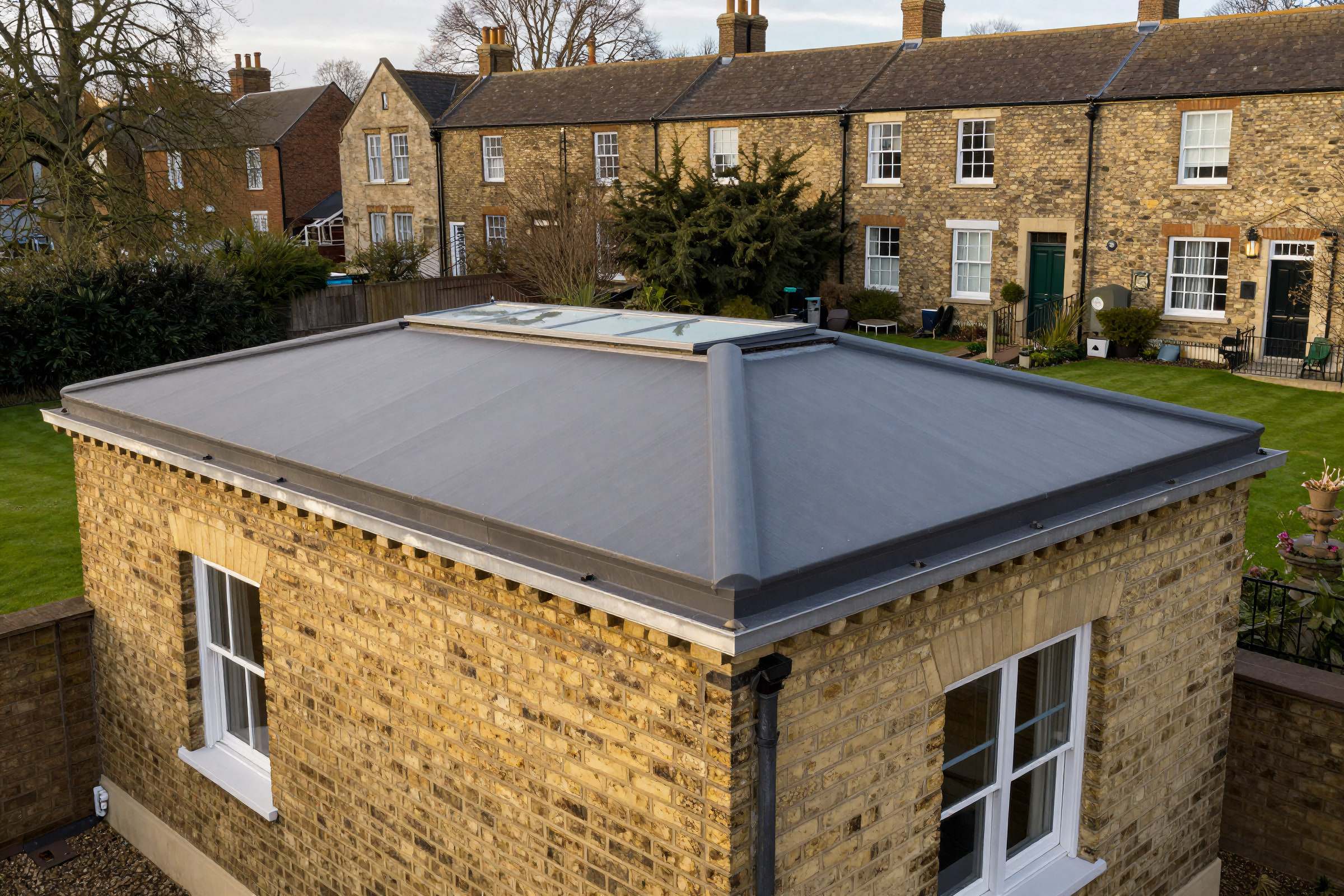
| Hip | Slopes on all four sides, meeting at hips and a shorter ridge | Many semi-detached and detached houses | Hip tiles and their bedding; more ridge line to maintain |
| Mansard | A steep lower slope with dormers below a shallower upper slope | A few older buildings in Chesterton village | Dormer cheeks, flashings and the joint between slopes |
| Lean-to or catslide | A single slope running down from a wall | Rear outshots, porches and village cottages | The abutment flashing where roof meets wall |
Most real roofs combine these. An L-shaped house has a valley where two slopes meet, and a loft conversion adds dormers. Valleys and dormers are where pitched roofs most often leak, because water is concentrated there and the weatherproofing depends on lead or a valley trough rather than the tiles alone; see lead roofing and leadwork.
How is a pitched roof built?
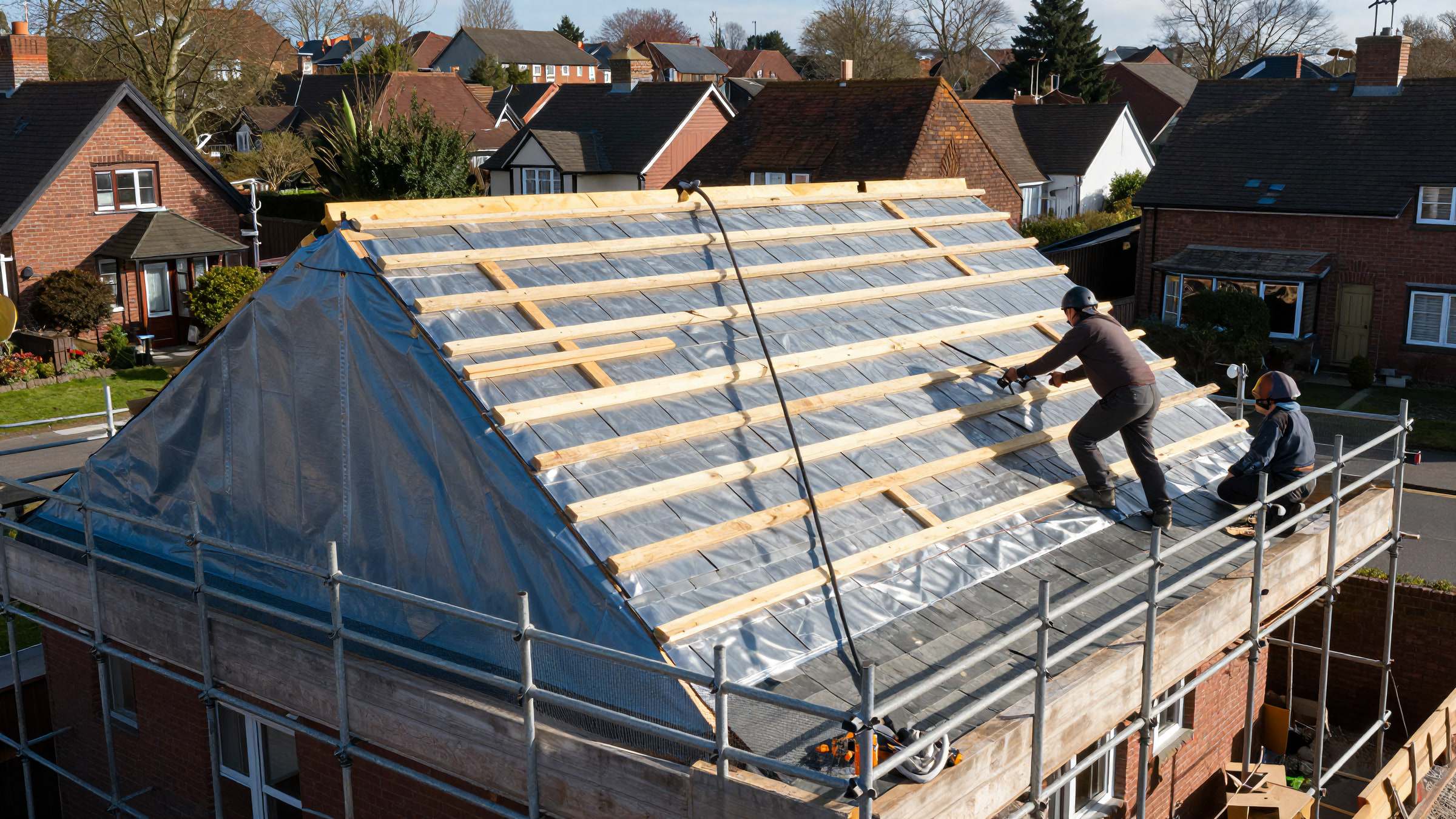
From the inside out: rafters, the sloping timbers, sit on a wall plate along the top of the walls and meet at the ridge. On longer spans, purlins and struts brace the rafters halfway up, and ceiling joists tie the rafter feet together so the roof can’t spread. Many post-war and modern houses use factory-made trussed rafters instead. Over the timbers go the underlay (bitumen felt on older roofs, a breathable membrane today), the battens and finally the tiles or slates.
Every covering needs a minimum pitch to shed rain. That is why you can’t put plain clay tiles on a shallow roof, or flatten a roof without changing what it is covered with. Our roof tiling and slates page covers the coverings themselves.
Sagging roofs and rotten rafters
A dip in the ridge or a wavy slope usually has one of four causes:
- Too much weight – heavy concrete tiles laid on timbers sized for slate. That is why a new covering adding 15% or more to the weight needs Building Regulations approval.
- Missing timbers – struts, purlins or ceiling ties cut out during an old loft conversion or to make storage space.
- Rot – a slow leak at a valley, chimney or eaves, left for years, softens rafter feet and wall plates.
- Roof spread – rafters pushing the tops of the walls outwards when the ties at their feet have failed.
Not every sag needs work. Some old roofs settled into a slight dip long ago and have been stable since, so we check whether movement is historic or ongoing. Where it is ongoing, the answer is usually to strengthen rather than rebuild: new timber fixed alongside weak rafters, or new binders and purlins with struts. Structural alterations need Building Regulations approval, and serious movement calls for a structural engineer.
Loft ventilation and condensation
Not every damp loft is a leak. Warm, moist air from the house rises into a cold loft and condenses on the underside of the roof. The giveaways are black mould on the rafters or felt, damp insulation, rusty nail tips, droplets on the underlay on cold mornings, and ceiling stains that appear after frosty nights rather than after rain. With around 40 days of air frost a year in Cambridge, winter is when it shows.
The usual culprits:
- Insulation pushed hard into the eaves, blocking the airflow.
- An old, non-breathable felt underlay with no ventilation added.
- Bathroom or kitchen extractor fans venting into the loft instead of outside.
- Gaps around loft hatches, downlights and pipes letting moist air up.
The cure is to let air through and keep moisture out: clear the eaves, add vents in the soffits, tiles or ridge, duct fans outside and seal the ceiling. Ventilation matters most when insulation is upgraded during a re-roof, which Approved Document L expects once more than 50% of a roof is renovated. Our warm roof vs cold roof guide explains the options.
What does pitched roof work cost in Cambridge?
Checkatrade’s 2026 data for Cambridge puts a typical pitched roof repair at £713–£2,827, averaging about £1,385, and a pitched roof installation at £4,242–£10,047, averaging about £6,514. Nationally, it prices a new gable roof of around 64 m² at £7,000–£16,250 and a hip roof of the same size at £9,250–£18,000; hips cost more because of the extra cutting and hip tiles.
Structural repairs are often cheaper than people expect: Checkatrade puts new 150×50 mm rafter timber at about £25 per metre. If the whole roof is near the end of its life, our new roof installation page explains what a full replacement involves.
| Job | Typical price |
|---|---|
| Pitched roof repair (typical Cambridge job) | £713–£2,827 |
| Pitched roof installation (typical Cambridge job) | £4,242–£10,047 |
| New gable roof (about 64 m²) | £7,000–£16,250 |
| New hip roof (about 64 m²) | £9,250–£18,000 |
| Strengthen rafters with new 150×50 mm timber | about £25 per m |
| New binders or purlins with struts | £30–£40 per m |
| Dry hip system | £70–£100 per m |
Guide prices from Checkatrade's Cambridge roofing data and its roof replacement and roof repair cost guides (2026), excluding VAT and scaffolding unless stated. Every roof is different, so we always fix the price in writing after a free survey. Get your exact price.
Signs your pitched roof has a problem
- A dipping ridge or wavy, uneven roof slopes
- Cracked or bowing rafters, or timbers that feel soft
- Black mould or droplets on the underside of the roof
- Damp loft insulation or rusty nail tips in the loft
- Ceiling stains that appear after frosty nights rather than rain
- Leaks around valleys, dormers or chimneys
- The tops of the walls pushing outwards under the eaves