- Seamless, walkable finish
- Ideal for balconies & dormers
- Choice of topcoat colours
- Warm-roof insulation upgrades
- 10-year insurance guarantee
GRP fibreglass roofing in Cambridge
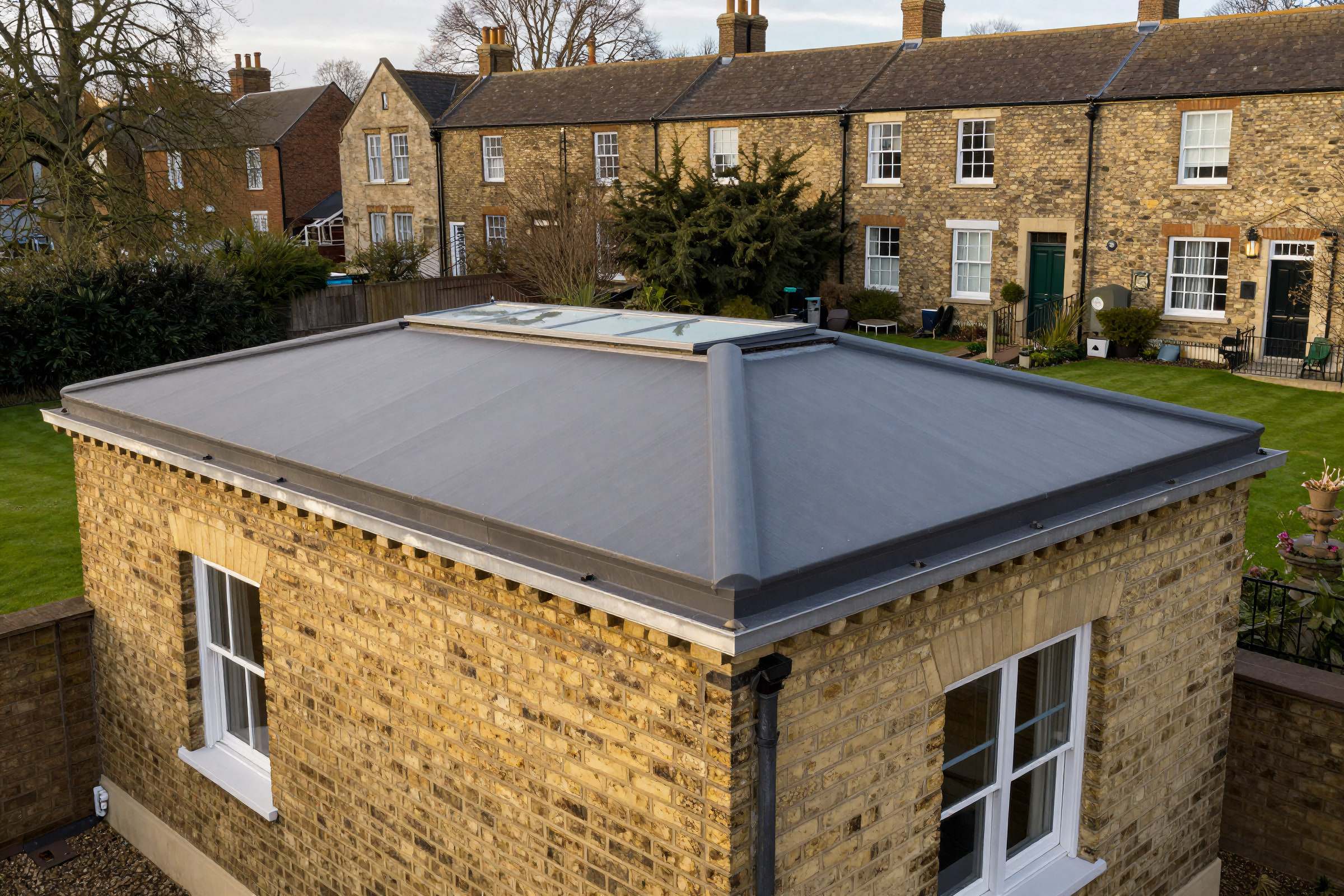
GRP stands for glass-reinforced plastic, though most people call it fibreglass. It is built on the roof from glass-fibre matting and resin, which set together into one rigid, seamless skin, then finished with a coloured topcoat. We fit GRP fibreglass roofing across Cambridge where a roof needs to be hard-wearing or neatly detailed: dormers on loft conversions, rear extensions with roof lanterns, balconies, walkways, bay roofs and porches. We also fit EPDM rubber and felt, so we only recommend GRP where it is genuinely the best fit. Our flat roofing page shows how the three compare.
How a GRP roof is built
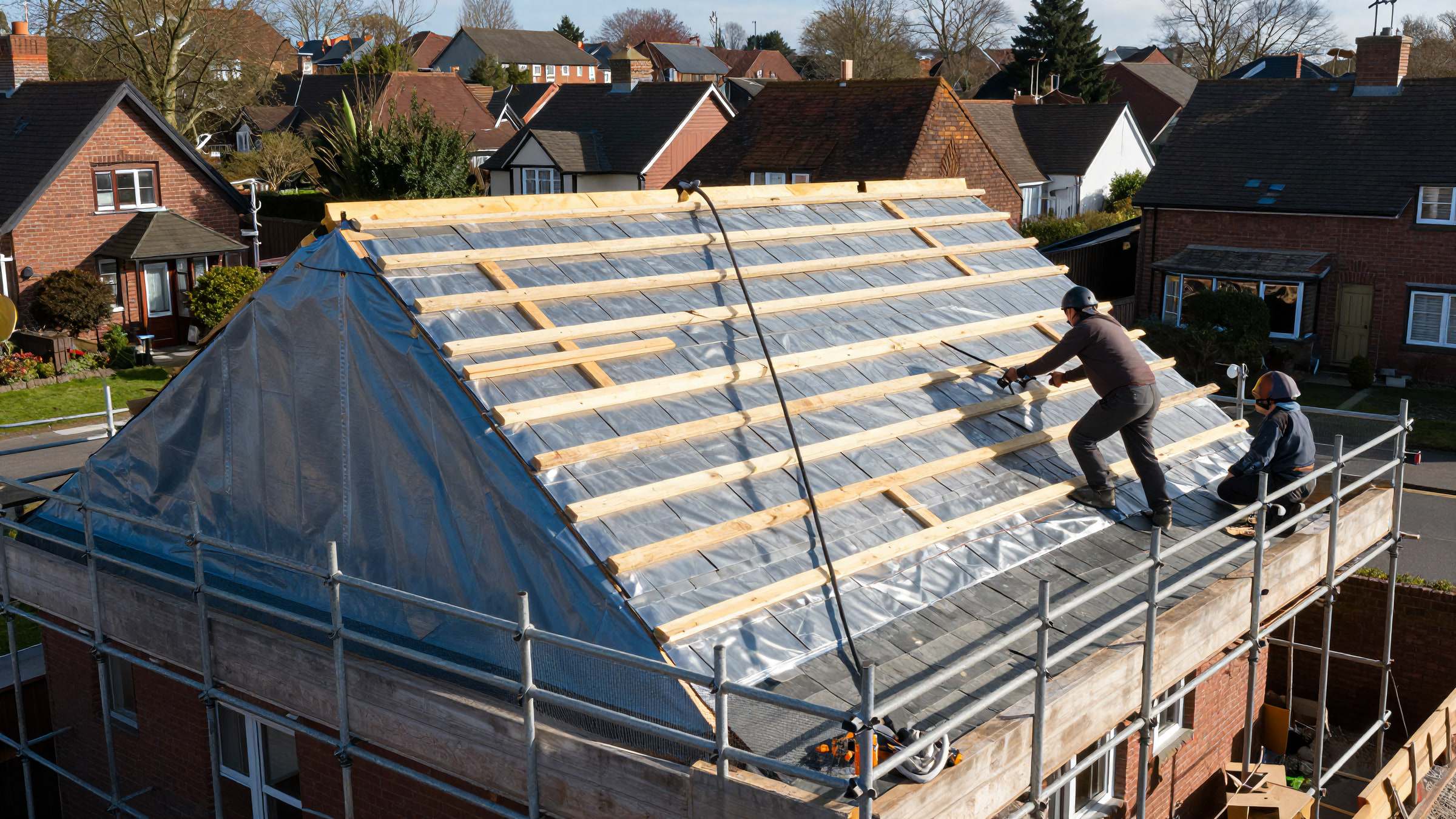
- A sound deck. GRP is rigid, so it needs a stable deck. We fit new boards suitable for GRP, fix them securely and tape the joints so normal timber movement doesn’t crack the laminate above.
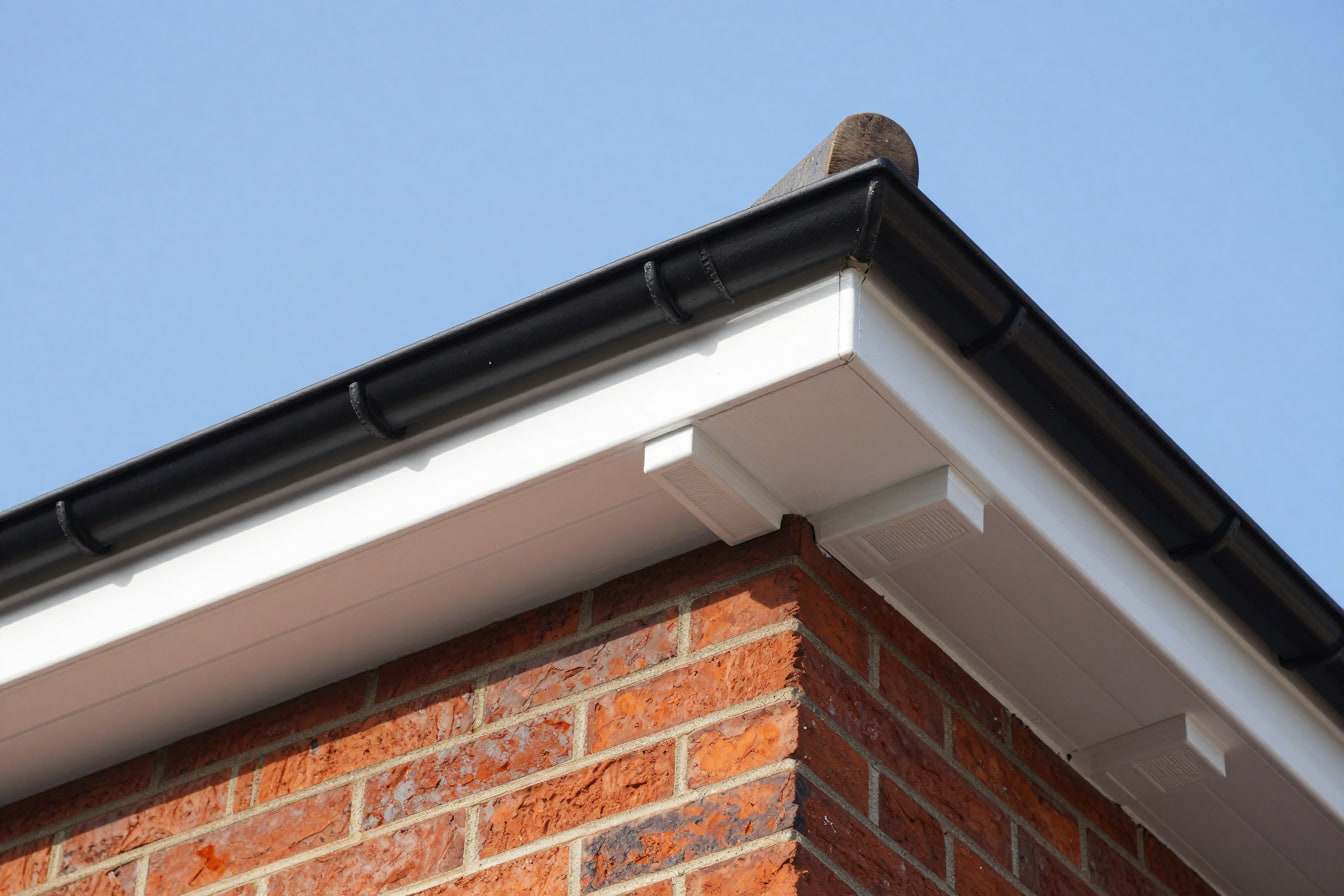
- Edge trims first. Pre-formed GRP trims are fixed around the roof before laminating: drip trims at the gutter edge, raised kerb trims on the other edges and angle trims where the roof meets a wall.
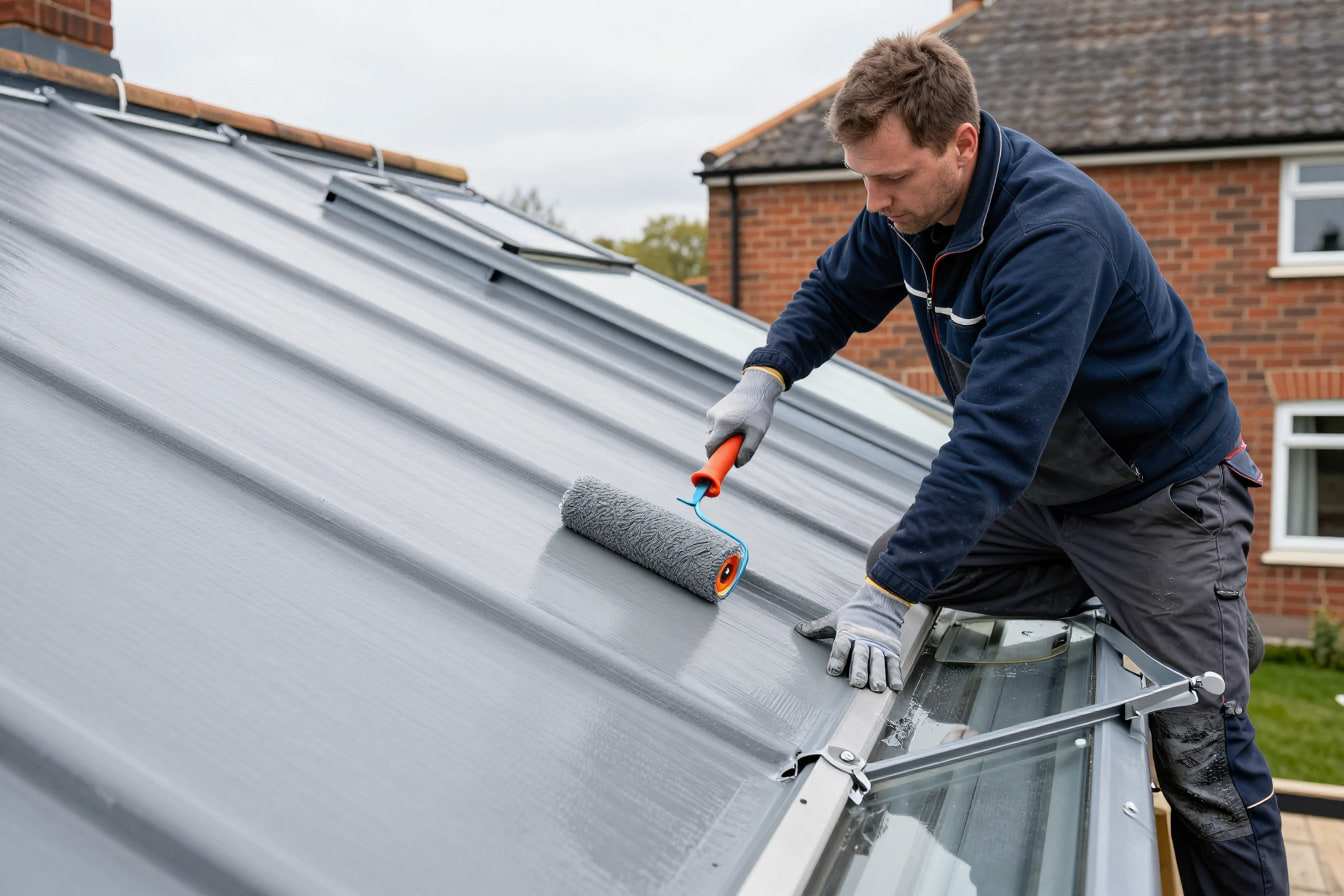
- The laminate. Resin is rolled onto the deck, the glass-fibre mat is laid into it and more resin is worked through until the mat is fully wetted out, then rolled to push out air. Corners, upstands and outlets get extra reinforcement.
- The topcoat. Once the laminate has cured, a pigmented topcoat goes on. It gives the roof its colour and protects the laminate from sunlight. On balconies and walkways we add an anti-slip finish.
The resin cures through a chemical reaction rather than by drying, and the result is one continuous surface that wraps over edges and up walls with no seams to fail.
Curing and the weather
GRP is the most weather-sensitive flat roof system to install. The deck must be dry, the resin must stay dry until it cures, and temperature changes the curing time: slow in the cold, fast in hot sun. So we plan GRP jobs around the forecast and lay them in sections we can finish properly.
Cambridge helps. East Anglia is the driest region of the UK, and the Met Office records about 559 mm of rain a year at its Cambridge station, with March the driest month. Summer brings the opposite challenge: 2025 was the UK’s warmest and sunniest year on record, and in that kind of heat the resin can set before it is properly worked in, so we work in smaller sections and avoid the hottest part of the day. Expect a strong resin smell while we work; keep nearby windows closed and it fades as the roof cures.
Topcoat colours and finishes
Greys, from a light grey to a charcoal close to slate, sit comfortably next to most Cambridge brick and slate, and other colours are available to order. The topcoat takes the punishment from sunlight and foot traffic, which is why Checkatrade recommends refreshing it every 10–15 years. On a balcony or walkway an anti-slip finish is worth having.
Where GRP works best
- Dormers and loft conversions. GRP wraps neatly over edges and around cheeks and corners, which suits the tight details of a dormer. In Cambridge’s conservation areas, dormers on any roof slope need planning permission, so we work to your approved drawings.
- Balconies and walkways. Rigid, walkable and available with an anti-slip finish.
- Extensions with lanterns and rooflights. Clean, seamless upstands around kerbs; see our Velux and skylights page for the glazing side.
- Bay roofs, porches and canopies. Small, fiddly shapes where a liquid laminate beats cutting sheets.
- Valleys on pitched roofs. GRP valley troughs are a durable alternative to mortar-bedded valleys, at about £30–£40 per metre (Checkatrade).
GRP vs EPDM: pros and cons
| GRP fibreglass | EPDM rubber | |
|---|---|---|
| Typical lifespan | 25–30 years (recoat every 10–15) | 30–50 years |
| Covering cost (supply & fit) | £95–£120 per m² | £80–£100 per m² |
| Foot traffic | Walkable; anti-slip finish available | Occasional maintenance access |
| Laying conditions | Dry weather and suitable temperatures to cure | Most dry weather; cold-applied |
| Cold and movement | Rigid; can crack in very cold conditions or if the deck moves | Flexible; copes with expansion and heat |
| Finish | Coloured topcoat, crisp trims | Black rubber |
| Repairs | Grind back, relaminate, topcoat | Clean, prime and patch |
Figures from Checkatrade’s 2025/26 flat roof, rubber roofing and fibreglass cost guides. In short, GRP wins where a roof is walked on or full of details, and EPDM rubber roofing wins on flexibility, lifespan and price for simple roofs.
Insulation and Building Regulations
If you replace the covering on more than half of a flat roof, Approved Document L expects the whole roof to be insulated to current standards (0.16 W/m²K where feasible). With GRP that usually means a warm roof: insulation boards on the deck, a new GRP-grade deck on top and then the laminate. Checkatrade puts a fully insulated GRP roof at around £210 per m². Our guide to warm roof vs cold roof explains why insulating above the deck avoids condensation problems.
Looking after a GRP roof
- Clear outlets and gutters each autumn.
- Look for hairline cracks, especially along deck joints and at trims, and get them repaired early.
- Keep heavy pots and furniture on pads, and don’t drag anything sharp across the surface.
- Plan a topcoat refresh at around 10–15 years.
Cambridge averages about 40 frosty nights a year, and Checkatrade notes that GRP can be prone to cracking over time in very cold conditions. Good decking and early repairs stop small cracks becoming leaks.
How much does GRP roofing cost in Cambridge?
Checkatrade puts GRP at £95–£120 per m² supplied and fitted, rising to around £210 per m² for a fully insulated warm roof from the deck up. A typical new flat roof in Cambridge costs £1,430–£2,988. Size, access, rooflights, decking and insulation move the price, and our flat roof replacement cost guide explains each item. New GRP roofs carry our 10-year insurance guarantee, and repairs our 5-year warranty.
| Job | Typical price | Typical time |
|---|---|---|
| GRP fibreglass covering (supply & fit) | £95–£120 per m² | — |
| Fully insulated GRP warm roof, deck to topcoat | around £210 per m² | — |
| New flat roof (typical Cambridge job) | £1,430–£2,988 | 1–3 days |
| Small GRP repair (per m², up to about 3 m²) | £123–£177 per m² | — |
| GRP valley on a pitched roof | £30–£40 per metre | — |
| Flat roof repair (typical Cambridge job) | £584–£1,738 | — |
Guide prices from Checkatrade's 2025/26 fibreglass roof, flat roof replacement and roof repair cost guides and its Cambridge roofing and repair data, excluding VAT, scaffolding and removal of the old roof unless stated. We confirm a fixed price in writing after a free survey. Get your exact price.
Signs your GRP roof needs attention
- Fine hairline cracks in the topcoat
- A faded, chalky or worn surface after 10–15 years
- Cracks along deck board joints or at the edge trims
- Water marks on the ceiling below a balcony or dormer
- Soft spots that flex underfoot
- Splits around outlets or rooflight upstands