Key takeaways
- EPDM rubber: 30–50 years, £80–£100 per m². One seamless sheet that copes well with heat and frost, and the best all-rounder for most extensions and garages.
- GRP fibreglass: 25–30 years with a recoat every 10–15, £95–£120 per m². Hard, walkable and neat around complex details, but less flexible in very cold weather.
- Torch-on felt: 15–20 years, £50–£80 per m². Cheapest upfront and easy to patch, but it ages fastest in hot, sunny summers.
- Spread over its life, EPDM works out at roughly £1.80–£3.00 per m² per year, against about £3.25–£4.35 for felt (our arithmetic on Checkatrade averages).
- Workmanship, falls and clear outlets matter as much as the material you choose.
| Job | Typical price |
|---|---|
| Torch-on felt (supply & fit) | £50–£80 per m² |
| EPDM rubber (supply & fit) | £80–£100 per m² |
| GRP fibreglass (supply & fit) | £95–£120 per m² |
| Fully insulated GRP warm roof (deck to finish) | around £210 per m² |
| Re-felt a flat garage roof | £1,000–£2,000 |
| Flat roof repair (typical Cambridge job) | £584–£1,738 |
| New flat roof (typical Cambridge job) | £1,430–£2,988 |
Guide prices from Checkatrade's flat roof, rubber roofing, fibreglass and re-felting cost guides and its Cambridge roofing data (2025/26), excluding VAT, scaffolding, removal of the old roof and skip unless stated. Every roof is different, so we fix the price in writing after a free survey. Get your exact price.
EPDM vs GRP, with torch-on felt as the budget third option, is the first decision most Cambridge homeowners face when a flat roof needs replacing. All three are proven, and all three can fail early if they are badly laid. The right answer depends on the roof: its size, its shape, whether anyone will walk on it and how long you want it to last.
We fit all three systems, so this guide has no product to push. It compares cost, lifespan, looks, repairs, foot traffic and installation weather, then gives a simple decision guide by roof type.
What are EPDM, GRP and torch-on felt?
EPDM rubber
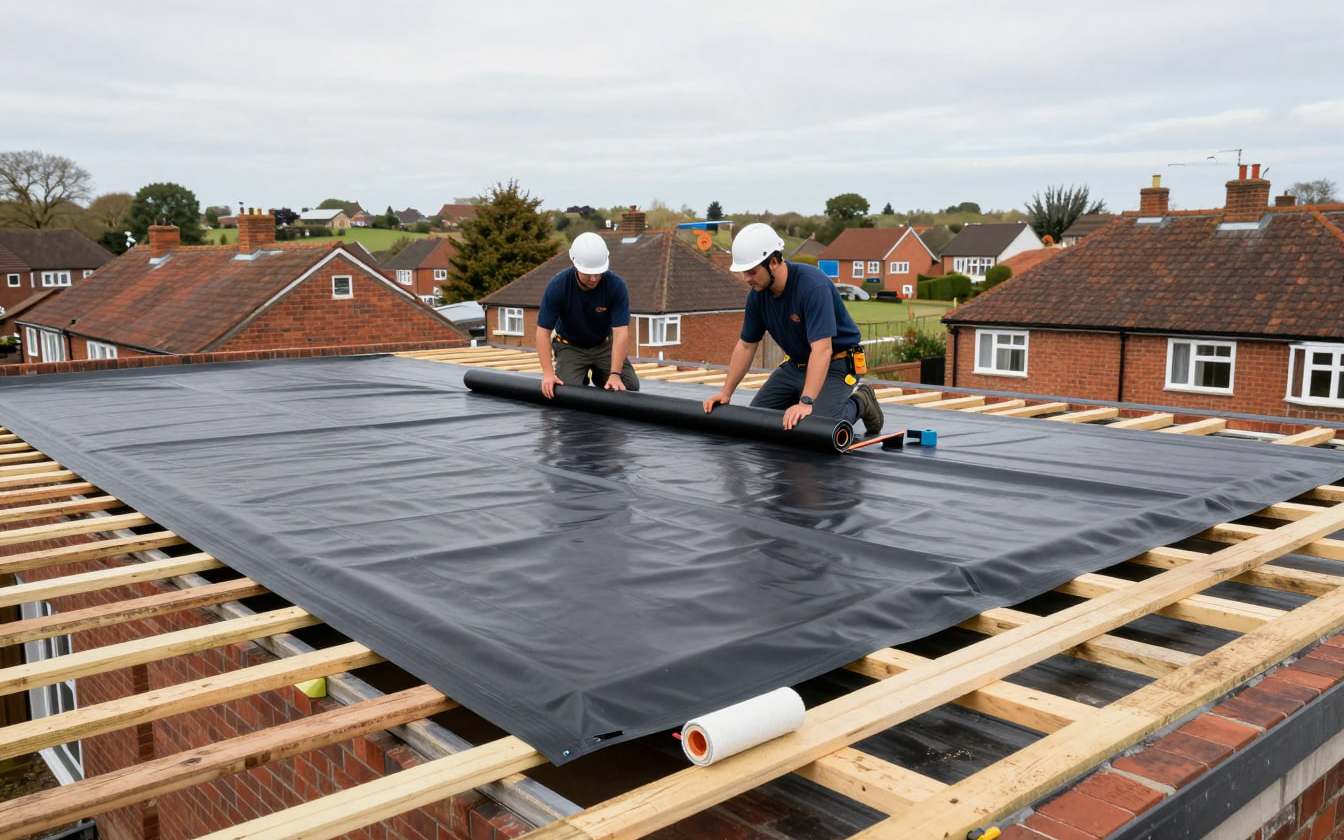
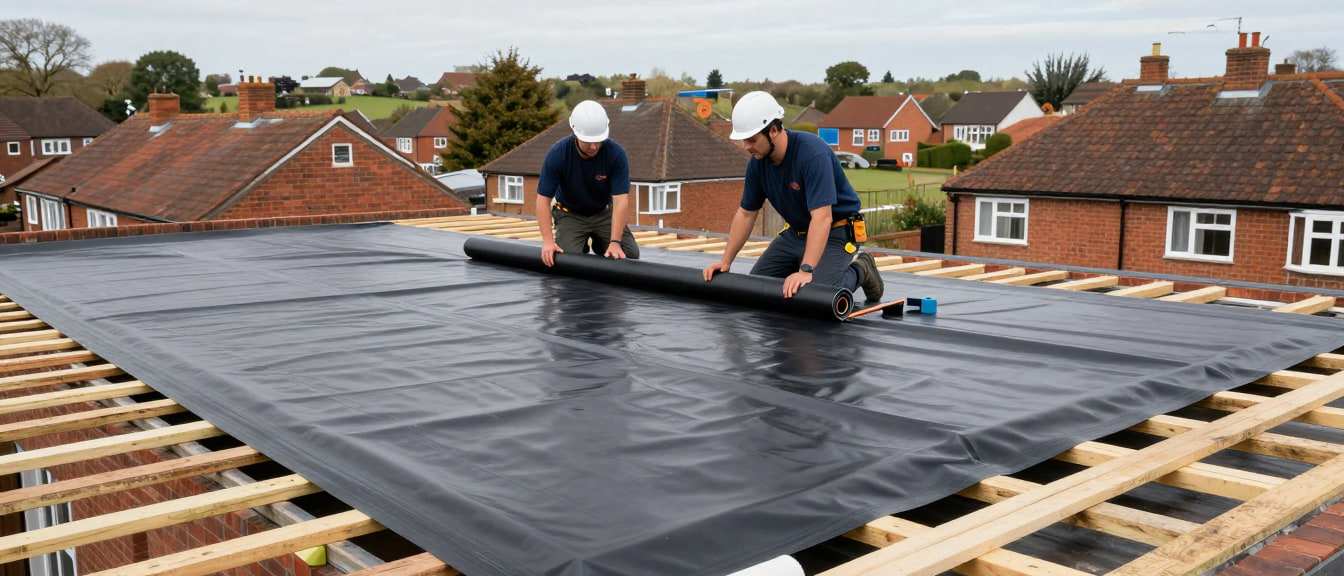
EPDM is a synthetic rubber membrane. On most domestic roofs it is laid as one single sheet, bonded to the timber deck and finished with edge trims. The result is a smooth, matt black roof with few or no joins. Read more on our EPDM rubber roofing page.
GRP fibreglass
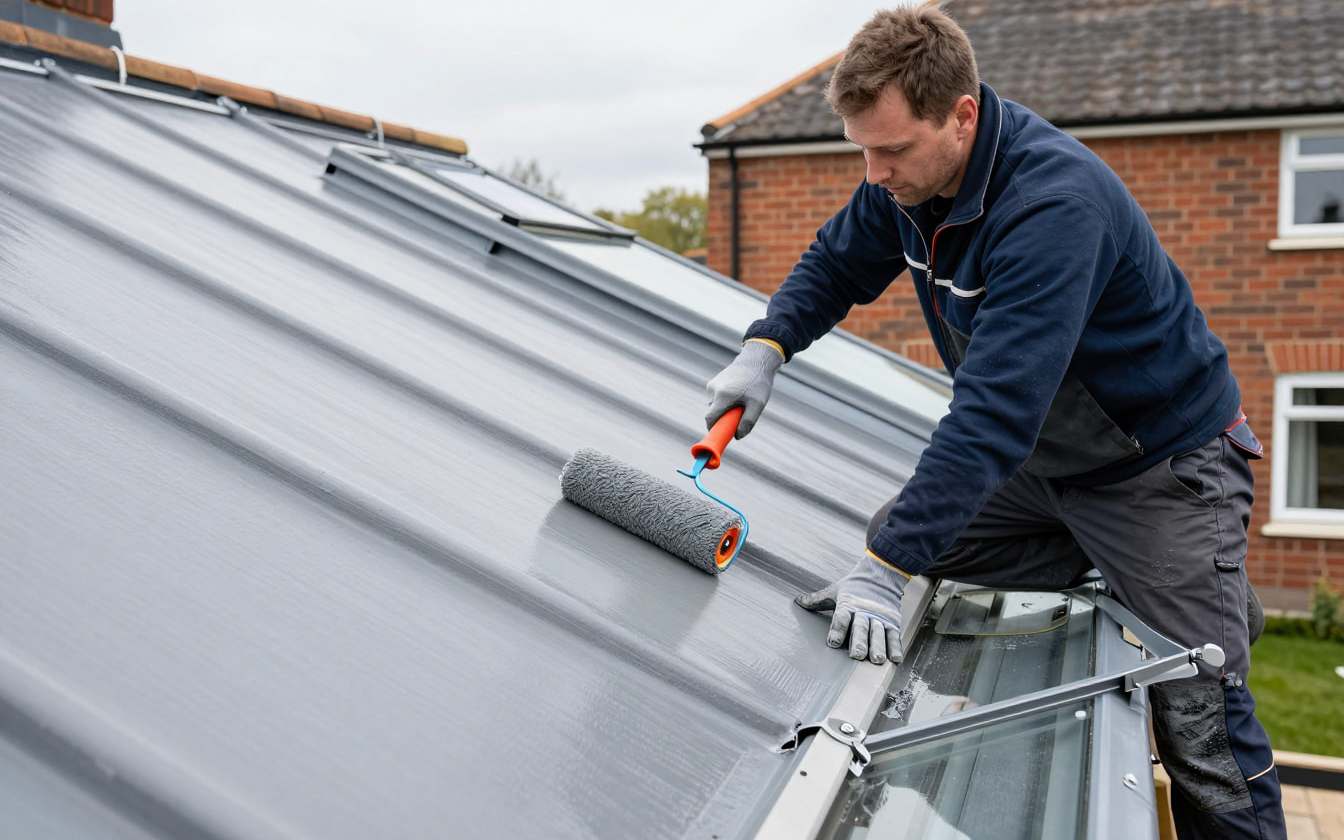
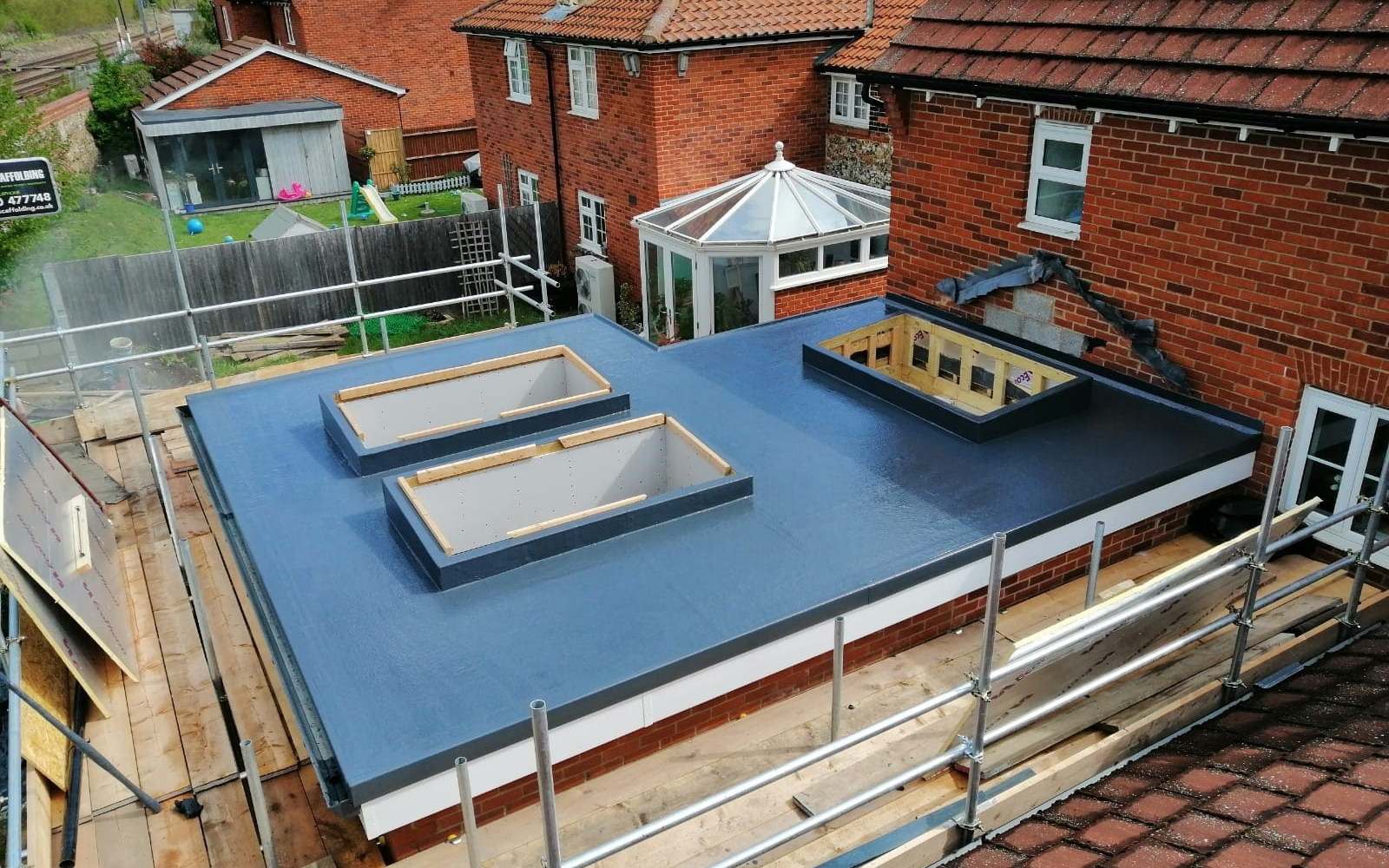
GRP stands for glass-reinforced plastic. Glass-fibre matting is laid on the deck, soaked in resin and finished with a hard topcoat, which cures into one rigid, seamless surface. Because it goes on wet, it can be formed neatly around upstands, outlets and awkward corners.
Torch-on felt
Modern felt roofs are reinforced bitumen membranes, usually a base layer and a mineral-finished cap sheet, bonded with a gas torch. They are a big improvement on the old three-layer felt roofs many garages still have, and they are the cheapest of the three to install. Our felt roofing page covers them in detail.
EPDM vs GRP vs felt: how do they compare?
| EPDM rubber | GRP fibreglass | Torch-on felt | |
|---|---|---|---|
| Supply and fit, per m² | £80–£100 | £95–£120 | £50–£80 |
| Patch repair in Cambridge, per m² | £116–£167 | £123–£177 | £94–£135 |
| Typical lifespan | 30–50 years | 25–30 years (recoat every 10–15) | 15–20 years |
| Look | Smooth, matt black; joins hidden under trims | Smooth, hard and seamless; coloured topcoat | Mineral-chipped surface, like traditional felt |
| Repairability | Patched with bonded rubber; surface must be clean and dry | Patchable, but needs careful preparation | Easiest and cheapest to patch |
| Foot traffic | Occasional access; can be punctured by sharp objects | Best of the three; suits balconies and walkways | Occasional access; softens in hot weather |
| Weather during install | Most dry weather | Dry weather and suitable temperatures for the resin to cure | Dry surface; uses a naked flame |
| Heat and frost | Flexible; copes with expansion and contraction | Can crack over time in very cold conditions | Ages fastest in heat and sunlight |
| Sustainability | Longest life, so fewest replacements | Long life; recoating extends it | Shortest life, so replaced most often |
Costs and lifespans come from Checkatrade’s 2026 flat roof replacement, rubber roofing and fibreglass roof cost guides; repair rates from its Cambridge roofing repairs page. All prices exclude VAT.
How much does each flat roof system cost?
On price per m², felt is cheapest, EPDM sits in the middle and GRP is the dearest of the three. A fully insulated GRP warm roof, built from the deck up, costs around £210 per m². For a whole job, Checkatrade’s Cambridge data puts a typical new flat roof at £1,430 to £2,988, with an average of about £2,059, and a typical flat roof repair at £584 to £1,738.
The upfront price is only half the story. If you divide Checkatrade’s average price per m² by each system’s lifespan, the picture changes:
- EPDM: about £90 per m² over 30–50 years, or roughly £1.80–£3.00 per m² per year
- GRP: about £107.50 per m² over 25–30 years, or roughly £3.60–£4.30 per m² per year, before recoating
- Felt: about £65 per m² over 15–20 years, or roughly £3.25–£4.35 per m² per year
That is simple arithmetic, ignoring repairs, inflation and the condition of the deck, but it explains why we recommend EPDM so often. Our flat roof replacement cost guide breaks down the extras, such as scaffolding, skips and new decking.
Which flat roof lasts longest?
EPDM has the longest typical life of the three, at 30–50 years. GRP follows at 25–30 years, provided the topcoat is renewed every 10–15 years. Torch-on felt usually manages 15–20 years, and Checkatrade’s own GRP guide puts it nearer 10–15.
Those are ranges, not promises. A roof with poor falls, blocked outlets or careless detailing at the upstands will fail early whatever it is made of. Our guide to how long a flat roof lasts explains what shortens a roof’s life and how to stretch it.
What goes wrong with each flat roof system?
Each system has its own weak points, and knowing them helps you judge a quote and spot trouble early.
EPDM rubber
Most EPDM failures happen at the edges, not in the middle of the sheet. Look for trims that have lifted, membrane pulling away from upstands and badly bonded joins where two sheets meet on a larger roof. Punctures from dropped tools, ladders or sharp debris are the other common cause. All of these are usually repairable with a bonded patch.
GRP fibreglass
GRP is rigid, so it relies on a stable deck. If the boards underneath move or were laid without proper joints, fine cracks can open along the board lines. Resin that was laid in damp or cold conditions may not cure properly, and an ageing topcoat goes chalky and thin. A recoat every 10–15 years keeps the surface sound.
Torch-on felt
Felt tends to show its age on the surface: blisters where moisture is trapped beneath, crazing and cracking where the sun has dried the bitumen, and laps that open at the edges. Patches are cheap, but once a felt roof is blistered and cracked all over, replacement is usually better value than another round of repairs.
How do Cambridge’s heat and frost affect each roof?
East Anglia is the driest region of the UK, and the Met Office’s 1991–2020 averages for its Cambridge NIAB station show about 559 mm of rain a year. Rain is rarely what finishes a flat roof here. Heat, sunlight and frost are.
Hot, sunny summers
Cambridge Botanic Garden recorded 38.7 °C in July 2019, which the Met Office confirmed as the UK’s highest temperature at the time. In summer 2025, East Anglia was the warmest and sunniest district in the UK, with nearly 700 hours of sunshine, according to the Met Office’s regional summer statistics.
Bitumen felt suffers most from that kind of heat and sunlight: it dries out, blisters and cracks. Checkatrade notes that EPDM’s flexibility helps it cope with expansion, contraction and heatwaves.
Frosty nights
Cambridge averages about 40 days of air frost a year, mostly from December to February. Checkatrade notes that GRP is “prone to cracking over time in very cold conditions as it’s not as flexible as other roofing, such as EPDM”. A well-laid GRP roof on a stable deck handles this, but it is one reason we favour EPDM on larger, more exposed roofs.
Summer downpours and ponding
Our heavy summer storms find any low spot. The Confederation of Roofing Contractors says all flat roofs will have some ponding, but water still standing weeks after rain should be reported to your roofer. Good falls and clear outlets matter on every system.
Which flat roof is best for your type of roof?
| Roof type | What we usually recommend | Why |
|---|---|---|
| Single garage or outbuilding | Felt or EPDM | Felt is cheapest upfront; EPDM if you want it to last |
| Rear kitchen extension, with or without a lantern | EPDM, or GRP for complex details | EPDM gives the best value over its life |
| Dormer roof | EPDM or GRP | Small, rarely walked on; GRP for intricate edges |
| Balcony, walkway or roof terrace | GRP, or paving over a protected membrane | Takes regular foot traffic |
| Large, simple roof (blocks of garages, commercial units) | EPDM | Few or no seams over a big area |
| Roof crowded with pipes, vents and upstands | GRP | Laid wet, so it forms neatly around details |
| Tight budget or short-term need | Felt | Lowest upfront cost and easy to patch |
In Cambridge, the most common flat roofs we see are rear extensions and dormers on the Victorian terraces of Chesterton, Romsey and Mill Road, and garages and porches on the post-war estates of Arbury and King’s Hedges. For most of them, EPDM is the sensible default. We suggest GRP where the roof will be walked on or where the detailing is unusually fiddly.
Do not forget the insulation
If you are replacing more than half of a flat roof, Approved Document L expects the roof to be insulated to current standards where feasible, which usually means building a warm roof. The covering goes on top of the insulation, so the choice of EPDM, GRP or felt stays the same. Our warm roof vs cold roof guide explains how it works.
What about other flat roof systems?
There are other options, each with a narrower use:
- Mastic asphalt: about £50–£70 per m² and 20–30 years, mostly seen on older commercial and block roofs.
- Liquid-applied coatings: around £20–£28 per m² for liquid plastic; useful for repairs and overlays, but they depend entirely on the surface underneath.
- Green roofs: about £75–£110 per m², built over a fully waterproofed and protected roof.
- Lead and zinc: traditional, long-lasting metals for small bays, porches and dormer tops on period homes.
Figures are from Checkatrade’s flat roof cost guide.
Talk to a local roofer
Roofing Cambridge fits EPDM rubber, GRP fibreglass and torch-on felt roofs, so our advice is based on your roof rather than the product we happen to sell. We survey for free, by ladder or drone, and give you a detailed written quote, usually with more than one option, so you can compare like with like.
Repairs come with our 5-year warranty and new roof installations with our 10-year insurance guarantee. Call 01223 902596 (Monday to Friday, 8am to 5pm) or request a free quote.
Sources
- Checkatrade: Flat roof replacement costs
- Checkatrade: Rubber (EPDM) roofing cost guide
- Checkatrade: Fibreglass (GRP) roof cost guide
- Checkatrade: Cost of re-felting a roof
- Checkatrade: Roofing repairs in Cambridge, local prices
- Checkatrade: Roofers in Cambridge, local prices
- Met Office: Cambridge NIAB climate averages 1991–2020
- Met Office: Regional weather stats for summer 2025
- Met Office: New official highest temperature in UK confirmed (2019)
- Confederation of Roofing Contractors: Frequently asked questions
Figures were checked on 1 October 2026. Published prices are guides only and usually exclude VAT; we always confirm a fixed price in writing after a free survey.