Key takeaways
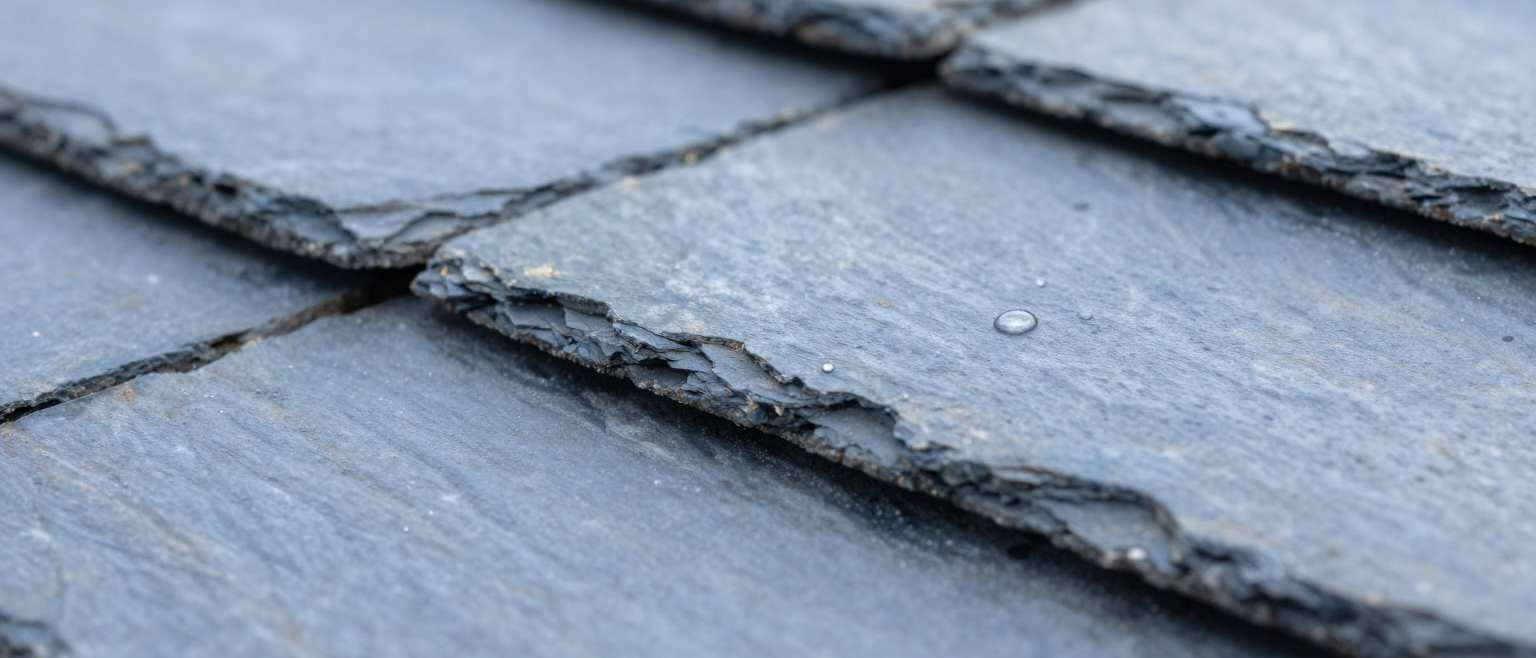
- Natural slate is the longest-lasting option, often 100+ years, but the nails usually fail long before the slates do. That is 'nail sickness'.
- Material-only prices (FMB): natural slate about £53 per m², clay plain tile about £60, fibre-cement slate about £23 and concrete interlocking tile about £22.
- Supplied and fitted, slate and clay tile roofs both cost roughly £160–£275 per m² (Checkatrade, 2026).
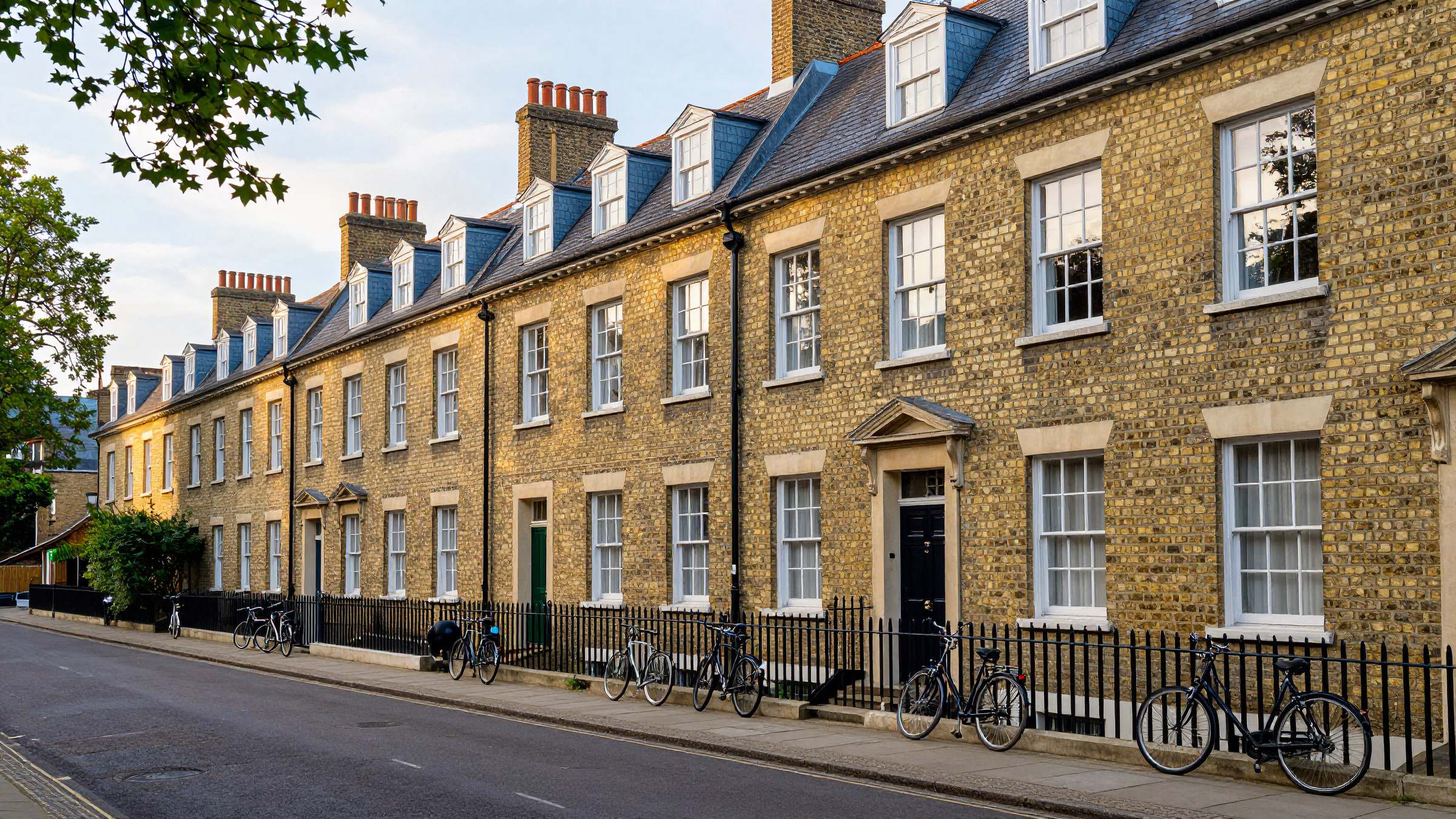
- On Cambridge's gault-brick Victorian terraces, Welsh slate is the original roof. Swapping to concrete tiles can look out of place and usually needs Building Regulations approval.
- Sound slates and tiles can usually be salvaged and re-laid, which keeps the look and saves on materials.
| Job | Typical price |
|---|---|
| Natural slate (materials only) | about £53 per m² (about £2.50 a slate) |
| Fibre-cement slate (materials only) | about £23 per m² |
| Clay plain tiles (materials only) | about £60 per m² (about £1 a tile) |
| Concrete interlocking tiles (materials only) | about £22 per m² |
| Slate roof (supply and fit) | £160–£275 per m² |
| Clay tile roof (supply and fit) | £160–£275 per m² |
| Plain concrete tile roof (supply and fit) | £120–£230 per m² |
Material prices from the FMB's new roof cost guide (November 2025); supply-and-fit rates from Checkatrade's roof installation cost guide (2026). Guide prices only: scaffolding, battens, membrane and removal of the old roof are usually extra, and you should always check whether a quote includes VAT. We fix the price in writing after a free survey. Get your exact price.
Slate vs tile roof is one of the biggest choices you make when re-roofing, and in Cambridge it is rarely a blank-sheet decision. The Victorian terraces of Mill Road, Romsey, Petersfield, De Freville and Chesterton were built with pale gault brick and natural slate. Older buildings in Chesterton village carry clay plain tiles. Many homes on the post-war estates of Arbury, King’s Hedges and Chesterton have concrete interlocking tiles.
This guide compares the four coverings we are asked about most: natural slate, fibre-cement slate, clay plain tiles and concrete interlocking tiles. It covers cost, lifespan, weight and looks, then the Cambridge-specific questions: conservation areas, nail sickness and reclaimed slate.
What are the main slate and tile options?
Natural slate
Natural slate is split stone: thin, flat and dark grey with natural variation. Welsh slate was carried across the country by the railways in the mid and late 19th century, and the railway reached Cambridge in 1845, which is why it covers so many of the city’s Victorian terraces. Spanish slate is the common imported alternative today. South Cambridgeshire’s Listed Buildings guidance, published by Greater Cambridge Shared Planning, gives a minimum pitch of 25 degrees for slate.
Fibre-cement slate
Fibre-cement slates are man-made from cement and fibres. They are flat, regular and even in colour, and they cost far less than natural slate. They are a sensible budget option on some homes but are not a straight substitute on period or listed buildings.
Clay plain tiles
Plain tiles are small, slightly curved clay tiles laid in overlapping double courses, which makes them heavy but very weathertight. Cambridge has its own clay tile history: gault clay made the buff plain tiles of the area, and where buff tiles ran short, red ones were mixed in, a look known locally as the “Cambridgeshire Mix”. Plain tiles need a pitch of at least 40 degrees.
Concrete interlocking tiles
These larger tiles lock together side by side in single courses, so they are quick to lay and cheap per m². They are the standard covering on post-war council and private estates. A council report on homes in The Grove, near our base in Chesterton, describes their roofs as “contoured roof tiles”.
What about clay pantiles?
Pantiles are the S-shaped clay tiles seen on cottages, outbuildings and sheds across East Anglia. They were introduced from the Netherlands in the 17th century, and local clays gave them their yellow and pink tones. They are single-lapped, so lighter than plain tiles, and need a pitch of at least 35 degrees. The listed buildings guidance warns that they are vulnerable at eaves, verges and abutments, and that heavy mortar pointing is a common bad repair. If you have a pantiled roof, re-laying the original tiles is usually the right approach.
Slate vs tile: how do they compare?
| Natural slate | Fibre-cement slate | Clay plain tile | Concrete interlocking tile | |
|---|---|---|---|---|
| Materials only, per m² | about £53 | about £23 | about £60 | about £22 |
| Supply and fit, per m² | £160–£275 | Not published separately | £160–£275 | £120–£230 (plain concrete tile) |
| Typical lifespan | 100+ years if well maintained | Shorter than natural slate; check the warranty | About 50–60 years | About 25–40 years |
| Minimum pitch | 25 degrees | Check manufacturer | 40 degrees | Varies by profile; check manufacturer |
| Relative weight | Light | Light | Heavy (double-lapped) | Heavier than slate |
| Look | Thin, crisp, natural variation | Flat, uniform colour | Small, textured, warm buff or red | Chunkier, uniform profile |
| Conservation areas | The original on most Victorian terraces | Not on listed buildings without consent | Original on many older buildings | Can look out of place where slate is the character |
| Repair, per m² (Cambridge) | £150–£218 | £85–£123 | £106–£152 | £83–£120 |
Sources: materials from the FMB’s new roof cost guide; supply and fit from Checkatrade’s roof installation guide; lifespans from Checkatrade’s tile replacement and roof replacement guides; minimum pitches from the Greater Cambridge Listed Buildings SPD; Cambridge repair rates from Checkatrade’s Cambridge repairs page. Checkatrade’s roof replacement guide gives 25–40 years for both clay and concrete tiles, so treat the clay figure as a range rather than a promise.
How much does a slate or tile roof cost?
For a whole roof, the FMB’s guide (with prices from Novello Chartered Surveyors) puts stripping and re-tiling at £7,500–£12,500 for a two-bed terrace of about 60 m², £10,000–£15,000 for a three-bed semi and £15,000–£20,000 for a four-bed detached house. Labour is around 40% of the budget. MyBuilder’s 2026 guide puts a typical slate roof at £8,000–£13,000, against £4,000–£8,000 for clay or concrete tiles.
Locally, Checkatrade’s data puts a typical Cambridge roof replacement at £5,443–£12,297, with an average of about £8,134. On a terrace, budget too for a pavement scaffold: Cambridgeshire County Council asks for at least 15 working days to process a scaffolding licence. Our new roof cost guide explains every line of the quote.
How long do slate and tile roofs last?
Natural slate is in a class of its own. Checkatrade says a well-maintained slate roof can last 100 years or more, and local listed buildings guidance notes that slate roofs fail mainly through their fixings. The weak point is not the slate but the nails, battens and flashings.
Clay plain tiles typically last 50–60 years, according to Checkatrade’s tile guide. The same planning guidance warns that machine-made tiles are more prone to frost damage than handmade ones, because their smoother surfaces trap moisture. With about 40 days of air frost a year in Cambridge, on Met Office averages, that matters.
Concrete interlocking tiles typically last 25–40 years. Any 1960s or 70s concrete tile roof in north Cambridge that has never been replaced is now well beyond that range.
What is nail sickness, and does it mean a new roof?
Nail sickness is the classic failure of an old slate roof. The original iron nails corrode, the slates lose their grip and start to slip, even though the slates themselves are perfectly sound. The Listed Buildings guidance says slates fail mainly through corroded fixings and recommends aluminium alloy or copper nails for repairs and re-slating.
The council’s Mill Road Conservation Area Appraisal notes that “many of the original slate roofs are now in need of replacement”. In practice the answer depends on the scale:
- A few slipped slates: refix them individually. This is a routine repair; see our roof repairs and replacements page.
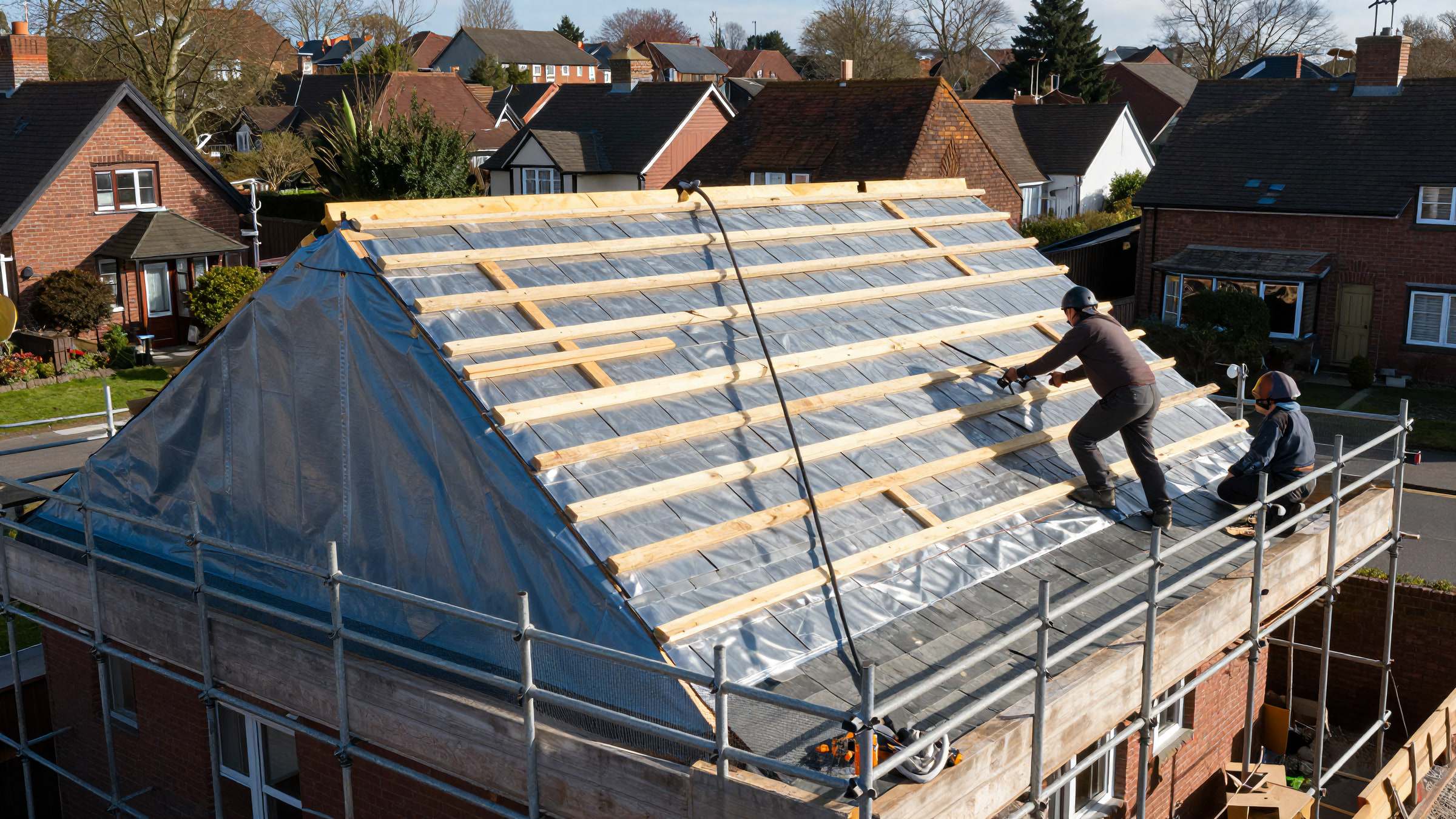
- Slipping across the roof: strip it, fit new battens and a breathable membrane, then re-lay the sound slates with copper or aluminium alloy nails.
- Many cracked or flaking slates: re-slate with matching reclaimed or new natural slate.
Tiled roofs suffer a similar problem. The same guidance names slippage from rusting fixings and decaying battens as one of the most common faults, and says re-laying the original tiles is usually the best fix.
Can you use reclaimed slate?
Yes, and on many Cambridge terraces it is the best option. Re-using your own sound slates keeps the roof looking exactly as it did, and matching reclaimed slates can make up the shortfall. We check each slate for cracks, flaking and damaged nail holes before it goes back on.
Matching matters more here than in many towns. The Mill Road appraisal points out that there are “no party walls through these roofs”, so one continuous roof runs across several houses. Re-roof one house in a different slate and the join with next door will show.
Slate or tile in a Cambridge conservation area?
Cambridge has 18 conservation areas, including Mill Road, De Freville, Chesterton and Riverside and Stourbridge Common. A few points are worth knowing:
- Planning permission is not usually needed for like-for-like re-roofing. Permitted development rules for re-roofing a house have no “similar materials” condition, and Cambridge’s only Article 4 direction restricting home alterations covers the Accordia estate. Always check your own property’s planning history.
- Character still matters. The De Freville appraisal says that where slate has been replaced by concrete tile, “the incongruity is painfully obvious”.
- Listed buildings need listed building consent. The council’s guidance says fibre-cement slate or concrete tiles on a listed building need consent and will not receive grant aid, and it supports natural Welsh slate.
- Building Regulations: the Planning Portal says changing to a different material, such as slate to tiles, is likely to need approval, and an application is needed for any covering that increases the roof’s weight by 15% or more.
- Bats: stripping a roof can disturb bat roosts, which are protected by law. GOV.UK guidance explains when you need advice before work starts.
Our guide to planning permission for roofing in Cambridge goes into more detail.
Which should you choose?
- Victorian or Edwardian terrace with slate: natural slate, re-using your own slates where possible.
- Older Chesterton or village building with clay tiles: clay plain tiles, handmade where the character matters.
- Post-war semi or estate house with concrete tiles: concrete interlocking tiles, or a better-quality tile if you want a longer life. Check the weight before changing type.
- Slate look on a budget, not listed: fibre-cement slate, accepting a shorter life and a flatter look.
- Extension or dormer on a pitched roof: match the main roof.
Our roof tiling and slates page shows the coverings we work with.
Talk to a local roofer
Roofing Cambridge re-slates and re-tiles homes across Cambridge and the surrounding villages. Our team includes Michael Conway, who has 35 years’ experience in slate and leadwork, and between us we have over 40 years of combined roofing experience.
We offer a free survey by ladder or drone, a detailed written quote that names the slates or tiles, nails and membrane, and a 10-year insurance guarantee on new roof installations. Call 01223 902596 (Monday to Friday, 8am to 5pm) or request a free quote.
Sources
- FMB: New roof cost UK, complete homeowner guide
- Checkatrade: Roof installation cost guide
- Checkatrade: Roof tile replacement cost guide
- Checkatrade: Roof replacement cost guide
- Checkatrade: Roofing repairs in Cambridge, local prices
- Greater Cambridge Shared Planning: Listed Buildings SPD
- Greater Cambridge Shared Planning: Mill Road Conservation Area Appraisal
- Greater Cambridge Shared Planning: De Freville Conservation Area Appraisal (2020)
- Planning Portal: Building Regulations, work to an existing roof
- Planning Portal: Building Regulations, re-roofing
Figures were checked on 1 October 2026. Published prices are guides only and usually exclude VAT; we always confirm a fixed price in writing after a free survey.