Key takeaways
- Most UK homes pay £7,500–£20,000 for a full strip and re-roof, depending on size (FMB and Novello Chartered Surveyors, 2025/26).
- Cambridge's average roof replacement is about £8,134 (Checkatrade, 2026), with no clear local premium over UK prices.
- Supply and fit runs about £120–£230 per m² for concrete tiles and £160–£275 per m² for clay tiles or natural slate.
- Budget for the extras: removal of the old roof (£1,000–£2,500), a skip (about £320 a week) and scaffolding.
- Renovating more than 50% of a roof normally means upgrading the insulation under Building Regulations.
| Job | Typical price | Typical time |
|---|---|---|
| 2-bed terrace, strip and re-roof (about 60 m²) | £7,500–£12,500 | — |
| 3-bed semi, strip and re-roof (about 80 m²) | £10,000–£15,000 | — |
| 4-bed detached, strip and re-roof (about 120 m²) | £15,000–£20,000 | — |
| Roof replacement, Cambridge average £8,134 | £5,443–£12,297 | 3 days to 3 weeks |
| Concrete tiles, supply and fit | £120–£230 per m² | — |
| Clay tiles or natural slate, supply and fit | £160–£275 per m² | — |
| Removal of the old roof | £1,000–£2,500 | — |
| Skip (6–8 yard) | about £320 a week | — |
| Scaffolding, two-storey semi | £650–£1,100 | — |
Guide prices from the FMB new roof cost guide (November 2025, with Novello Chartered Surveyors) and Checkatrade's 2026 Cambridge, roof replacement, installation and scaffolding cost guides, excluding VAT where stated. We always confirm a fixed price in writing after a free survey. Get your exact price.
If you are budgeting for a new roof, the honest answer on new roof cost in the UK is a range: most homes pay between about £7,500 and £20,000 for a full strip and re-roof in 2026, depending on size, covering and access. Prices in Cambridge sit very close to the national picture. This guide breaks the cost down by house type, by material per square metre and by the extras that quotes often leave out, using published 2025/26 figures from the Federation of Master Builders (FMB), Checkatrade and MyBuilder, so you can sense-check any quote you receive.
How much does a new roof cost in the UK in 2026?
The FMB’s new roof cost guide, with prices from Novello Chartered Surveyors, puts a typical strip-and-retile at £7,500–£12,500 for a two-bed terrace, £10,000–£15,000 for a three-bed semi and £15,000–£20,000 for a four-bed detached house. It also says to “expect a new roof to cost from £4,500”, which is a realistic floor for a small, simple roof.
Other national guides land in the same territory. Checkatrade’s roof replacement guide gives a UK average of about £8,000, with most homeowners paying £4,000–£19,000, and MyBuilder’s 2026 price guide puts a typical new roof at £4,000–£13,000.
Why the spread? Checkatrade alone quotes different “average” figures on different pages, from £7,000 to £13,000, because each page assumes a different roof. That is why we talk in ranges rather than one magic number, and why a survey matters more than any online average.
New roof cost by house type
| House type | Typical roof area | Typical new roof cost (FMB) | Common Cambridge examples |
|---|---|---|---|
| 2-bed terraced | about 60 m² | £7,500–£12,500 | Victorian slate terraces in Romsey, Petersfield and around Mill Road |
| 3-bed semi-detached | about 80 m² | £10,000–£15,000 | Interwar and post-war semis in Chesterton, Arbury and Cherry Hinton |
| 4-bed detached | about 120 m² | £15,000–£20,000 | Larger homes in Queen Edith’s, Newnham and the South Cambridgeshire villages |
Labour is the biggest single part of the bill. The FMB estimates it at about 40% of a new roof budget, and Checkatrade’s roof installation guide puts roofing labour at about £130 per m², with roofers working at £35–£45 an hour or £280–£360 a day.
How much does a new roof cost per m² by material?
The covering you choose moves the price more than anything except size. These supply-and-fit rates come from Checkatrade’s installation guide (June 2026 table), with the FMB’s materials-only prices alongside, so you can see how much of each square metre is labour, battens, membrane and fixings.
| Roof covering | Supply and fit, per m² | Materials only, per m² (FMB) | Typical lifespan |
|---|---|---|---|
| Concrete tiles | £120–£230 | about £22 | about 25–40 years |
| Clay plain tiles | £160–£275 | about £60 | 25–60 years (guides differ) |
| Natural slate | £160–£275 | about £53 (about £2.50 a slate) | 100+ years if well maintained |
Lifespans are Checkatrade’s ranges, and its own guides disagree on tiles. In practice the nails and battens often give up before the tiles or slates do.
Roof shape matters too. For a 64 m² roof, Checkatrade gives £110–£260 per m² for a simple gable (£7,000–£16,250 in total) and £145–£285 per m² for a hipped roof (£9,250–£18,000), because hips mean more cutting, more ridge and more waste. Flat roofs are cheaper per square metre at £45–£120, or £2,800–£7,500 for 32 m²; our flat roof replacement cost guide covers them in detail. MyBuilder puts a typical metal roof at £6,000–£10,000.
Which Cambridge roofs cost more to replace?
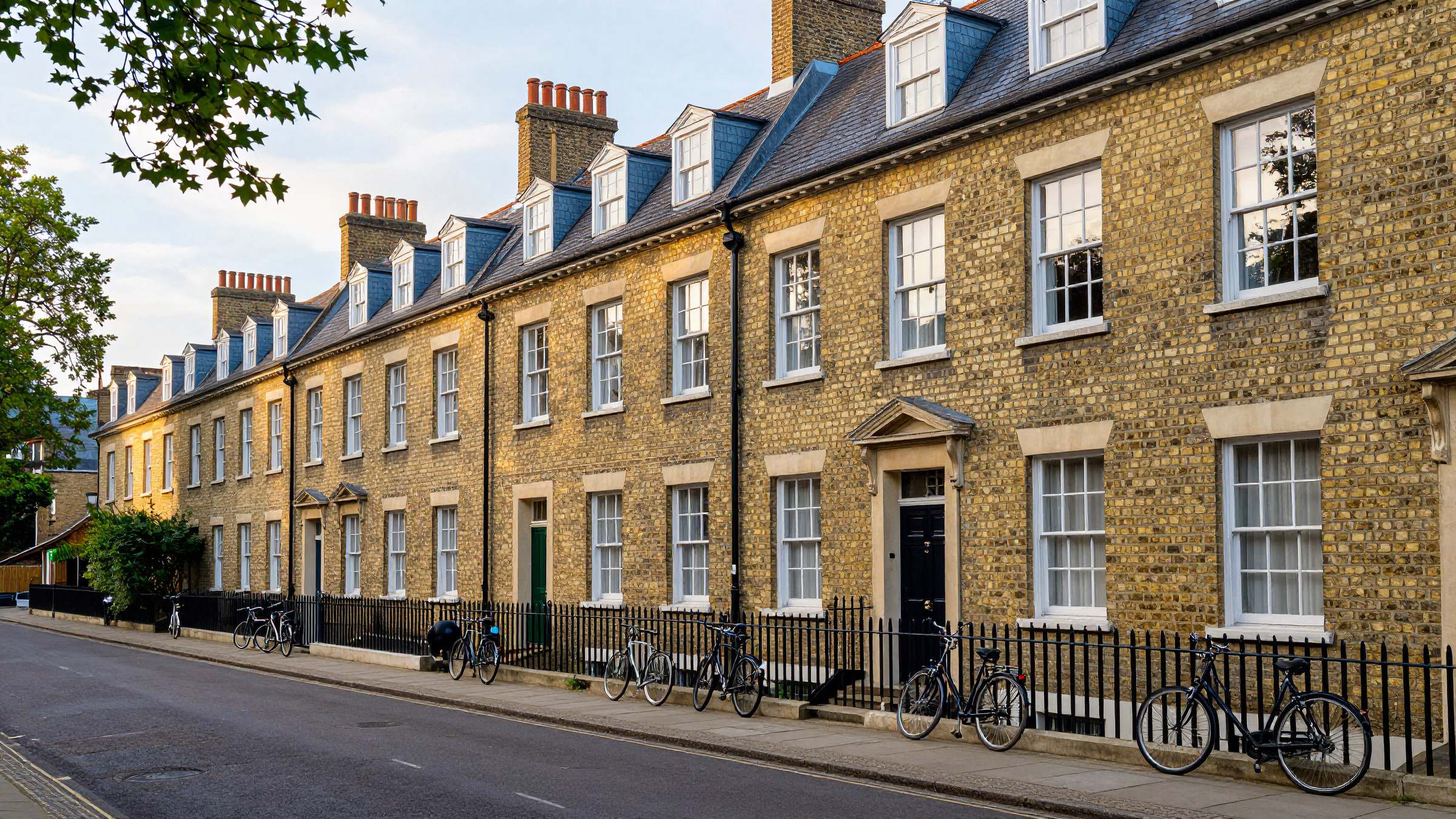
Nearly one in five Cambridge homes was built before 1919, according to the VOA’s 2025 housing stock figures, and many are gault-brick terraces in Romsey, Petersfield and De Freville with natural slate roofs. The council’s own Mill Road conservation area appraisal notes that “many of the original slate roofs are now in need of replacement”. Re-slating sits at the top of the per-m² range, especially when good slates are salvaged and re-laid alongside matching reclaimed ones. Our roof tiling and slating team does this regularly.
About 30% of the city’s homes date from 1945 to 1982, including the council-built estates of Arbury and King’s Hedges, where concrete interlocking tiles are common. These are usually the most straightforward roofs to replace. And roughly one in five Cambridge homes has been built since 2009, so most of those will not need a new roof for many years.
What extra costs should you budget for?
A headline roof price is only part of the bill. These are the items that most often separate a cheap-looking quote from a realistic one.
Removing the old roof and the skip
Checkatrade lists removal of the old roof at £1,000–£2,500 and a 6–8 yard skip at about £320 a week. If the skip has to sit on the road, it needs a permit from Cambridgeshire County Council, which asks for 10 working days and covers 14 days.
Scaffolding
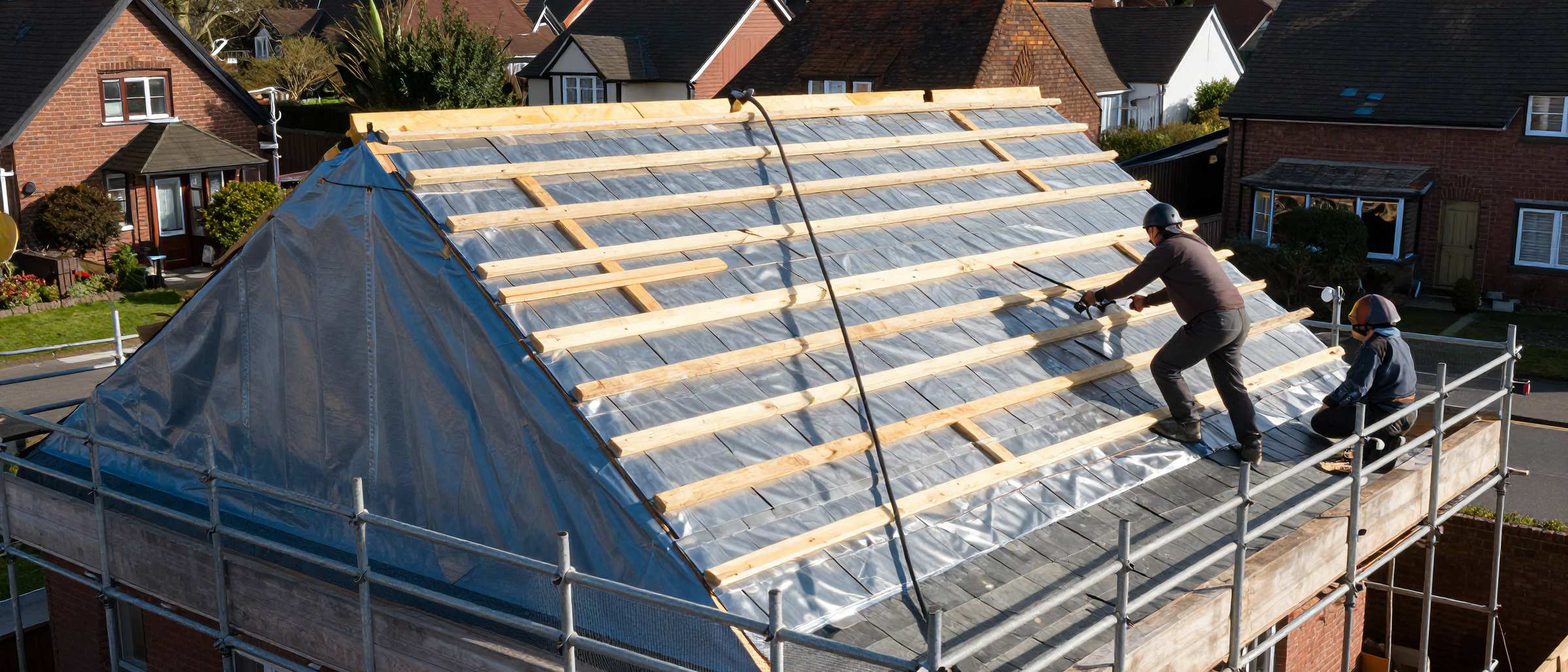
Scaffolding is needed on almost every re-roof. Checkatrade’s scaffolding guide shows £650–£1,100 for a two-storey semi, and monthly domestic figures of about £800 for a two-storey terrace, £875 for a semi and £1,200 for a detached house. The guide is inconsistent about whether some figures are weekly or monthly, so check the hire period on every quote.
If the scaffold stands on the pavement, as it does on most terraced streets where front doors open straight onto the footway, it needs a licence from Cambridgeshire County Council. The council asks for at least 15 working days to process it (highway licences and permits).
Insulation and Building Regulations
Under Approved Document L, if more than 50% of a roof is renovated, or more than 25% of the whole building envelope, the whole roof should be upgraded to a U-value of 0.16 W/m²K where that is technically and economically feasible. A new edition of the document takes effect on 24 March 2027, but the roof renovation rules stay the same. When the loft insulation is upgraded, Checkatrade recommends a minimum of 270 mm of glass wool or 250 mm of rock wool.
The Planning Portal says most re-roofing “will need Building Regulations approval”. The work is signed off either through building control or by a roofer registered with a competent person scheme, which can self-certify re-roofing. Our planning permission and Building Regulations guide explains both routes.
Timber repairs and a new roof structure
Once the old covering is off, rotten battens, sagging rafters or a decayed wall plate sometimes come to light. Checkatrade prices a rafter repair at about £25 per metre and a full new roof structure at £6,500–£20,000 or more. NFRC reminds homeowners that estimates can change once the covering is removed, so ask how any extra work will be priced before it starts.
Leadwork, fascias and solar panels
Chimney flashings, valleys and abutments are often renewed with the roof; Checkatrade puts Code 5 lead flashing at about £50–£70 per metre. While the scaffold is up is also the cheapest moment to replace tired fascias and soffits and gutters. Solar panels have to be isolated, removed and refitted, which adds cost, and the roofing competent person schemes do not cover solar panel installation.
Is a new roof more expensive in Cambridge?
Not noticeably. Checkatrade’s Cambridge data puts the average roof replacement at £8,134 (range £5,443–£12,297), within 2% of its £8,000 UK figure. Its Cambridge page quotes the UK average as £7,000, so whether Cambridge looks dearer or cheaper depends on which national figure you pick. Its Cambridge per-m² repair rates are 0–8% below its UK rates, and roofer day rates are identical at £280–£360.
You will see claims online that the South East or conservation areas add 15–40% to a roof. We have not found evidence for a blanket uplift. What does cost more is specific to the roof: natural slate instead of concrete tile, a pavement scaffold licence on a terrace, three storeys of access, or traditional leadwork on a period house.
What affects the price of a new roof?
- Size and shape: area, pitch, hips, valleys and dormers.
- Covering: concrete tiles are cheapest per m²; clay and natural slate cost more but can last far longer.
- Access: scaffolding, pavement licences, three-storey elevations or rear-only access through a terrace.
- What’s underneath: rotten timbers, sagging rafters or a missing breathable membrane.
- Details: chimneys, valleys, rooflights, leadwork and dry ridge or dry verge systems.
- Regulations: insulation upgrades, building control and any listed building constraints.
- Wildlife and hazards: bats in the roof may mean a survey before stripping, and asbestos cement can turn up in older outbuildings.
- Weather: the Confederation of Roofing Contractors advises stopping roof work as winds reach force 5 to 6, so blustery spells can stretch a job.
How do you compare new roof quotes?
NFRC’s homeowner advice is to get up to three written quotes and not automatically take the cheapest. To compare them fairly, check that each one covers:
- Scaffolding (and the pavement licence if needed), the skip and removal of the old roof.
- The exact covering, plus the underlay or membrane, battens and fixings.
- Ridge, hip and verge details (mortar or dry-fix) and any leadwork.
- Insulation and ventilation, and how Building Regulations compliance will be certified.
- What happens, and at what rate, if rotten timber is found.
- The guarantee: what it covers, for how long and whether it is insurance-backed.
- Payment terms. Be wary of large upfront payments.
What does an insurance-backed guarantee add?
An insurance-backed guarantee sits behind the contractor’s own guarantee. NFRC explains why it matters: “even the best contractors can go out of business whereupon their own guarantees become worthless”. The Confederation of Roofing Contractors notes they are not mandatory by law and are normally issued once the work is paid in full. Our new roof installations come with a 10-year insurance guarantee.
A note on VAT
Most published cost guides quote prices without VAT; Checkatrade’s repair guide states its costs “are exclusive of VAT and will need to be added”. When comparing quotes, check whether each one includes VAT. Be cautious about cash or “VAT-free” deals, which NFRC warns come from contractors who “are not easily tracked down if things go wrong”.
Should you repair or replace your roof?
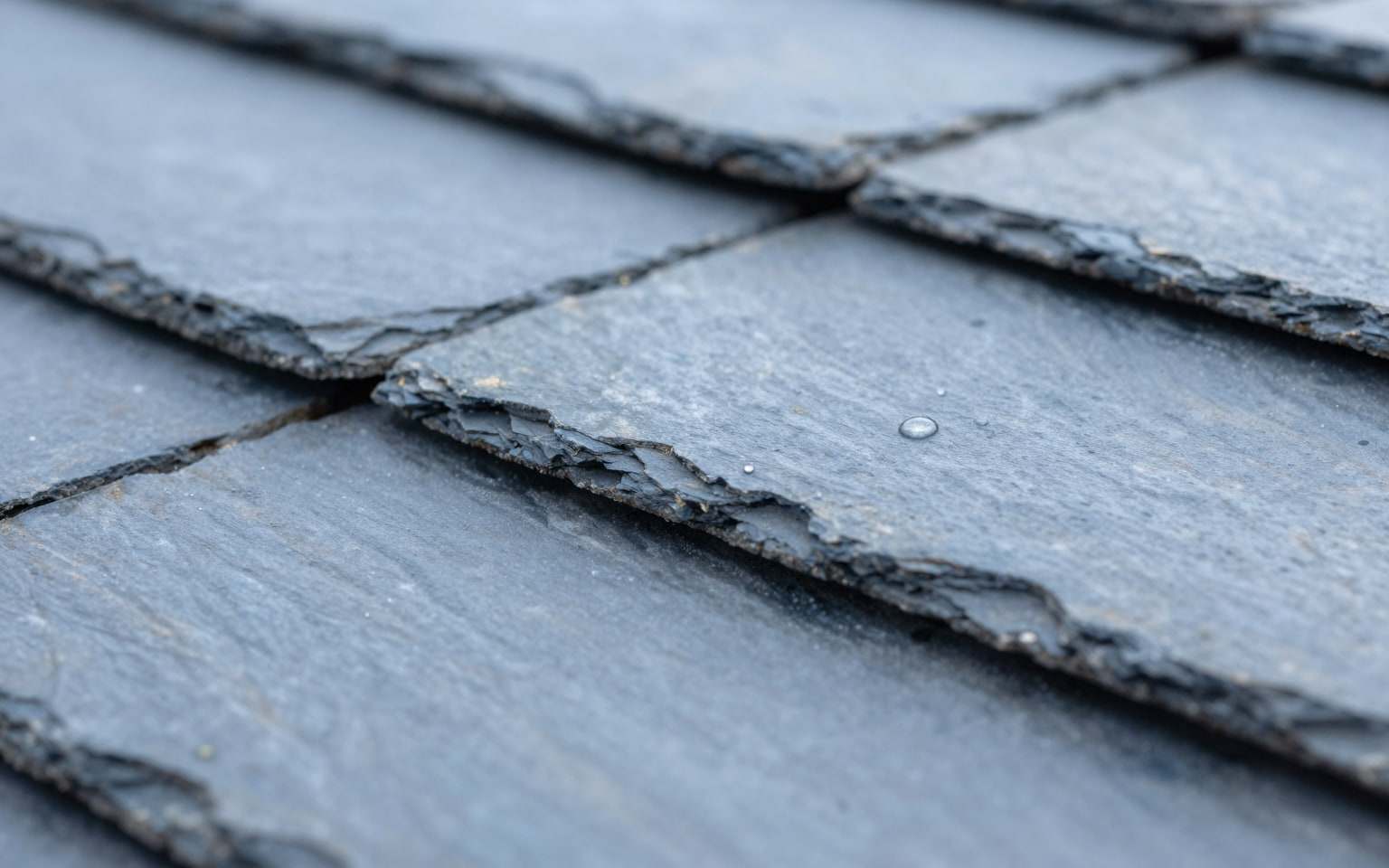
Not every tired roof needs replacing. A few slipped tiles, a cracked ridge or a failed flashing are repairs, often costing a few hundred pounds; our roof repair cost guide has the figures. Replacement makes sense when slipped tiles keep recurring across the roof, the battens or underlay have failed, a slate roof has widespread nail sickness (corroded nails letting slates slide), or repairs have become an annual event.
If you are unsure, a drone roof survey shows the whole roof in photos, so you can see the condition for yourself before deciding. When replacement is the right call, our new roof installation service covers everything from scaffold to sign-off.
Get a fixed price for your roof
Online averages help you budget, but only a survey gives you a real number. We inspect by ladder or drone, then send a detailed written quote that spells out the covering, scaffolding, insulation and guarantee, with a fixed price. The survey is free and there is no obligation. Call 01223 902596 (Monday to Friday, 8am to 5pm) or request a free quote.
Sources
- FMB: New roof cost UK, complete homeowner guide (Nov 2025)
- Checkatrade: Roof replacement cost guide (2026)
- Checkatrade: Roof installation cost guide (2026)
- Checkatrade: Roofers in Cambridge, local cost data
- Checkatrade: Scaffolding cost guide
- MyBuilder: Average cost of a roofer (2026)
- GOV.UK: Approved Document L (2026 edition)
- Planning Portal: Building Regulations for re-roofing
- Cambridgeshire County Council: Highway licences and permits
- NFRC: Choosing a roofing contractor (homeowners)
Figures were checked on 1 October 2026. Published prices are guides only and usually exclude VAT; we always confirm a fixed price in writing after a free survey.